A shop buys a machine-monitoring package. The business case is sound, the vendor demo goes…

MANTEC: Strengthening South Central Pennsylvania Manufacturing
Manufacturers are spending billions on automation, but a startling share of those investments underperform. North American companies ordered $2.25 billion worth of robots in 2025 alone. Yet survey after survey reveals the same uncomfortable truth: nearly one in three automation projects fails to deliver expected results. The reason is almost never the robot. It is the operation that bought the robot.
Automation readiness — the operational state of being prepared to absorb, deploy, and benefit from new technology — has become the single most reliable predictor of whether a capital investment pays off. Manufacturers who skip this assessment routinely discover, six months and several hundred thousand dollars in, that the problem they thought a robot would solve was actually a process problem, a data problem, or a workforce problem all along.
What Readiness Actually Means
Readiness is not enthusiasm, vendor relationships, or budget approval. It is measurable. The National Institute of Standards and Technology’s research on technology adoption in manufacturing explicitly identifies the gap between manufacturer interest and successful deployment, noting that small and mid-sized firms often hesitate to adopt new technologies due to uncertainty in evaluating the actual advantage. That uncertainty is not a personal failing — it reflects the absence of structured assessment tools.
True readiness covers five dimensions: process stability, data availability, workforce capability, infrastructure (electrical, network, floor space, ventilation), and management commitment to change. A weakness in any one of these areas can sink an otherwise well-conceived automation project. A weakness in two or more makes failure nearly certain.
Process Stability: The Foundation No One Wants to Talk About
The most common cause of automation failure is automating a process that was never stable to begin with. If cycle times vary widely across shifts, if defect rates fluctuate without clear cause, or if standard work exists only on paper, a robot will not fix any of it. The machine will faithfully reproduce whatever inconsistency it is asked to perform.
Before evaluating equipment, manufacturers need documented evidence that the process being automated runs the same way, with the same inputs, producing the same outputs, every time. Lean methodology, standard work, statistical process control, and basic value stream mapping all serve this purpose. Manufacturers who have not done this foundational work are not ready for automation, regardless of budget. Those exploring Manufacturing Automation in 2026: The Question Every Pennsylvania Leader Is Asking can place this readiness work in the broader context of regional competitive pressure.
Data: The Hidden Bottleneck
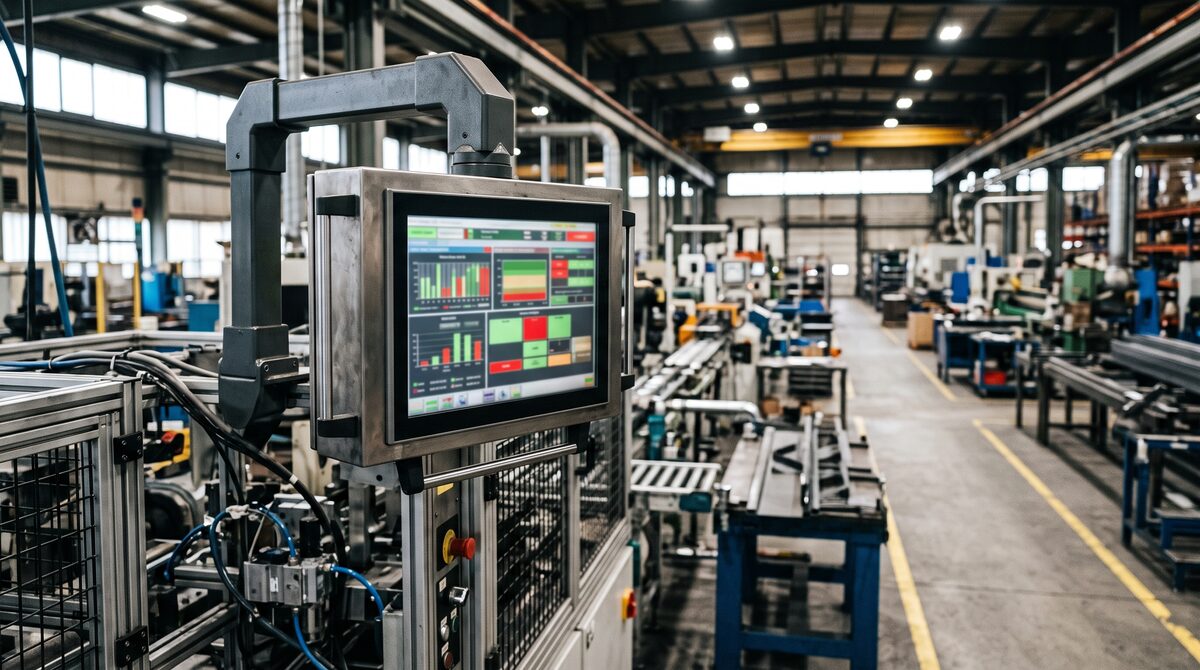
Modern automation generates and consumes enormous quantities of data. If a manufacturer cannot reliably measure cycle time, downtime causes, defect rates, and material flow today — manually — they will struggle to use the data a robot generates tomorrow. Industry surveys show that nearly half of manufacturers still rely on partly or wholly manual processes for inventory management and equipment monitoring. That manual baseline limits what automation can do once installed.
Readiness assessments evaluate not just whether systems exist, but whether the operation actually uses them. A factory full of sensors collecting data nobody reviews is no more ready for automation than a factory with no sensors at all.
Workforce Capability and the Skills Gap
Automation does not eliminate the need for skilled workers — it changes the skills required. According to the National Institute of Standards and Technology’s MEP National Network, robotics and automation help manufacturers improve efficiency and address labor gaps, but realizing those benefits requires operators, technicians, and supervisors who can run, troubleshoot, and improve automated systems. Roughly four in ten manufacturers report insufficient internal expertise to design, deploy, or maintain automation — a gap that no equipment purchase can close on its own.
Manufacturers serious about automation invest in workforce development before equipment arrives. Programs in industrial automation, robotics technician training, and continuous improvement methodology build the internal capability that determines whether day-one operation becomes day-365 productivity. The fundamentals of robot selection and ROI are discussed further in Before You Buy a Robot: How to Ensure It Improves Productivity, which complements the workforce focus addressed here.
Infrastructure and Management Commitment
The physical and organizational pre-conditions matter too. Electrical capacity, network reliability, floor layout, safety guarding, and environmental controls all affect what equipment can be installed and how it performs. A surprising number of automation projects stall because the facility cannot physically support the installation as scoped.
Management commitment is equally critical and often equally overlooked. Automation projects that survive their first crisis — and they all have a first crisis — are the ones where leadership has communicated a clear vision, allocated genuine engineering and training time, and is willing to absorb short-term productivity hits during the learning curve. Projects championed by enthusiasm alone rarely survive contact with operating reality.
Scoring Readiness Before Spending Capital
A structured readiness assessment turns these abstract concepts into specific, scorable criteria. It identifies which processes are ready now, which need foundational work first, and which should probably not be automated at all. This kind of disciplined evaluation is exactly what separates manufacturers who join the 37 percent achieving significant automation adoption from the majority still stuck in pilot purgatory.
MANTEC: Your Partner in Manufacturing Excellence
MANTEC helps South Central Pennsylvania manufacturers assess automation readiness before capital is committed. Our independent advisors evaluate your operation against proven criteria so you know exactly where you stand — and exactly what needs to happen before automation pays off.
Our Services Include:
- Smart Manufacturing Services — Automation readiness assessments, feasibility reviews, and implementation roadmaps
- Robotics in Manufacturing Consulting — Independent guidance on robotics selection, integration, and workforce preparation
Ready to Find Out Where You Actually Stand? Contact MANTEC to schedule an automation readiness review and build the foundation your next capital investment will need.
Works Cited
“New Technology Adoption and Industry Operations Analysis for Smart Manufacturing.” National Institute of Standards and Technology, U.S. Department of Commerce, www.nist.gov/programs-projects/new-technology-adoption-and-industry-operations-analysis-smart-manufacturing. Accessed 25 May 2026.
“Advanced Manufacturing Technology and Industry 4.0 Services.” National Institute of Standards and Technology, Manufacturing Extension Partnership, U.S. Department of Commerce, www.nist.gov/mep/advanced-manufacturing-technology-and-industry-40-services. Accessed 25 May 2026.
Related Articles
Related Posts