A shop buys a machine-monitoring package. The business case is sound, the vendor demo goes…
MANTEC: Strengthening South Central Pennsylvania Manufacturing
The numbers tell an uncomfortable story heading into summer. U.S. manufacturing labor productivity rose 3.2 percent in the first quarter of 2026, a respectable quarterly bounce — but step back and the longer trend is far less encouraging. According to the U.S. Bureau of Labor Statistics, output per hour in the manufacturing sector has grown at an annualized rate of only about half a percent across the current business cycle that began in late 2019. After more than six years, factory productivity is, for practical purposes, flat. The easy gains have been absorbed, and the structural ones remain stubbornly out of reach.
That stall sets a trap for the months ahead. Summer is when improvement programs quietly lose their grip. Vacations thin out teams, skeleton crews keep the line running rather than rethinking it, and the goals leaders set with conviction in January start to feel like someone else’s idea by July. Continuous improvement initiatives don’t usually die in a dramatic meeting; they fade because no one has the bandwidth to push them. The result is a mid-year plateau that compounds the productivity problem the data already describes.
The good news is that mid-year is also the single best moment to intervene. The first half of the year has generated real performance data — what worked, what slipped, where the bottlenecks actually are rather than where everyone assumed they were. July offers a rare combination of slower demand cycles, fresh information, and enough runway to bank measurable results before the fourth-quarter crunch. The manufacturers who treat summer as a reset rather than a holding pattern tend to enter autumn ahead of the ones who waited.
The Capacity Sitting Idle on Your Floor
Stalled productivity is not the same as maxed-out capacity. Far from it. The factory floor in mid-2026 has slack in it, and that slack is precisely where summer wins live.
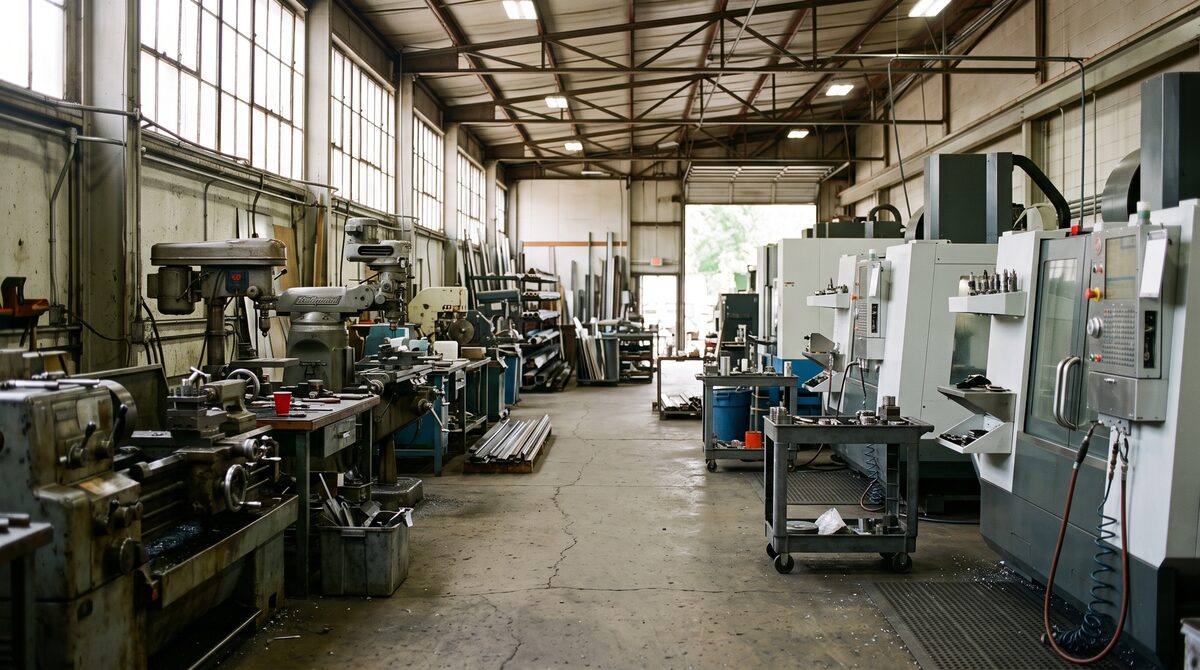
Federal data makes the point plainly. Manufacturing capacity utilization sat at 75.7 percent in May 2026, roughly two and a half percentage points below its long-run average, while overall factory output was essentially flat for the month, according to the Federal Reserve’s Industrial Production and Capacity Utilization report. In other words, the average U.S. plant is running with a meaningful cushion of unused capability — equipment, floor space, and labor hours that are available but not fully converted into output. When utilization is below its norm, the constraint on output is rarely raw capacity. It is friction: changeovers that take too long, materials that arrive late to the cell, rework loops, unplanned downtime, and information that doesn’t move as fast as the product does.
That distinction matters enormously for how a manufacturer should spend July. Chasing more capacity — overtime, new equipment, another hire in a tight labor market — is expensive and slow. Reclaiming idle capacity that already exists is fast and largely free. A two-hour reduction in changeover time, a workstation reorganized so an operator stops walking fifteen feet for every part, a maintenance check that prevents a Friday breakdown: none of these require capital, and all of them turn flat output into more throughput from the same footprint.
The manufacturers who understand this stop framing summer as downtime to be endured and start framing it as the lowest-risk window of the year to experiment on the process itself.
Make the Win Small, Fast, and Measurable
The instinct when productivity stalls is to launch something big — a sweeping transformation, a new system, a year-long roadmap. Summer is the wrong season for that, and a stalled cycle is the wrong moment to bet on it. Ambitious initiatives need sustained attention that thin summer crews can’t supply, and they deliver results too far out to rebuild the momentum that’s slipping right now.
The higher-impact play is the opposite: a tightly scoped improvement aimed at one process, completed in days, with a number attached to it. A focused team examines a single problem area, identifies the waste, and implements the change before the week is out. Because the scope is narrow, a short-handed summer crew can actually finish it. Because the result is measured, it produces evidence — and evidence is what reignites a stalled improvement culture. Nothing restores belief in continuous improvement faster than a team seeing scrap drop or a line speed up because of a change they made themselves.
This is the logic behind rapid, short-cycle improvement work, and it’s the subject of a companion piece worth reading alongside this one: Short Kaizen Events: How Manufacturers Turn a Slow July Into Quick Productivity Wins. Stacking several of these quick wins through July and August does something a single grand initiative cannot — it rebuilds the habit of improving, one visible result at a time, so the organization carries momentum rather than fatigue into the fall.
A Practical Mid-Year Improvement Checklist
Manufacturers looking to convert a slow summer into real gains can start with a handful of high-leverage targets that rarely require new spending:
- Audit changeover and setup times. Long, variable setups are among the most common hidden drains on a plant running below capacity. Timing a few changeovers and standardizing the sequence often recovers hours of productive time each week.
- Walk the material flow. Trace how a part actually moves from receiving to shipping. Excess motion, waiting, and handoffs accumulate quietly. A short value-stream walk frequently exposes a bottleneck nobody had named.
- Fix the recurring stoppage. Every floor has the breakdown everyone shrugs about. Mid-year, with slightly more slack, is the time to address the root cause rather than the symptom — turning a recurring fire into a closed problem.
- Tighten the daily huddle. Productivity stalls when problems surface slowly. A disciplined five-minute shift huddle that surfaces yesterday’s misses and today’s risks keeps small issues from becoming weekly ones.
- Capture the data while it’s fresh. Half a year of performance information is your most valuable improvement asset. Reviewing it now — before memories fade and conditions change — points the next round of effort at the problems that actually cost the most.
Leadership is the multiplier on all of this. A quick win designed by a supervisor who knows the floor will beat a sophisticated plan imposed from above, which is why mid-year is also the moment to invest in the people who run the line. That theme is explored in depth in Mid-Year Reset: Why July Is the Right Time to Strengthen Manufacturing Floor Leadership, a companion article in this series.
Turning a Plateau Into a Trajectory
The productivity data describes a sector that has run hard against the limits of its current processes. Six years of flat output per hour is not a labor problem or a demand problem — it is a process problem, and process problems respond to attention, not just investment. The plants that pull ahead over the next decade will be the ones that treat improvement as a continuous discipline rather than an annual resolution.
Summer is where that discipline is either reinforced or quietly abandoned. The manufacturer who lets July drift accepts the plateau. The one who uses it to bank a few measurable wins — reclaiming idle capacity, proving the value of focused effort, and re-energizing the team — converts a flat line into an upward one. The difference between the two is rarely talent or budget. It is the decision to act in the season when most competitors won’t.
MANTEC: Your Partner in Manufacturing Excellence
MANTEC helps small and mid-sized manufacturers across South Central Pennsylvania turn improvement intentions into measurable results. Our advisers work alongside your team to identify the highest-impact opportunities and implement changes that stick.
Our Services Include:
- Continuous Improvement Support — Hands-on guidance to eliminate waste, reduce variation, and reclaim idle capacity
- Professional Development & Training — In-person and virtual courses that build durable improvement skills across your workforce
Ready to make this summer count? Contact MANTEC to discuss how a focused mid-year improvement effort can move your productivity off its plateau.
Works Cited
“Productivity and Costs.” U.S. Bureau of Labor Statistics, U.S. Department of Labor, www.bls.gov/productivity/. Accessed 24 June 2026.
“Industrial Production and Capacity Utilization – G.17.” Board of Governors of the Federal Reserve System, www.federalreserve.gov/releases/g17/current/default.htm. Accessed 24 June 2026.
Related Articles
Related Posts