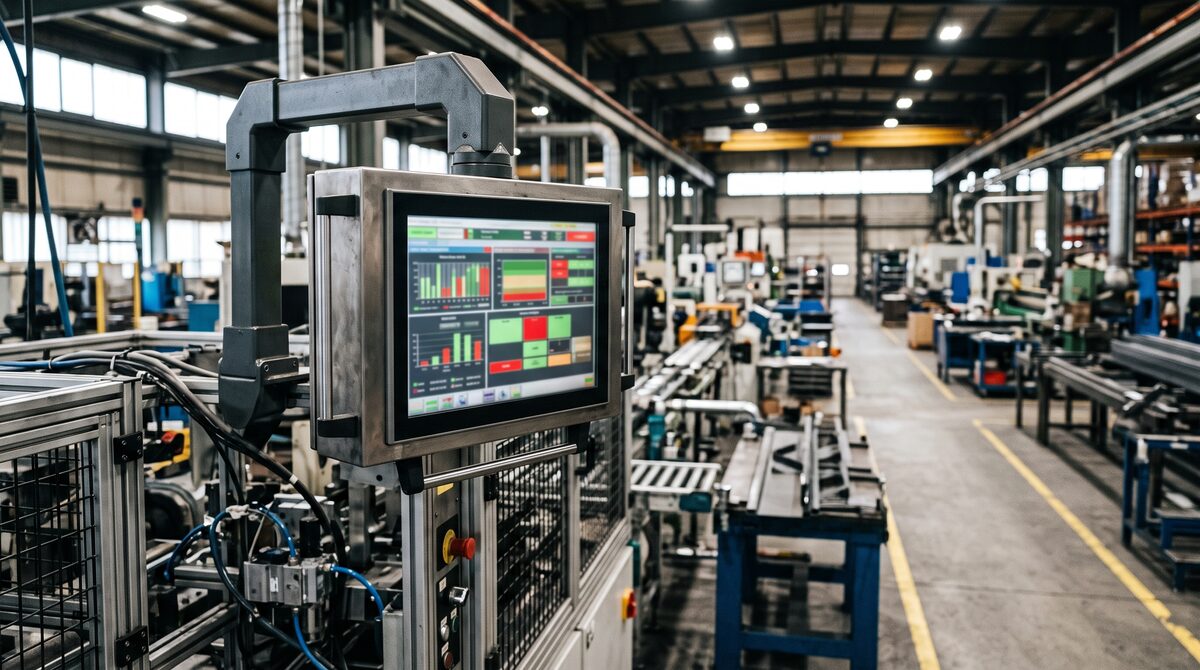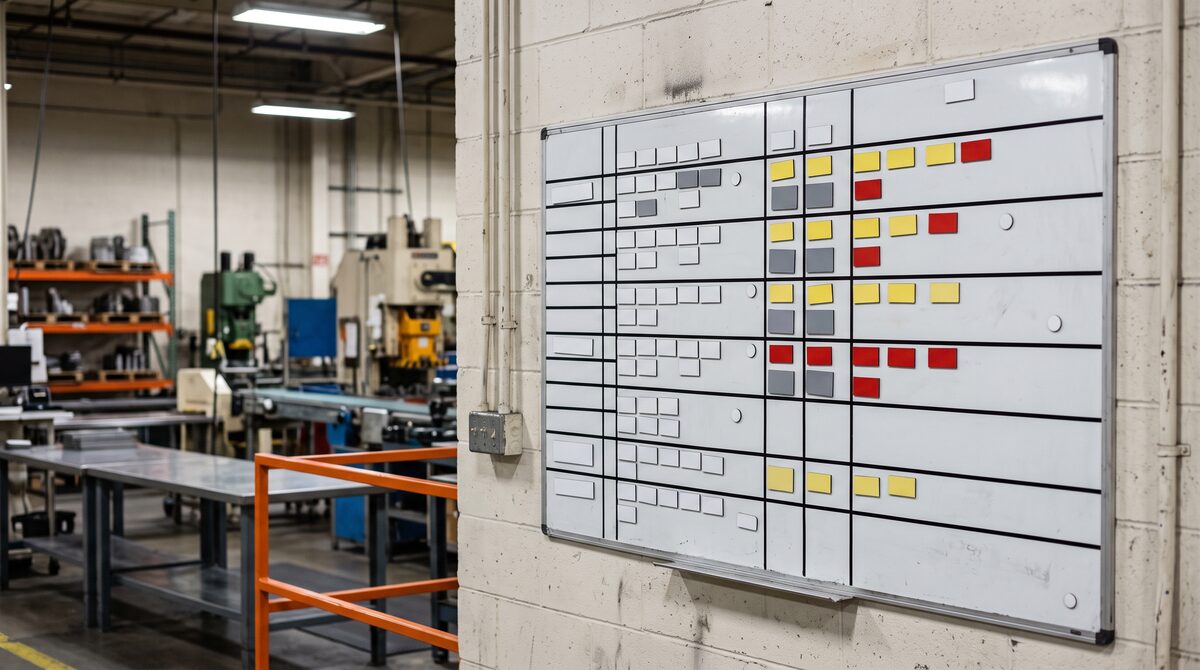
A shop buys a machine-monitoring package. The business case is sound, the vendor demo goes…
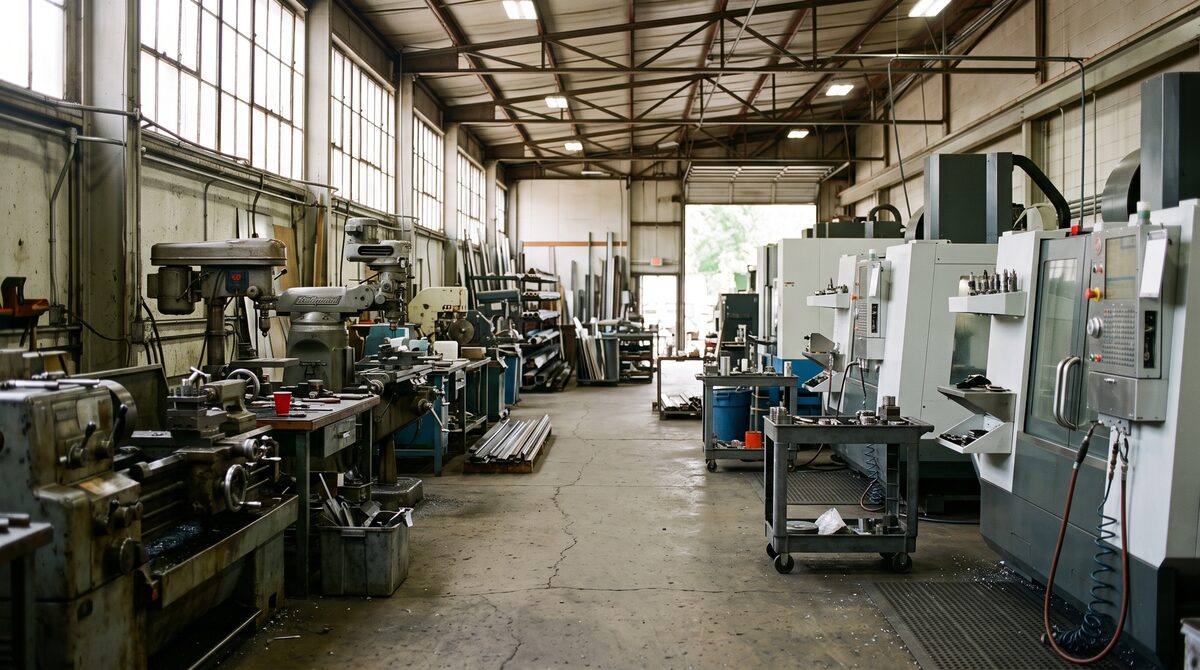
Most small manufacturers have a technology wish list. Far fewer have a roadmap. The difference is sequence. A wish list says what the shop wants. A roadmap says what has to come first, what it depends on, and what has to be true before the next step makes sense.
That distinction decides whether a purchase compounds or strands. Buy analytics before the data exists and you have bought a dashboard full of guesses. Buy a cobot before the changeover is standardized and you have automated a moving target.
The capital climate this fall
Regional conditions favor deliberate planning. The Federal Reserve Bank of Philadelphia surveys manufacturers across its Third District, which covers Delaware, southern New Jersey, and eastern and central Pennsylvania. In the July 2026 report, the index for current general activity reached its highest reading since November 2021, and new orders hit a similar five-year high (Federal Reserve Bank of Philadelphia).
Capital plans are steadier than the headline suggests. The index for future capital expenditures stayed elevated at 30.1 after falling 11 points. Underneath that number, 34.4 percent of firms expect capital spending to rise over the next six months, 59.7 percent expect no change, and 4.3 percent expect a decline.
Read that as most shops holding position. Firms also reported continued cost pressure, with median expected 2026 increases of 3 to 4 percent for wages and 4 to 5 percent for energy. Rising input costs and flat capital plans are the conditions where sequencing matters most, because there is little room to absorb a project that stalls.
Step 1 — Start your manufacturing technology roadmap at the constraint
A roadmap begins with one question: what limits output or margin right now? Not what is old. Not what a competitor bought.
If the answer is unplanned downtime on two machines, that is the constraint. If it is quote turnaround, or scrap on one part family, or the fact that only one person knows the setup for the largest customer, name it plainly. Constraints are specific. Anything general is a symptom.
Shops that struggle here usually have not mapped the process as it actually runs, which makes the constraint hard to see from the office.
Step 2 — Rank by dependency
Once the constraint is named, the sequence follows from what depends on what.
Data foundations come before analytics. There is no useful OEE reporting without reliable, consistent capture of run time and reason codes. Standardized work comes before automation, because a robot repeats whatever it is given, including a bad method. Network and access control come before connected equipment. Basic scheduling discipline comes before advanced planning software.
Draw this as a simple chain on one page. If step three requires something from step one, step one is not optional and it is not later.
Step 3 — Stage by absorption capacity, not by budget
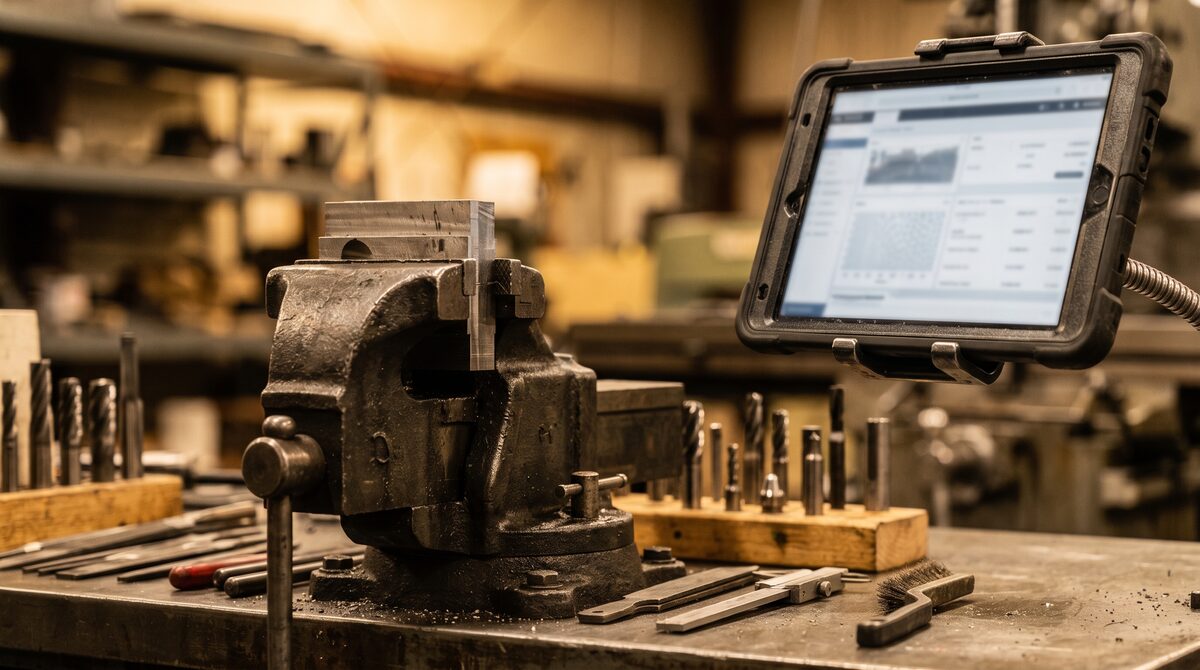
The limiting resource in a 40 to 150-person shop is rarely money. It is attention. A plant manager can carry roughly one significant change at a time alongside daily production.
Build the roadmap in 90-day blocks, one meaningful change per block, with recovery time between blocks. A shop that schedules four rollouts in a year has scheduled four half-finished rollouts.
Federal research on industrial technology adoption documented short-term performance losses preceding longer-term gains, with the deepest effects among older, established plants. Staging with recovery periods is how a shop absorbs that dip without stacking three of them on top of each other. The reasons projects stall in that window are covered in more depth in why technology projects fail.
Step 4 — Attach triggers, not just dates
Dates on a roadmap age badly. Triggers hold up.
Write conditions rather than calendar entries. Move on the maintenance system when downtime logging runs at 90 percent completeness for two consecutive months. Look at automation on the second cell when changeover time on the first cell holds under the target for a quarter. Revisit the ERP module when order volume crosses the threshold where the current workaround breaks.
Triggers make the roadmap a decision tool. Dates make it a document that gets quietly ignored by March.
Step 5 — Build the funding path alongside the technical path
Funding programs have their own timelines, and the manufacturers who benefit are the ones who applied before they needed the money.
Pennsylvania’s Department of Environmental Protection funds no-cost Level II energy audits for industrial facilities, using U.S. Department of Energy State Energy Program funds. The program is aimed at manufacturers with fewer than 500 employees and covers up to 200 facilities on a first-come, first-served basis. A Level II audit produces a cost-benefit analysis of recommended measures along with implementation steps (Pennsylvania DEP).
Eligibility for this and similar programs is set by the administering agency and terms change, so eligible manufacturers may qualify but nothing is automatic. MANTEC helps manufacturers identify and apply for available programs, which is worth starting early rather than at the point of purchase.
Step 6 — Pressure-test the sequence against peers
The fastest way to find a flaw in a roadmap is to show it to someone who has already run that rollout. Manufacturers in the same region, at similar scale, have usually made the mistake you are about to make.
MANTEC’s Continuous Improvement Peer Group meets monthly and exists for exactly this kind of exchange. A consultant can review a plan. A peer who has lived through the implementation will tell you which vendor promise did not survive contact with second shift.
Three ways manufacturing technology roadmaps go wrong
Everything is phase one. A roadmap where nothing is deferred is a wish list with headers.
The roadmap belongs to one person. When the champion leaves, an unshared plan leaves with them. Ownership groups, plant leadership, and the CI lead all need a copy and a say.
It never gets revised. A roadmap built in September 2026 should be reviewed against reality in early 2027. Constraints move. A plan that has not changed in eighteen months is probably not being used.
A fourth pattern is worth naming because it is harder to spot. Some roadmaps are built around a technology the owner finds interesting rather than around the constraint. The tell is that the justification keeps shifting. Asked why the shop needs the system, the answer is efficiency one week and quality the next, then customer expectations, then competitiveness. A step tied to a real constraint has one answer and it stays the same.
Reviewing your manufacturing technology roadmap
Set a quarterly review with three questions. Did the trigger conditions get met? Has the constraint moved? What did the last block teach us about how long things actually take here?
That last question is where the roadmap gets accurate. Most shops discover their real absorption rate is about half what they assumed. Planning around the honest number produces a slower roadmap that finishes.
Frequently Asked Questions About Manufacturing Technology Roadmaps
01What is a manufacturing technology roadmap?
A sequenced plan showing which investments come first, what each one depends on, and what has to be true before the next step makes sense. A wish list names what a shop wants. A roadmap names the order, the dependencies, and the conditions for moving.
02What should come first on a manufacturing technology roadmap?
Dependencies set the order. Reliable data capture comes before analytics, standardized work comes before automation, and network and access control come before connected equipment. Drawing the chain on a single page shows which steps are foundations rather than optional additions for later.
03How far ahead should a manufacturing technology roadmap plan?
Eighteen to thirty-six months, built in 90-day blocks with one meaningful change per block and recovery time between them. Attention rather than budget is usually the limiting resource in a shop of 40 to 150 people, so staging matters more than ambition.
04How often should a technology roadmap be reviewed?
Quarterly. Ask whether the trigger conditions were met, whether the constraint has moved, and what the last block taught you about how long work actually takes at your plant. A roadmap that has not changed in eighteen months is probably not being used.
05Are there funding programs for Pennsylvania manufacturers adopting technology?
Pennsylvania’s Department of Environmental Protection funds no-cost Level II energy audits for industrial facilities with fewer than 500 employees, on a first-come basis. Several MANTEC courses are listed as WEDnetPA eligible. Terms are set by the administering agencies and change, so confirm before budgeting.
MANTEC: Manufacturing Support Across South Central Pennsylvania
MANTEC is a nonprofit Industrial Resource Center in York, Pennsylvania and a member of the MEP National Network. We work with small and mid-sized manufacturers across Adams, Cumberland, Dauphin, Franklin, Fulton, Lancaster, Lebanon, Perry, and York counties.
How We Help:
- Manufacturing Technology — Advising on where technology fits, what to select, and how to sequence integration
- Continuous Improvement — Advising and training on process, quality, and standard work
Working through something similar?
Talk to a MANTEC adviser about what your operation is running into.
Works Cited
- Federal Reserve Bank of Philadelphia. “Manufacturing Business Outlook Survey — July 2026 Report.” Federal Reserve Bank of Philadelphia, 16 July 2026, www.philadelphiafed.org/surveys-and-data/regional-economic-analysis/mbos-2026-07.
- Pennsylvania, Department of Environmental Protection. “Request an Industrial Energy Efficiency Assessment.” Commonwealth of Pennsylvania, www.pa.gov/services/dep/energy/request-an-energy-efficiency-assessment. Accessed 18 Aug. 2026.
- This article is general information for manufacturers and is not legal, compliance, or financial advice. Program requirements and eligibility change — confirm current terms with the administering agency.
Related Posts