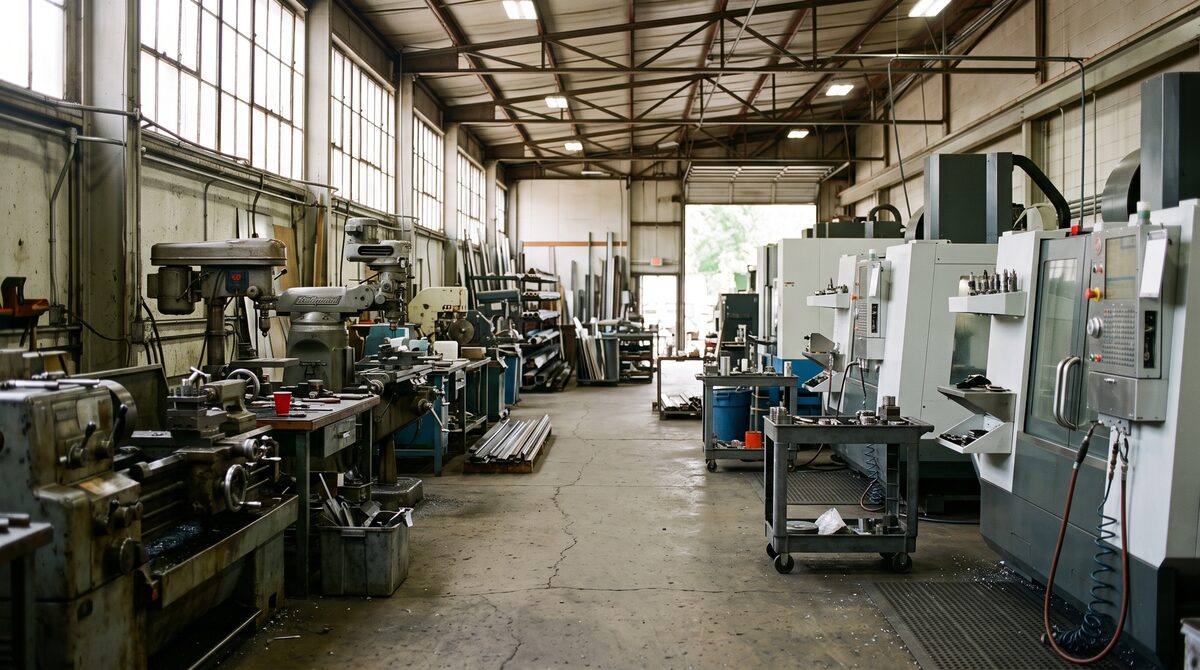
Most small manufacturers have a technology wish list. Far fewer have a roadmap. The difference…
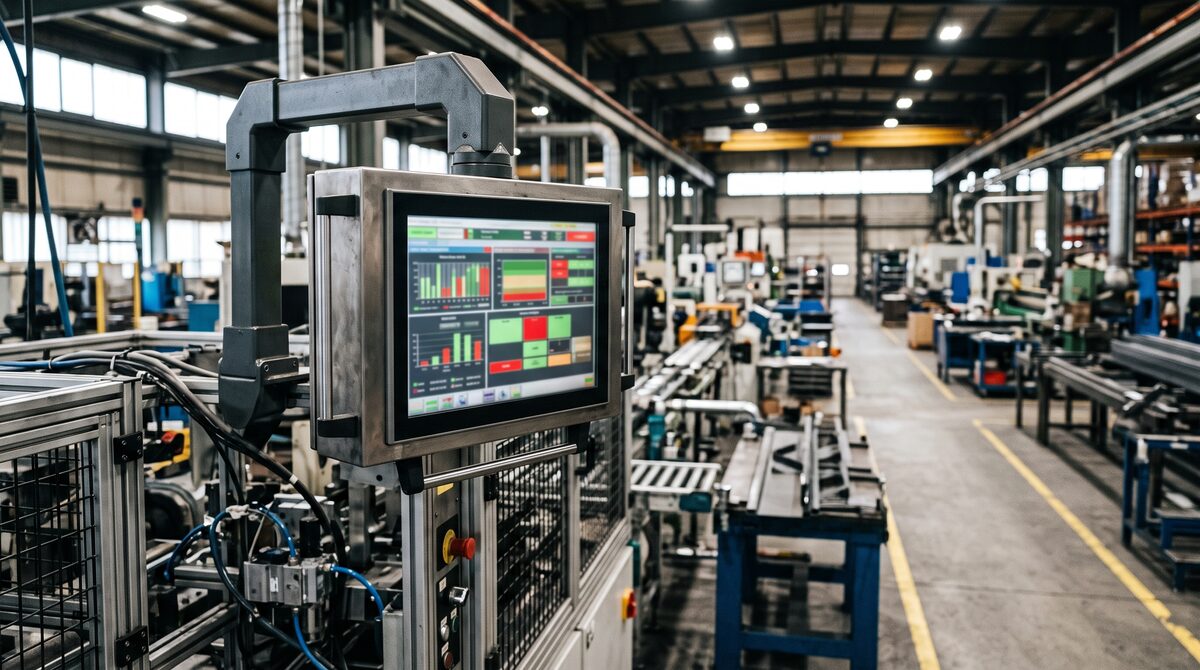
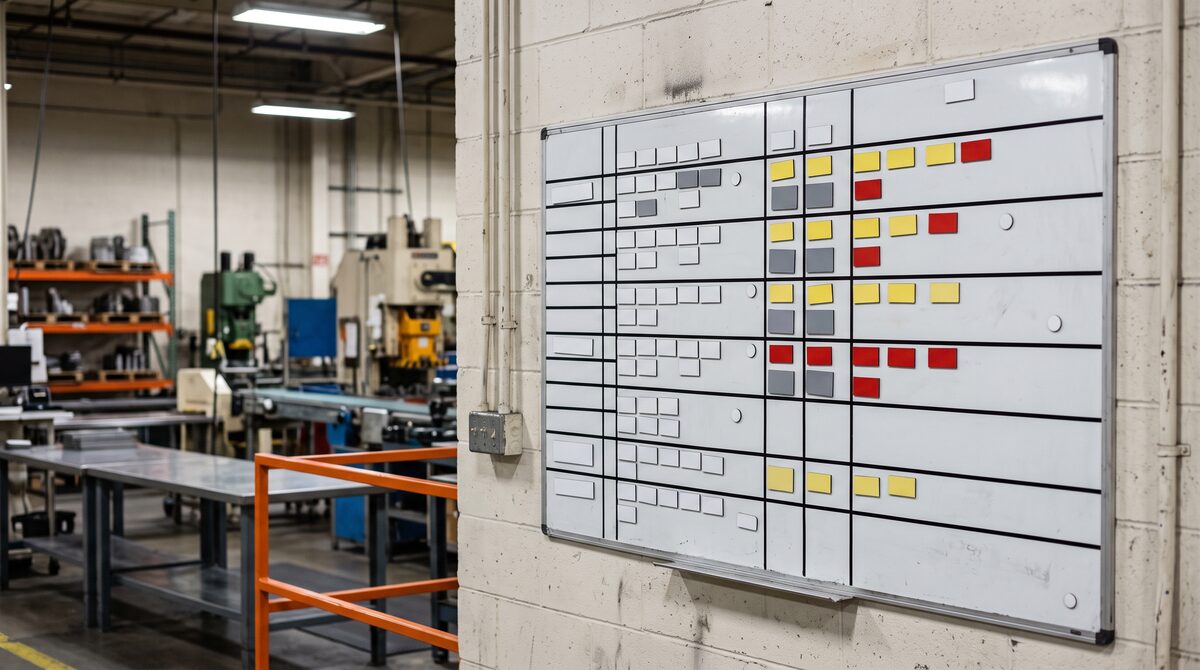
A shop buys a machine-monitoring package. The business case is sound, the vendor demo goes well, and two production lines get sensors. Six months on, the tablets sit in a drawer, the dashboard is a browser tab nobody opens, and the schedule still lives on the whiteboard by the shipping door. No one decided to quit. The project just stopped mattering.
That pattern is common enough that federal researchers have now measured it. Understanding what the data shows is the first step toward a different outcome this fall.
Why manufacturing technology projects dip before they pay off
Census Bureau economists studied industrial artificial intelligence across American manufacturing using detailed plant-level data for 2017 and 2021. Their finding runs against most vendor literature. Returns follow a J-curve shape, which means short-term performance losses come before longer-term gains. Plants adopting industrial AI showed rising work-in-progress inventory, higher spending on industrial robots, and reduced headcount, along with weaker productivity and profitability in the near term (U.S. Census Bureau).
Two details matter for a 60-person shop in Adams or Lebanon County.
First, the losses were not evenly spread. They concentrated among older, established businesses. Growth-oriented strategy and spillovers from elsewhere in the same firm softened the effect.
Second, timing mattered. Businesses that had adopted earlier showed stronger growth over the following years, conditional on staying in business. The dip is a passage, not a verdict.
Most shop-floor projects get killed during that dip. The quarter closes, the numbers look worse, and the improvement stalls right before the curve turns.
The single biggest cause is quietly dropping what already worked
The most useful finding in that research is easy to miss. Among older establishments, the abandonment of structured production-management practices accounted for roughly one-third of the short-run losses.
Read that again in shop-floor terms.
The plant already had something working. A daily production meeting. A tracking board in the aisle. A changeover sheet the second-shift lead actually filled out. The new system was pitched as replacing all of it. The old practice stopped on the day the software went live. The new practice never fully started, because the reports were not trusted yet and the training happened once in March.
What is left is a gap where the management system used to be. The technology did not cause the loss. The vacuum did.
Shops that hold their ground through implementation tend to keep running the old method in parallel until the new one earns the handoff. That is unglamorous, and it works. Fundamentals like documented standard work become more valuable during a technology rollout, not less. MANTEC runs Introduction to Standard Work at Knowledge Park in York, with the fall session listed for December 16, 2026.
Productivity gains were never automatic
There is a broader reality behind individual project failures. Labor productivity rose in 39 of the 80 covered four-digit manufacturing industries in 2025, which means it did not rise in the other 41. Looking at broader three-digit industry groups, productivity declined in 14 of 20. Unit labor costs climbed in all 20 groups, at an average of 4.5 percent (U.S. Bureau of Labor Statistics).
Stretch the window and the picture stays mixed. From 2019 to 2025, productivity decreased in 54 of the 80 covered manufacturing industries. That period covers the heaviest wave of shop-floor digitization in a generation.
None of this argues against technology. It argues against assuming the technology does the work by itself.
Four patterns behind failed manufacturing technology projects

Advisers who walk plants across South Central Pennsylvania see the same few failure modes in manufacturing technology projects, and none of them are about the equipment.
The system measures something nobody owns. A dashboard reports downtime by cause code. No supervisor is accountable for acting on a cause code. The data accumulates and nothing happens, so people stop looking.
Data entry lands on the person with the least available time. Setup operators are asked to log reason codes during changeover, which is exactly when they cannot spare thirty seconds. Entry quality decays within weeks and the numbers become unusable.
Nobody defined finished. The project had a go-live date and no completion criteria. Without an agreed definition of a working state, there is no moment where the team can say the thing is done and running.
The pilot ran on the easy line. The new system was proven on the newest cell with the best operators and the cleanest routings, then rolled out to a line with three legacy machines and a tribal-knowledge setup. The rollout is where it broke.
Every one of these is a management design problem. Each can be caught before purchase, which is the point of a written implementation checklist rather than a vendor timeline.
The conversation nobody has before signing
There is a discussion that rarely happens in the room where the purchase gets approved, and its absence explains a lot of abandoned equipment.
Someone needs to tell the ownership group, in advance and in writing, that the numbers will likely get worse before they get better. Put a range on it. Name the quarter. Explain that inventory may build, that output may dip during the changeover to the new method, and that this is the documented shape of the curve rather than a sign of a bad decision.
Without that conversation, the first bad month becomes a referendum. The plant manager who championed the project spends the next quarter defending it, the pilot gets quietly narrowed to one line, and the rollout dies of caution.
With that conversation, the same bad month is a checkpoint. The question shifts from whether to continue toward whether the dip is tracking as expected and what the early signals say. That is a solvable question. The other one is not.
Shops that plan the dip out loud also tend to hold their nerve at the point where the curve turns.
What separates the manufacturing technology projects that stick
Shops that get value from new technology tend to share a short list of habits. They pick one problem that costs real money and can be described in a sentence. They name a single owner with authority to change the process, not just the software settings. They write down what a working state looks like before signing. They keep the existing management routine running in parallel. They plan for a rough first quarter and tell the ownership group to expect it.
They also sequence. A shop that has not mapped its current process cannot tell whether new software fits the flow or fights it, which is why sequencing decisions belong in a technology roadmap built before the first quote arrives.
The local picture
South Central Pennsylvania manufacturers are making these calls under real cost pressure. Wages, energy, and materials are all moving. A stalled technology project is not just a sunk cost. It burns credibility with the people on the floor, which makes the next attempt harder.
The counties MANTEC serves — Adams, Cumberland, Dauphin, Franklin, Fulton, Lancaster, Lebanon, Perry, and York — hold a dense base of small and mid-sized manufacturers facing this exact question. The failure modes are shared. So are the fixes.
Frequently Asked Questions About Manufacturing Technology Projects
01Why do manufacturing technology projects fail so often?
Most fail for management reasons rather than technical ones. Census Bureau research found that abandoning structured production-management practices accounted for roughly one-third of short-run losses among older plants. The shop switches off a routine that was working before its replacement has earned trust, and a gap opens.
02How long does the productivity dip last after new technology goes live?
Census research documents a J-curve, with short-term losses coming before longer-term gains, though it does not fix a single timeline for every plant. Plan for at least one rough quarter, tell the ownership group in advance, and track early signals rather than quarterly totals alone.
03Is the equipment usually the problem?
Rarely. The common failure modes are a system measuring something nobody owns, data entry assigned to the busiest person on the floor, no agreed definition of finished, and a pilot run on the easiest line. Each one is a decision that can be settled before purchase.
04What is the most common mistake small manufacturers make?
Switching off the existing management routine on go-live day. Keeping the board, the daily meeting, or the paper sheet running in parallel until the new system produces numbers people trust costs a few hours a week and protects the project through its weakest stretch.
05Should a small shop wait until it is larger before adopting new technology?
Not necessarily. Census researchers found that earlier adopters showed stronger growth over time, conditional on staying in business. Size matters less than sequencing, clear ownership, and a shop’s capacity to absorb one significant change at a time without stacking three of them together.
MANTEC: Manufacturing Support Across South Central Pennsylvania
MANTEC is a nonprofit Industrial Resource Center in York, Pennsylvania and a member of the MEP National Network. We work with small and mid-sized manufacturers across Adams, Cumberland, Dauphin, Franklin, Fulton, Lancaster, Lebanon, Perry, and York counties.
How We Help:
- Manufacturing Technology — Advising on where technology fits, what to select, and how to connect it to existing operations
- AI for Manufacturing Leaders — A four-hour session on governance, guardrails, and a structured path from experimentation to controlled use
Working through something similar?
Talk to a MANTEC adviser about what your operation is running into.
Works Cited
- United States, Bureau of Labor Statistics. “Productivity and Costs by Industry: Manufacturing and Mining Industries — 2025.” U.S. Department of Labor, 24 June 2026, www.bls.gov/news.release/prin.nr0.htm.
- United States, Census Bureau, Center for Economic Studies. “The Rise of Industrial AI in America: Microfoundations of the Productivity J-curve(s).” Working Paper CES-25-27, Apr. 2025, lehd.ces.census.gov/applications/creat/paper-profile/1332.
- This article is general information for manufacturers and is not legal, compliance, or financial advice. Program requirements and eligibility change — confirm current terms with the administering agency.
Related Posts