A shop buys a machine-monitoring package. The business case is sound, the vendor demo goes…

MANTEC: Strengthening South Central Pennsylvania Manufacturing
Every manufacturer in South Central Pennsylvania has a version of the same story. A veteran operator retires after twenty-five years, taking with them the precise feed rate that prevents chatter on the lathe, the workaround for the press that’s been quirky since 2018, and the judgment call that separates acceptable from scrap on a borderline part. Within weeks, quality dips. Supervisors spend their shifts firefighting. New hires take twice as long to reach competency as anyone had planned. None of that is anyone’s fault. All of it was preventable.
The gap between what experienced workers know and what manufacturers have formally documented and consistently taught is one of the most underestimated productivity drains on shop floors today. It does not show up as a line item on the income statement. It shows up as extended ramp-up time, inconsistent output, preventable rework, and supervisor hours consumed by teaching instead of leading. Solving it is not a technology problem or a hiring problem. It is a training problem — and it has a structured solution.
The Real Cost of Slow Onboarding
Most manufacturers think about the cost of a new hire in terms of recruiting and wages. The larger cost — the one that rarely gets measured — is the productivity loss during the ramp-up period. According to the National Institute of Standards and Technology’s Manufacturing Extension Partnership, new employees in manufacturing take an average of five to nine months to reach full productivity. For a skilled machinist, assembler, or line operator earning forty to sixty thousand dollars annually, that ramp-up window represents a substantial drag on output that the company carries on every new hire, every year.
The calculation compounds quickly. Multiply a six-month productivity lag across four or five new hires per year, add the senior operator who is slowing down their own production while trying to informally show someone the ropes, and factor in the rework and scrap that accumulate while a new employee learns by trial and error — and the cost of a poor training system can easily exceed the annual salary of the person being trained. Most manufacturers do not track this number. The ones who do are usually the ones motivated to fix it.
The problem is not that manufacturers do not care about training. It is that training has historically been delivered informally — the experienced worker shows the new hire, the new hire watches, and eventually something sticks. That approach worked when employee tenure was measured in decades and knowledge transfers happened slowly across overlapping generations. It does not work when turnover is elevated, experienced workers are retiring faster than they can be replaced, and every week of delayed productivity costs the operation real money.
The Tribal Knowledge Crisis Playing Out Right Now
Research across the manufacturing sector consistently finds that approximately 70 percent of critical operational knowledge is tribal — meaning it exists only in the minds of experienced workers, never written down and never formally taught. That number, already alarming, is becoming an acute operational risk as the manufacturing workforce ages. Roughly one in four U.S. manufacturing workers is currently 55 or older. In South Central Pennsylvania’s nine-county corridor, the same demographic reality plays out across fabricators, food processors, precision manufacturers, and distribution operations alike. The retirements are not coming. They are happening now.
What walks out with each retiring employee is not just a body that needs replacing. It is the specific, plant-floor knowledge that took years to accumulate: which machine runs tight in humid weather, how to read the sound of a good weld versus a cold one, what the customer actually means when they say “tight tolerance” on that particular part family. That knowledge is the difference between a new hire who reaches full competency in three months and one who takes nine. When it is not captured and transferred deliberately, it is lost — and the shop pays to rediscover it, one trial-and-error mistake at a time.
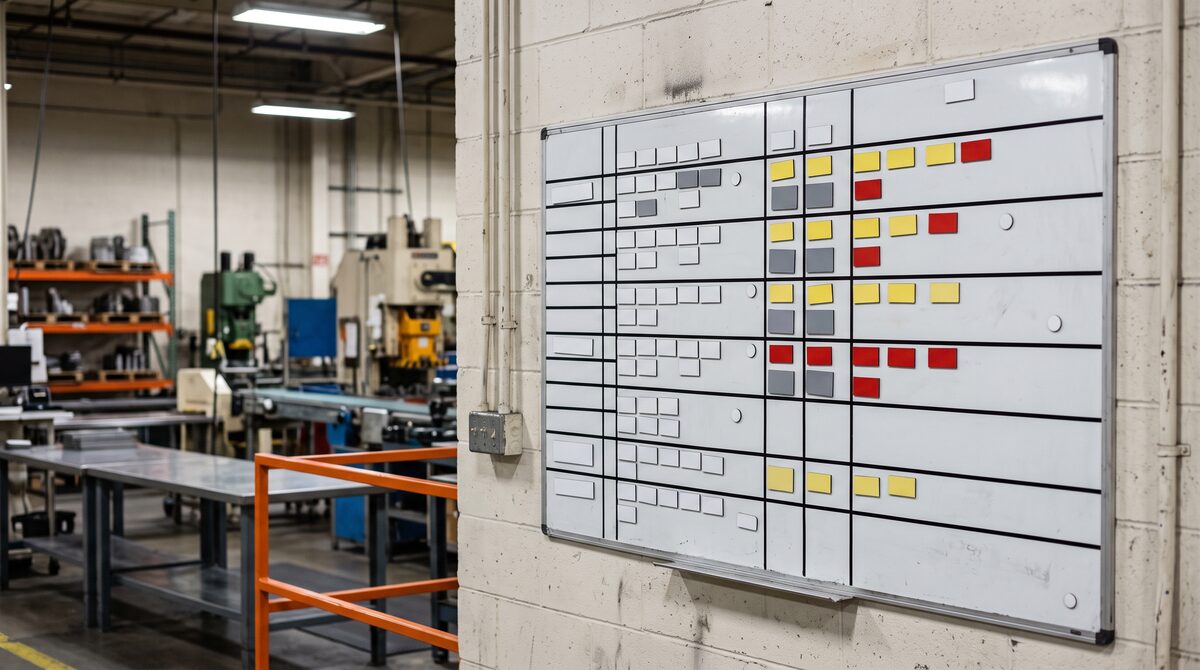
The urgency of this problem is driving manufacturers across the region toward structured knowledge transfer systems, formalized training documentation, and train-the-trainer programs that embed instruction capability inside the organization rather than leaving it to chance. As detailed in The Training Matrix: How South Central Pennsylvania Manufacturers Are Building Skills They Can Actually See, one of the most practical first steps is simply knowing what skills your workforce currently has versus what the job requires — a gap that most manufacturers cannot answer with confidence today.
From Tribal Knowledge to Consistent Output: What Structured Training Actually Does
The shift from informal to structured training is not about bureaucracy. It is about repeatability. When a manufacturing operation captures its best practices in documented, teachable form — with clear steps, identified key points, and the reasons behind each step — several things happen simultaneously. Training time shortens because new employees receive organized instruction rather than whatever the trainer happens to remember to mention that day. Quality consistency improves because the standard for doing the job correctly is explicit and verifiable rather than assumed. Supervisors spend less time correcting mistakes and more time developing their teams. And the organization becomes less fragile: when any individual leaves, the knowledge they held is not lost because it was never solely theirs to begin with.
This is the core principle behind Training Within Industry’s Job Instruction methodology — the approach that the NIST MEP National Network identifies as cutting the time to develop new hires into productive workers in half, with immediate reductions in scrap and rework for companies that implement it. Job Instruction is not a training program in the conventional sense. It is a methodology for teaching supervisors and team leads how to break down jobs into teachable components and deliver instruction in a way that employees actually retain — combining demonstration with explanation and building in follow-up that confirms competency rather than assuming it.
The key insight behind Job Instruction is that most people who are excellent at doing a job are not automatically effective at teaching it. They have internalized the key points to the point where they no longer consciously notice them. Ask an experienced machinist to explain how to set up a part and they will tell you the broad steps while unconsciously skipping the specific adjustments they make from feel and experience — the exact knowledge the new hire needs most. Job Instruction training gives those experienced workers the framework to surface and communicate what they know. It turns individual expertise into transferable instruction.
The Supervisor Role: Where Training Investments Pay Off or Fail
The supervisor is the critical variable in any training system. A shop floor training culture is built or undermined at the supervisor level, one interaction at a time. When supervisors have the skills to deliver structured instruction — to break down a job, demonstrate it correctly, confirm understanding, and follow up deliberately — ramp-up times compress, mistakes fall, and new hires feel supported enough to stay. When supervisors are improvising — or, worse, delegating training to whoever is available — the new hire’s experience varies wildly depending on who showed them what on which day.
This is why effective training investment does not just target new employees. It targets the people doing the teaching. Train-the-Trainer approaches develop internal instruction capability so that the quality of a new hire’s first week does not depend on which shift they started on or how busy their designated buddy was that morning. They create a system that is consistent, measurable, and improvable over time — which is exactly what a production floor requires from every other process it runs.
For manufacturers ready to build that capability from the foundation up, Job Instruction Training: The Proven Framework for Getting New Operators Productive Faster provides the operational detail on how Job Instruction and Train-the-Trainer programs work together to create the kind of systematic training infrastructure that high-performing shops run as standard practice.
The Throughput Argument
The case for structured training ultimately reduces to throughput. Every week a new hire operates below full competency is a week of output that does not happen, a quality check that relies on supervision rather than skill, and a supervisor hour spent compensating for what training should have already installed. Multiply those weeks across the full hiring cycle, and the accumulated productivity loss is substantial — and entirely preventable. The manufacturers in South Central Pennsylvania who invest in building repeatable training systems are not just solving an HR problem. They are protecting their throughput, their quality, and their ability to take on new work without assuming that the next hire will figure it out on their own.
MANTEC: Your Partner in Manufacturing Excellence
MANTEC specializes in helping South Central Pennsylvania manufacturers build competitive advantage through workforce development and operational improvement. Our team understands the unique challenges facing regional manufacturers and delivers practical solutions that generate measurable business results.
Our Services Include:
- Workforce Engagement Consulting — Job Instruction, Train-the-Trainer, onboarding systems, and workforce engagement strategies tailored to your operation
- Introduction to Standard Work — Hands-on training that builds the documentation and instruction foundation new hires need to reach full productivity faster
Ready to Get Your People Up to Speed Faster? Contact MANTEC to discuss how Job Instruction and workforce training programs can reduce ramp-up time and turn your tribal knowledge into consistent, repeatable output.
Works Cited
“Manufacturing Workforce Development.” National Institute of Standards and Technology Manufacturing Extension Partnership, U.S. Department of Commerce, www.nist.gov/mep/manufacturing-workforce-development. Accessed 26 Mar. 2026.
“Training Within Industry (TWI).” National Institute of Standards and Technology Manufacturing Extension Partnership, U.S. Department of Commerce, www.nist.gov/mep/training-within-industry-twi. Accessed 26 Mar. 2026.
Related Articles
- The Training Matrix: How South Central Pennsylvania Manufacturers Are Building Skills They Can Actually See
- Job Instruction Training: The Proven Framework for Getting New Operators Productive Faster
Related Posts