A shop buys a machine-monitoring package. The business case is sound, the vendor demo goes…
At the National Safety Council Congress in September, OSHA released its preliminary fiscal year 2025 list of most-cited standards. Manufacturing leaders saw a familiar pattern. Lockout tagout sat at number four with 2,177 citations. Powered industrial trucks placed eighth with 1,826. Machine guarding rounded out the top ten with 1,239. Furthermore, Regional Administrator Eric Harbin tied many lockout tagout citations to two industries: plastic products manufacturers and machine shops. That profile fits a substantial slice of South Central Pennsylvania’s manufacturing base.
These citations are not just paperwork problems. Each one maps to a hazard category. When uncontrolled, those hazards take equipment offline and pull trained workers off the line. Lockout tagout failures and weak job hazard analyses are the two most common upstream causes. As a result, manufacturers who address both end up with fewer citations and more uptime in the same quarter.
Why Lockout Tagout Sits Near the Top of OSHA’s Citation List
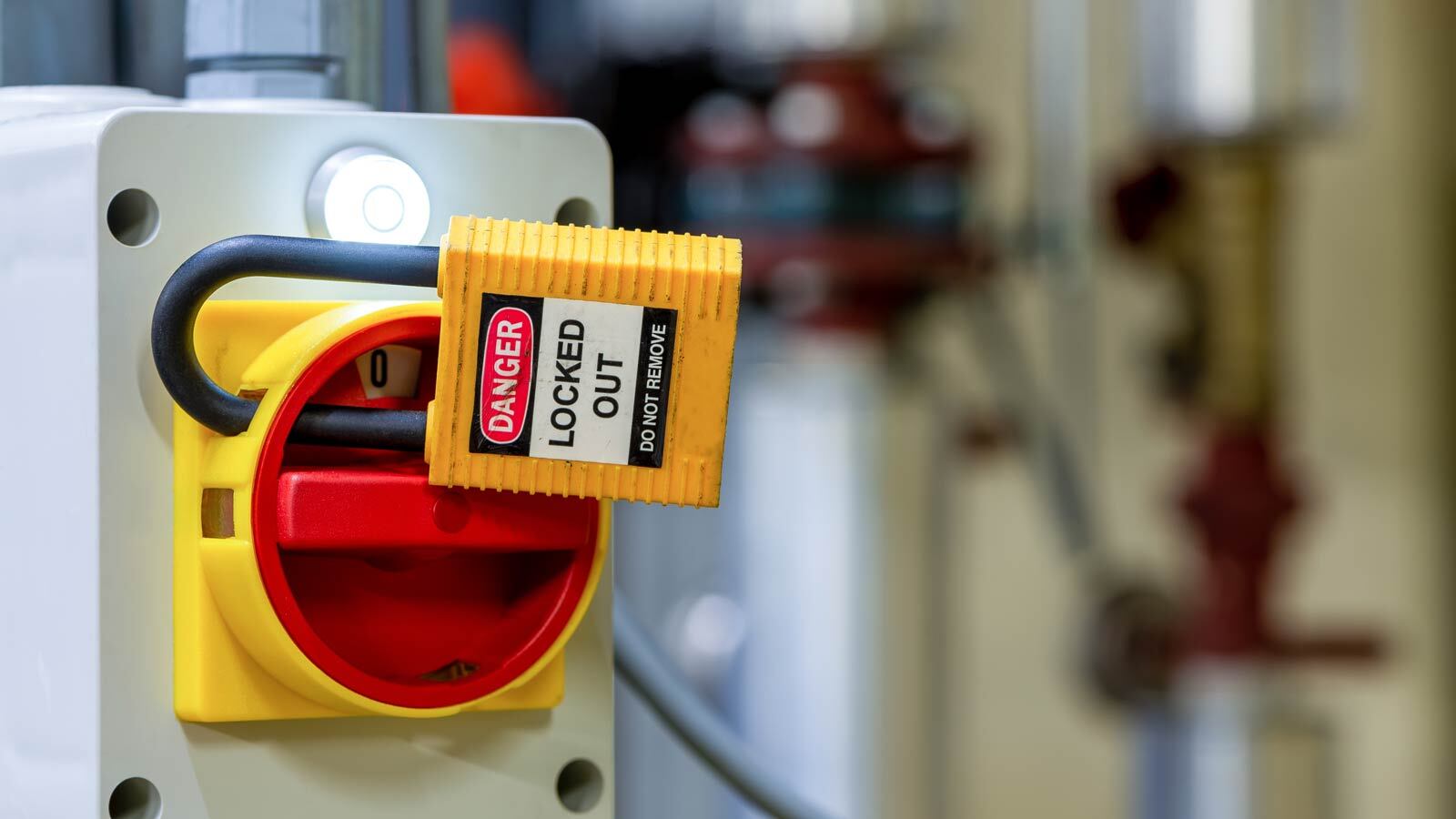
OSHA’s Control of Hazardous Energy standard 29 CFR 1910.147 sets minimum requirements for protecting workers during machine servicing and maintenance. The lockout tagout standard covers electrical, mechanical, hydraulic, pneumatic, chemical, and thermal energy sources. In addition, it requires written machine-specific procedures, periodic inspections of those procedures, and documented training for every authorized employee.
Common lockout tagout citations fall into a small number of categories. Missing or inadequate written procedures for specific equipment account for many violations. Failures to train authorized employees on those procedures show up frequently as well. As a result, both gaps create the same shop-floor scenario. A maintenance worker improvises an energy-control sequence and misjudges stored energy. The result is either an injury or a fault that idles the line for hours. Both outcomes erase weeks of operating discipline in a few seconds.
How Lockout Tagout Failures Take Production Offline
Lockout tagout incidents disrupt production across two timelines. The immediate timeline is the obvious one. A worker injured during servicing triggers an OSHA recordable, an incident investigation, and equipment downtime. That downtime can stretch from hours to days. Therefore, a single serious lockout tagout incident can cost more in lost production than a year of proper energy-control procedures.
The longer timeline is less visible but equally costly. Plants without machine-specific lockout tagout procedures rely on tribal knowledge passed informally between maintenance staff. As shifts change and personnel turn over, that knowledge degrades. Maintenance work takes longer because crews have to rediscover the right energy-isolation steps for each piece of equipment. Furthermore, near-miss events accumulate without being captured. Informal lockout tagout practices make incident root-cause analysis difficult.
This dynamic mirrors the broader argument in How Better Safety Makes Production Faster and More Reliable. Specifically, lockout tagout compliance work and uptime work are two views of the same problem.
Where Job Hazard Analysis Connects to Lockout Tagout
OSHA’s Job Hazard Analysis Guide (Publication 3071) frames JHA as a structured method for identifying hazards before they cause injury. In practice, the technique focuses on the relationship between worker, task, tools, and environment. To use it, teams break each job into steps. Then they identify hazards at each step and engineer controls, including lockout tagout procedures, or training to address them. Notably, the discipline produces a written record that survives turnover and trains new hires faster than informal walkthroughs.
JHA is most powerful when it serves as connective tissue between data sources that usually live in silos. For example, near-miss reports flag tasks that need analysis. Likewise, OSHA citations point to standards that need procedure work. In addition, workers’ compensation claims reveal where existing JHAs missed something. Together, those inputs produce a living document. That document drives training, equipment specifications, and the lockout tagout procedures that keep machines safe to service. As a result, JHA becomes the input that produces better lockout tagout procedures. Plants that run JHA and lockout tagout work on parallel tracks, however, miss most of that leverage.
Which Jobs Belong on the Lockout Tagout Priority List
OSHA recommends prioritizing JHAs for four kinds of jobs. First, the priority list includes jobs with a history of injuries or near misses. Second on the list are jobs where a single human error could cause severe harm. Third, any job that has changed recently belongs on the list. Finally, jobs complex enough to require written instructions belong on the priority list as well. In practice, manufacturing operations across South Central PA typically have dozens of tasks meeting at least one criterion. Specifically, machine setup, die changes, hopper cleaning, conveyor maintenance, hot work, and forklift operations all qualify. As a result, most of those tasks belong on the lockout tagout JHA priority list.
The hazards that surface in those analyses feed directly into structured reporting work. Specifically, we cover that approach in Near-Miss Reporting Quick Guide for South Central PA Manufacturers. Together, JHA and near-miss reporting close the loop between hazard identification and lockout tagout correction. Notably, that loop, run consistently for two or three quarters, materially shifts a plant’s recordable case rate.
Three Lockout Tagout Failure Modes to Fix
Three failure modes account for most of the lockout tagout citation and incident pattern OSHA documented in 2025:
- Outdated procedures. Equipment changes and processes evolve, but written lockout tagout and JHA documents stay frozen in time. As a result, a 2018 procedure for a 2024 retrofit is not compliance. Instead, it is a setup for an incident. Therefore, annual review cycles, with sign-off from operations and maintenance leads, prevent drift.
- Generic instead of specific. A boilerplate energy-control procedure listing “all hydraulic equipment” does not meet OSHA’s requirement for machine-specific lockout tagout steps. Similarly, the same logic applies to JHAs. For example, a generic “operating the press brake” document misses the controls workers actually need.
- Training without practice. Classroom-only training degrades within weeks. In contrast, plants with strong lockout tagout performance pair initial training with periodic hands-on verification. Specifically, the verification happens on actual equipment, ideally during scheduled maintenance windows where errors carry low consequences.
Building a Lockout Tagout Program That Holds
Pennsylvania workforce-training programs cover a portion of eligible safety training costs for qualifying manufacturers. As a result, OSHA-aligned lockout tagout certification is economically accessible even for smaller operations. The MEP National Network, delivered regionally, provides safety culture assessments, hazard reduction consulting, and structured training programs. These programs translate citation-list problems into shop-floor solutions. Manufacturers in plants with fewer than 250 workers see the biggest gains. They often lack the dedicated safety staff that larger operations rely on.
The work pays back fastest where it is most needed. For example, picture a machine shop with three documented near-misses on a single press. The team now has a clear roadmap for a JHA. That JHA reveals an inadequate guard and a missing energy-control step. The fix takes a week. Furthermore, it prevents the lockout tagout incident that would have cost the plant a week of production.
MANTEC: Your Partner in Manufacturing Excellence
MANTEC helps South Central Pennsylvania manufacturers move from citation risk to operational excellence through structured safety programs. Our team brings deep regional industry knowledge to every engagement.
Our Services Include:
- OSHA 30 Certification Training — Comprehensive certification covering Lockout/Tagout, Machine Guarding, Job Hazard Analysis, and the rest of OSHA’s most-cited standards
- Health & Safety Advisory Services — Safety culture assessments, hazard reduction consulting, JHA development, and lockout tagout program design
Ready to Turn Compliance Into Competitive Advantage? Contact MANTEC to discuss how structured safety programs can strengthen your operations.
Works Cited
“Control of Hazardous Energy (Lockout/Tagout) – Overview.” Occupational Safety and Health Administration, U.S. Department of Labor, www.osha.gov/control-hazardous-energy. Accessed 29 Apr. 2026.
“Job Hazard Analysis.” OSHA Publication 3071, U.S. Department of Labor, Occupational Safety and Health Administration, www.osha.gov/sites/default/files/publications/OSHA3071.pdf. Accessed 29 Apr. 2026.
Related Articles
Related Posts