A shop buys a machine-monitoring package. The business case is sound, the vendor demo goes…

MANTEC: Strengthening South Central Pennsylvania Manufacturing
There is a standard complaint from supervisors on manufacturing floors across Adams, Cumberland, Dauphin, Franklin, and York counties that sounds something like this: “I showed them how to do it. I don’t understand why they’re still making mistakes.” The frustration is real. The assumption behind it is wrong. In most cases, the new hire is not failing to retain instructions. The instructions were never delivered in a form that the human brain reliably retains. The gap is not in the employee. It is in the instruction.
This is the fundamental insight behind Job Instruction training — and it is why manufacturers who implement it systematically consistently cut new-hire ramp-up times in half while also driving down scrap, rework, and safety incidents caused by incomplete or inconsistent training. The methodology is not new. It emerged from the Training Within Industry program developed during World War II, when the United States needed to rapidly train millions of inexperienced workers to perform precision manufacturing work at scale. It worked then. It works now. And the manufacturing labor shortage bearing down on South Central Pennsylvania in 2026 presents almost exactly the conditions that made it necessary in the first place.
Why Conventional “Showing” Does Not Work
The typical manufacturing training interaction follows a predictable pattern. An experienced worker shows a new hire how to do a task. The new hire watches, nods, and is told to try it. The experienced worker observes briefly, makes a correction or two, and moves on — because they have their own production responsibilities and cannot spend the rest of the shift supervising. The new hire then works from memory, filling in the gaps with guesswork. What they remember is generally the sequence of steps they could observe. What they miss is the key points — the specific adjustments, the things to watch for, the reasons behind each step — that are the actual substance of the skill.
This is not a character flaw in new hires or experienced workers. It reflects how instruction and memory actually function. Research on learning retention consistently finds that passive observation produces poor retention compared to active engagement. When training does not include clear identification of key points, explanation of why each key point matters, opportunity for the learner to demonstrate the task while narrating what they are doing, and structured follow-up that checks for drift as independence develops — the training has not really occurred. The employee has been shown a task. They have not been taught it.
The NIST MEP National Network’s TWI resources document that companies implementing Job Instruction have seen new-hire time-to-productivity cut in half, alongside immediate reductions in scrap and rework. Those outcomes are not the result of a more talented workforce. They result from a better-designed teaching process that gives experienced workers the tools to surface and communicate what they know — and gives new hires the instructional support to absorb it correctly the first time rather than through weeks of costly trial and error.
The Four-Step Job Instruction Method
Job Instruction is built around a four-step teaching sequence that applies to every task, every time, regardless of the complexity of the job being taught. Its power comes from its consistency: when every supervisor and team lead in the operation uses the same method, the quality of a new hire’s training stops depending on who happened to be available that morning.
The first step is preparation — setting up the learner by identifying what the task is, why it matters to the operation, and where it fits in the broader workflow. This step also establishes what the learner already knows and sets a comfortable, low-pressure tone that is essential for actual learning to occur. The second step is presentation — demonstrating the task while simultaneously explaining each step, its key point, and the reason that key point matters. That reason layer is where most informal training fails entirely. Experienced workers skip it because they have long since stopped consciously noticing why they do things. Job Instruction makes it explicit.
The third step is performance — having the learner perform the task while explaining back what they are doing and why. This is the step that reveals whether actual understanding has occurred. A learner who can perform the steps but cannot articulate the key points and reasons has memorized a motion, not acquired a skill. The fourth step is follow-up — structured check-ins that taper gradually as independence develops, with explicit responsibility assigned to the supervisor for monitoring performance and addressing any drift before it becomes a habit.
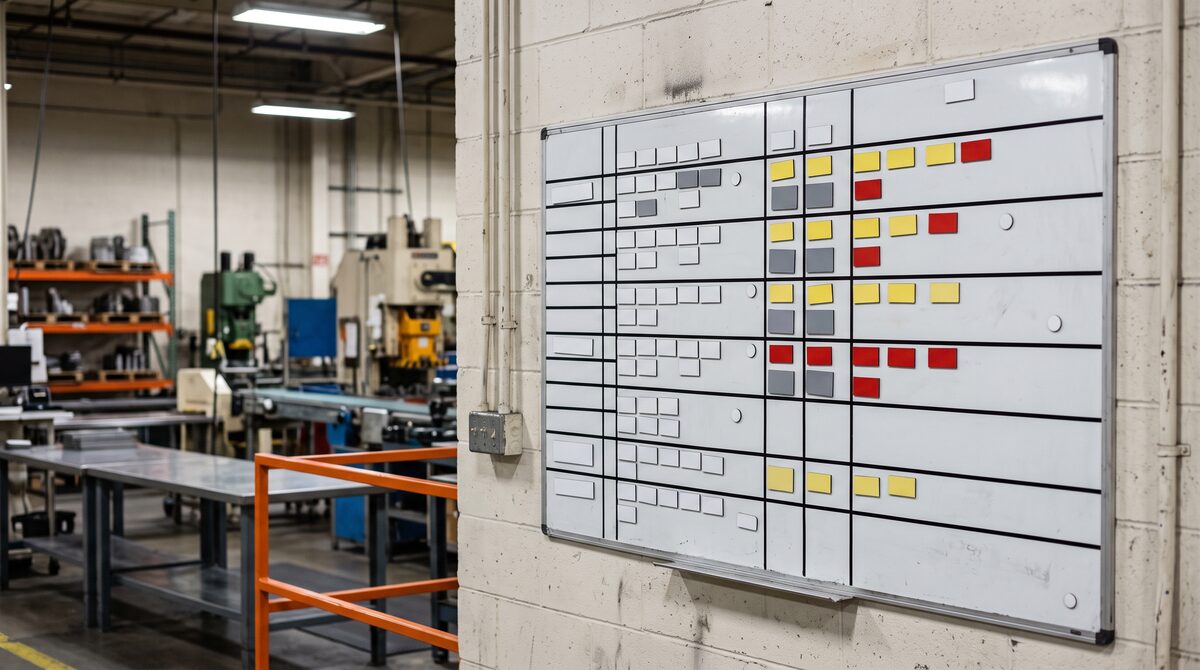
This four-step process, applied consistently, produces something that ad hoc training almost never achieves: documented, verified competency. The supervisor knows the employee was taught correctly because they observed the teaching and the performance. The employee knows the standard because they demonstrated it. And when the training matrix — described in The Training Matrix: How South Central Pennsylvania Manufacturers Are Building Skills They Can Actually See — is updated to reflect verified competency, the organization has a reliable record of its workforce capability rather than a set of assumptions.
Train-the-Trainer: Building Instruction Capability Into the Organization
Job Instruction as a one-time event adds value. Job Instruction as a permanent organizational capability transforms the training culture. That transformation happens through Train-the-Trainer programs — structured development that teaches a critical mass of supervisors, team leads, and experienced operators how to deliver Job Instruction reliably, assess learner competency accurately, and update job breakdowns when processes change.
The value of building this capability internally rather than depending on external training resources for every new hire cannot be overstated. External training is appropriate for introducing methodologies, developing specialized technical skills, and building leadership capability — and MANTEC’s regional programs serve those needs across the nine-county service area. But the day-to-day instruction that gets a new press operator, assembler, or CNC operator to full competency needs to happen on the floor, delivered by someone who knows the specific machine, the specific part family, and the specific quality standard in play. That person is an internal trainer — and Train-the-Trainer gives them the skills to do it right.
NIST’s analysis of how TWI supports employee engagement and retention also highlights a benefit that is easy to overlook in the focus on ramp-up speed: well-trained employees who understand why they are doing what they are doing are substantially more engaged and more likely to remain with the organization. Job Instruction’s requirement that trainers explain reasons — not just steps — creates a workforce that understands its own work rather than executing procedures by rote. That understanding drives both quality and retention.
The Connection to Standard Work
Job Instruction and Standard Work are inseparable. You cannot deliver consistent Job Instruction on a process that has no agreed standard — because different trainers will teach it differently, producing the same variability that the training investment is meant to eliminate. Standard Work defines the best-known method for doing a job, captures the sequence, key points, and reasons, and provides the documented foundation from which a Job Instruction breakdown is built. When Standard Work and Job Instruction are deployed together, each reinforces the other: Standard Work gives trainers a reliable source of truth, and Job Instruction ensures that source of truth is transmitted accurately to new employees.
This is precisely why MANTEC’s Introduction to Standard Work course and workforce engagement advising are natural partners in addressing the new-hire ramp-up problem. Standard Work provides the documented process. Job Instruction provides the teaching methodology. The training matrix provides the tracking system. And workforce engagement consulting provides the organizational change support that ensures these tools get used consistently rather than enthusiastically for two weeks and then left behind when production pressure returns.
The question South Central Pennsylvania manufacturers are asking — “how do we get new people up to speed faster?” — has a clear answer. It requires a documented process, a structured teaching method, supervisors trained to deliver that method consistently, and a tracking system that makes skills gaps visible before they become throughput problems. The manufacturers who build all four elements are the ones who stop asking the question, because new hires who are properly instructed reach full competency on schedule — and stay.
As explored in Why Training Drives Productivity: Turning Tribal Knowledge Into Consistent Output, the urgency driving this investment is not going away. The demographic and workforce reality facing the region means that the cost of informal, inconsistent training is only going to rise. The structured alternative is available, proven, and fully supported through MANTEC’s training programs and advising services.
MANTEC: Your Partner in Manufacturing Excellence
MANTEC specializes in helping South Central Pennsylvania manufacturers build competitive advantage through workforce development and operational improvement. Our team understands the unique challenges facing regional manufacturers and delivers practical solutions that generate measurable business results.
Our Services Include:
- Workforce Engagement Consulting — Job Instruction, Train-the-Trainer, onboarding systems, and workforce engagement strategies tailored to your operation
- Introduction to Standard Work — Hands-on training that builds the documentation and instruction foundation new hires need to reach full productivity faster
Ready to Get Your People Up to Speed Faster? Contact MANTEC to discuss how Job Instruction and workforce training programs can reduce ramp-up time and turn your tribal knowledge into consistent, repeatable output.
Works Cited
“10 Ways TWI Supports Employee Engagement and Retention.” NIST Manufacturing Innovation Blog, National Institute of Standards and Technology, www.nist.gov/blogs/manufacturing-innovation-blog/10-ways-twi-supports-employee-engagement-and-retention. Accessed 26 Mar. 2026.
“Training Within Industry (TWI).” National Institute of Standards and Technology Manufacturing Extension Partnership, U.S. Department of Commerce, www.nist.gov/mep/training-within-industry-twi. Accessed 26 Mar. 2026.
Related Articles
- Why Training Drives Productivity: Turning Tribal Knowledge Into Consistent Output
- The Training Matrix: How South Central Pennsylvania Manufacturers Are Building Skills They Can Actually See
Related Posts