A manufacturing talent pipeline is not a job board with better traffic. It is a…
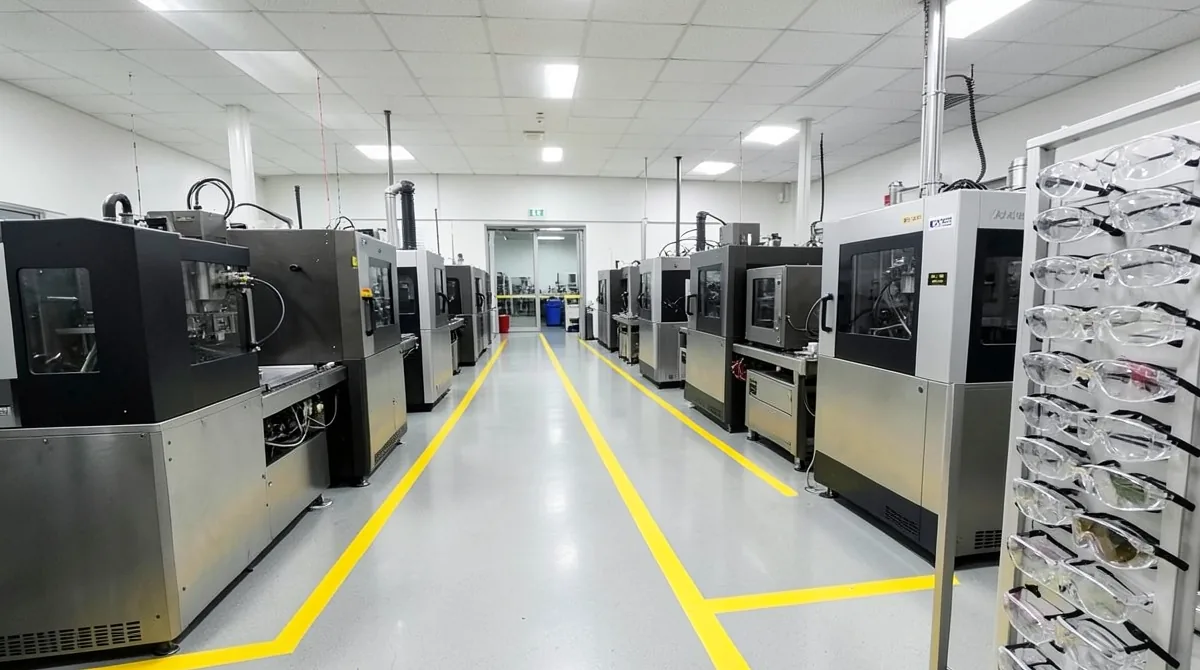
A manufacturing plant tour is one of the least expensive recruiting tools a small shop owns, and one of the easiest to waste. Thirty students walk a marked aisle and hear a fifteen-minute history of the company. They take a group photo and leave with no clearer picture of the work than when they arrived.
The difference between that and a tour that produces applicants comes down to preparation. What follows is a working toolkit, organized in the order the work happens.
Before your manufacturing plant tour: three decisions
Decide who you actually want in the building. Middle schoolers, high school juniors, a CTE class, guidance counselors, or adults considering a career change are five different tours. A group of counselors needs wage ranges and career ladders. Ninth graders need to touch something. Trying to serve both in one visit serves neither.
Cap the group at what your floor can handle. Eight to twelve visitors suits a typical small floor. Larger groups turn into a parade past machines nobody can hear over. Two small tours in one week are usually worth more than one large one.
Pick the date around production, not the calendar. Manufacturing Day is the first Friday in October. The Manufacturing Institute and the National Association of Manufacturers organize it nationally, and some states have expanded the observance to cover the full month (Manufacturing.gov). That flexibility is useful. Host on a day when a real job is running, rather than a slow Friday when half the floor is idle.
Manufacturing plant tour safety planning, done properly
Visitors change the risk picture on a floor, and the planning should be deliberate rather than improvised at the door.
Federal regulation requires employers to assess the workplace for hazards that make protective equipment necessary. It also requires selecting equipment that matches those hazards. The assessment is then verified through a written certification naming the workplace evaluated, who performed it, and when (29 CFR 1910.132). That standard governs employees rather than guests, and the hazard assessment your shop already maintains is the right starting map for a tour route.
Practical steps that follow from it:
- Walk the intended route beforehand and note every point where a visitor would need eye protection
- Keep spare safety glasses in a range of sizes, including over-the-glasses styles
- Set a clear rule on closed-toe footwear and tell the school in writing, well before the bus is booked
- Decide which operations visitors watch from a distance rather than beside
- Brief the operators on the route so nobody is surprised mid-setup
- Confirm your insurance carrier’s position on minors onsite before the first group arrives
Getting this settled once produces a reusable plan. Shops that treat it as a one-time build host far more comfortably the second year.
During the tour: what actually lands
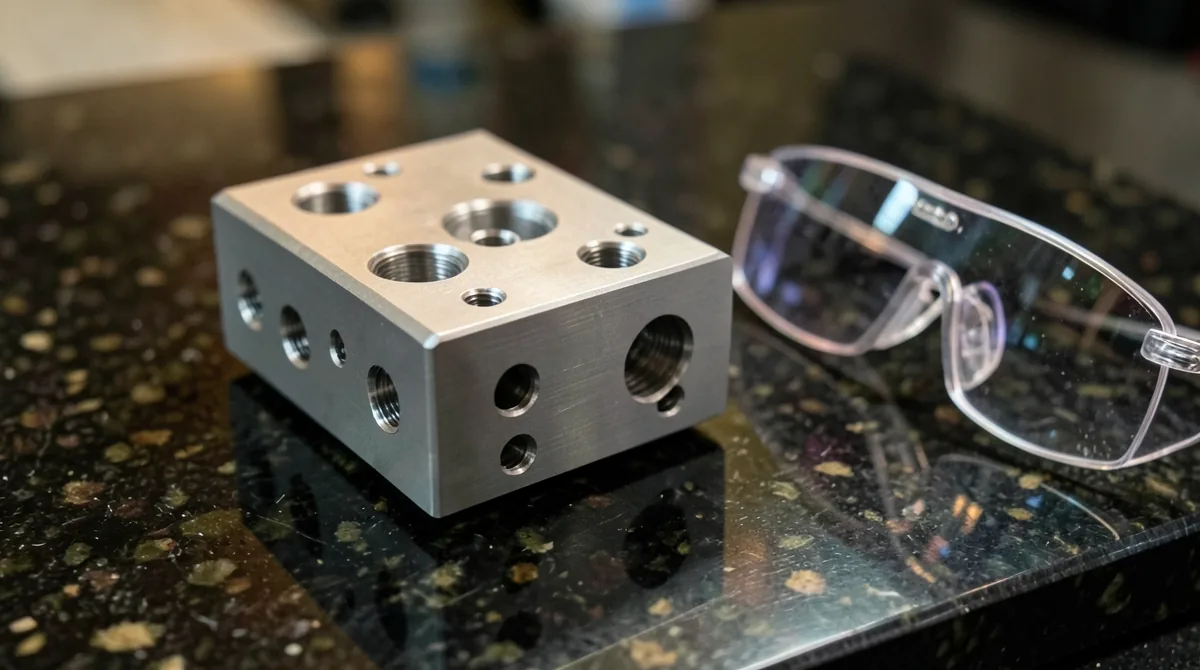
Lead with a finished part, not a slide. Hand it around. Let people see the thing before they see the process that makes it.
Show the tolerance. A caliper on a machined feature, a print with a tight callout, a gauge that rejects a part by two thousandths. Precision is the part of the work that does the most to correct an outdated picture of the industry, and it has to be seen rather than described.
Let a young employee do part of the talking. A 24-year-old operator describing their own job gives visitors something a plant manager describing the company cannot: a person who looks like a plausible version of themselves.
Name wages honestly. Starting range, what the range looks like after two years, what a certified journeyperson earns. Parents and counselors are the ones deciding whether to take manufacturing seriously as a path, and they cannot do that without numbers.
Let them make something. Even five minutes of hands-on work outperforms an hour of walking. A simple assembly, a measurement task, a part they keep.
Keep it under ninety minutes. Attention fades well before the tour does.
After: the step almost everyone skips
The tour is not the deliverable. Follow-up is.
Before the group arrives, decide who collects contact information and how. A sign-in sheet with an optional “interested in learning more” checkbox works fine. So does handing the teacher a one-page summary of your open roles and how to apply.
Send something to the school within a week. Photos the teacher can share, a thank-you, and a specific offer for what comes next — a co-op slot, a summer position, a return visit in spring.
Then calendar the actual follow-up. A student who toured in October and hears nothing until they graduate has effectively not toured at all. Manufacturers who treat one visit as the start of an ongoing relationship are the ones who see applicants. That relationship is the foundation of a longer-term talent pipeline.
The counselor and parent version
The adult tour is a different event and deserves its own planning, because the people who steer students toward or away from manufacturing are rarely the students themselves.
Run it shorter, around an hour, and schedule it after school or in the early evening so working parents can attend. Skip the hands-on activity. Adults want different information. What roles exist, what they pay, what training is required, whether the work is stable, and what a career looks like ten years in.
Bring an org chart, even a rough one. A counselor who can picture the path from entry-level operator to setup technician to quality lead can describe it to a student. One who saw machines running and heard nothing about progression cannot.
Have your HR lead present, and let a mid-career employee talk about how they got in. The story that lands hardest with parents is usually someone who started without a degree and now runs a cell.
Finish with something they can carry. A one-page sheet listing your open roles, starting ranges, and a named contact turns a pleasant visit into a referral source for the rest of the school year.
Getting schools to say yes
Cold outreach to a school district is the step where this work often stalls. Counselors are stretched, liability questions come up, and transportation has to be funded.
MANTEC’s Career Concierge exists for this. It coordinates tours, presentations, and classroom experiences between schools and manufacturers, which moves the scheduling and outreach work off the employer. What’s So Cool About Manufacturing takes a different route, bringing middle school students in to produce videos about what they see. Details on both sit on the New Talent Pipeline page.
Manufacturers who would rather start smaller can host a single counselor for coffee and a walk-through. That costs an hour and often opens the door to everything else. The broader case for doing this in October rests on schools being in session and receptive.
Frequently Asked Questions About Manufacturing Plant Tours
01How long should a manufacturing plant tour run?
Ninety minutes or less for student groups, including a short introduction, the floor walk, and a question period. Beyond that, attention tends to fade and the floor loses more production time. Two shorter tours on separate days often work better for visitors and operators alike.
02What safety precautions do we need for visitors on the floor?
Start from the hazard assessment your shop already maintains under federal PPE rules. Walk the route in advance and stock spare eye protection in multiple sizes. Set a written footwear requirement and mark viewing distances for higher-risk operations. Confirm your insurance carrier’s position on minors onsite.
03How many students should we host at once?
Eight to twelve suits a typical small manufacturing floor. Larger groups cannot hear, cannot see the detail that makes the work interesting, and create more congestion around equipment. Splitting a class into two visits usually produces a better experience than accommodating everyone at once.
04What do students respond to on a plant tour?
Finished parts they can hold, precision they can see measured, young employees describing their own work, and any task they get to do themselves. Company history and process flowcharts give a student audience the least to hold onto, so keep both short.
05Should we talk about pay during a tour?
Yes, with real ranges. Parents, counselors, and teachers are evaluating manufacturing against other paths and need concrete numbers to do that. Give a starting range, a two-year range, and what a fully skilled role pays, rather than a single figure without context.
MANTEC: Manufacturing Support Across South Central Pennsylvania
MANTEC is a nonprofit Industrial Resource Center in York, Pennsylvania and a member of the MEP National Network. We work with small and mid-sized manufacturers across Adams, Cumberland, Dauphin, Franklin, Fulton, Lancaster, Lebanon, Perry, and York counties.
How We Help:
- New Talent Pipeline — Career Concierge coordinates tours, presentations, and classroom experiences between schools and local manufacturers
- Young Manufacturers Network — A South Central PA resource group for young manufacturing professionals, with networking events, professional development, and plant tours through the year
Working through something similar?
Talk to a MANTEC adviser about what your operation is running into.
Works Cited
- United States, Department of Commerce. “Manufacturing Day.” Manufacturing.gov, 25 Sept. 2025, www.manufacturing.gov/manufacturing-day.
- United States, Office of the Federal Register. “29 CFR 1910.132 — General Requirements.” Electronic Code of Federal Regulations, current as of 17 Sept. 2026, www.ecfr.gov/current/title-29/subtitle-B/chapter-XVII/part-1910/subpart-I/section-1910.132.
- This article is general information for manufacturers and is not legal, compliance, or financial advice. Program requirements and eligibility change — confirm current terms with the administering agency.
Related Posts