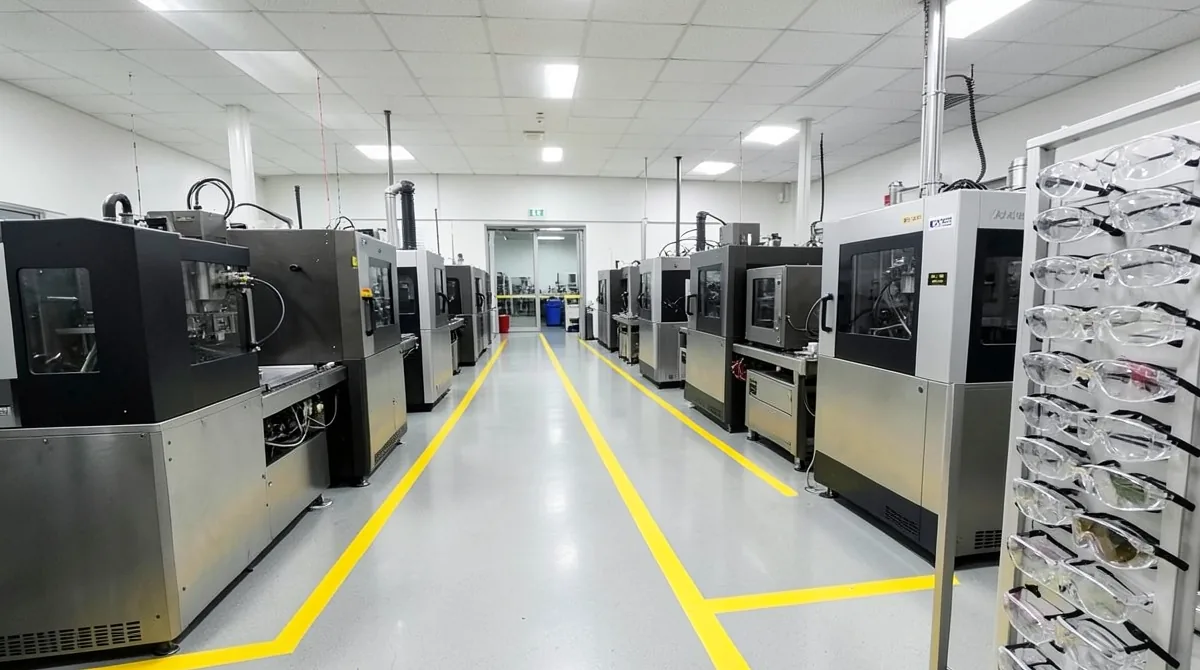
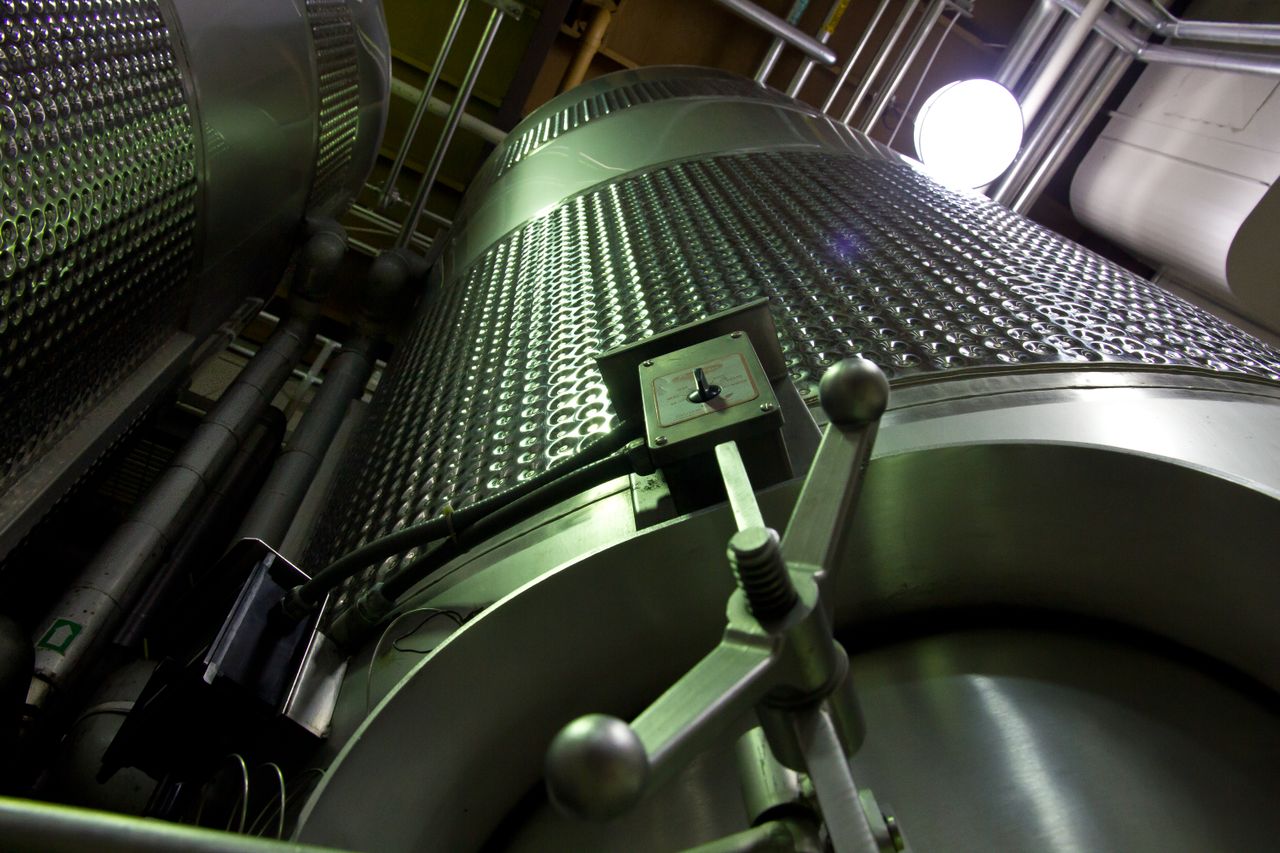
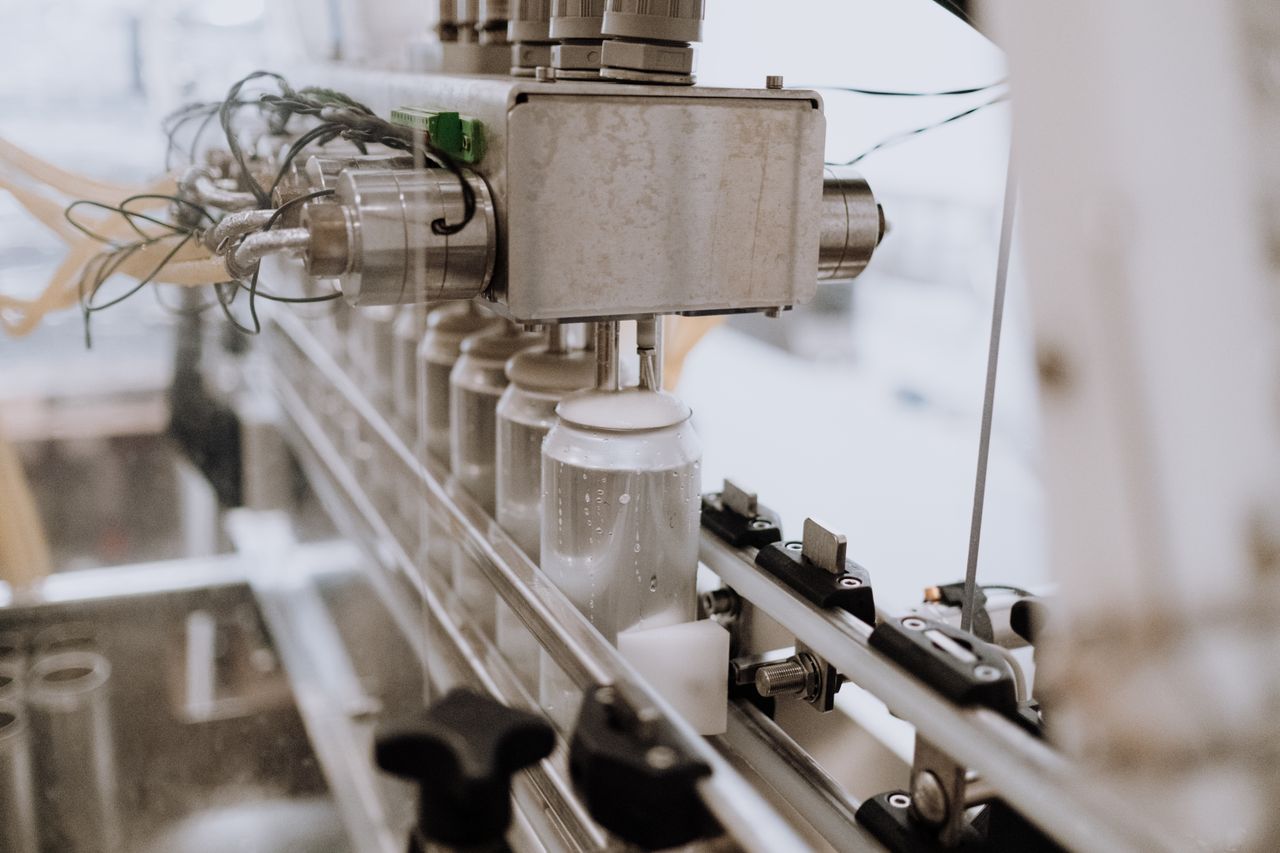
A manufacturing plant tour is one of the least expensive recruiting tools a small shop…
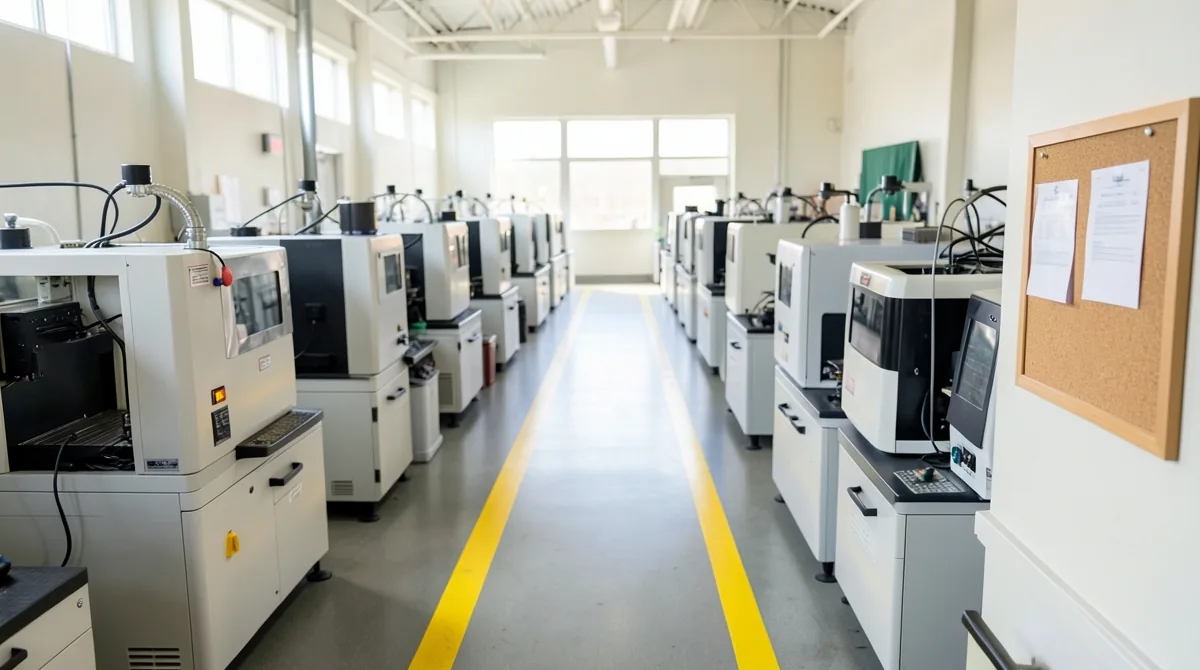
Six openings on the board. Two applications in three weeks, and one of those has never set foot in a plant. The posting is fine and the wage is competitive. What is missing sits upstream of the job board, in a pool of candidates that was never built.
October is the one month of the year when the whole industry works on that problem at the same time. Understanding what the hiring data actually shows makes the month far more useful than a photo opportunity.
The manufacturing talent gap is widening, and it is measurable
Federal survey data tells a clearer story than any anecdote. In July 2026, manufacturers reported 580,000 open positions, up from 428,000 in the same month a year earlier. Over that same stretch, hires went the other direction, slipping from 295,000 to 288,000 (U.S. Bureau of Labor Statistics).
Read those two numbers together. Demand for workers climbed by roughly a third. Actual hiring did not move at all.
Rate figures sharpen the picture. Manufacturing job openings rose from 3.3 percent to 4.4 percent. Among durable goods producers, the category that covers machining, fabrication, and metal and machinery production, the openings rate reached 5.2 percent, up from 3.2 percent a year earlier.
More postings chasing the same candidates is not a recruiting problem that better ad copy solves. It is a supply problem, and supply takes longer to build than a hiring cycle.
What MFG Day actually is, and why the timing works
Manufacturing Day falls on the first Friday in October. In 2026 that is Friday, October 2, with events running through the rest of the month. The scale is real: more than 3,000 events across the United States and Puerto Rico, drawing over 325,000 students, parents, and community members (NIST MEP).
For a 60-person shop, the practical value is not the national number. It is that October removes every excuse on both sides of the conversation.
Schools are in session and their calendars are set. Teachers are looking for career-exploration content. Parents are paying attention to what comes after graduation. And there is a recognized national hook, which means a cold call to a school district in October is an easy conversation rather than an odd one.
Try the same outreach in February and you are asking a busy counselor for a favor. In October you are inviting them to something.
Four audiences, one month
Shops that get something out of October usually pick a single audience and do one thing well.
Students are the long play. A sophomore who tours your floor is not filling a req this quarter. They are the reason you have applicants in four years.
Parents and educators are the gatekeepers, and they are an audience many shops skip. A guidance counselor who has never set foot in a modern plant has little to describe to a student beyond a four-year degree. Changing one counselor’s mental picture can reach hundreds of students.
Career changers are the near-term opportunity. Warehouse workers, retail managers, and people leaving food service are already in your labor market. Many have never had reason to look at what a machine operator earns, or at what the work involves.
Your own employees are the audience nobody counts. People tend to take pride in a place that outsiders want to see. Plan for that deliberately rather than treating it as a side benefit. Turnover is often what created the opening in the first place.
Exposure is the lever for finding manufacturing talent
The obstacle is rarely that people dislike manufacturing. It is that they have no picture of it at all, or the picture is forty years out of date — dark, dirty, and dangerous.
Argument does not fix an outdated image. Seeing the floor does. That is the whole logic behind opening the doors, and it is why a well-run plant tour outperforms any amount of advertising spend for a small manufacturer.
Manufacturing talent programs already running in South Central Pennsylvania
Manufacturers in the nine-county region do not have to build this from nothing. MANTEC runs several programs that connect shops with schools and young workers, all described on the New Talent Pipeline page.
Career Concierge coordinates tours, presentations, and classroom experiences between schools and manufacturers, which shifts the outreach and scheduling burden off the employer.
What’s So Cool About Manufacturing brings middle school students into local plants to produce videos about what they find. Students do the storytelling, which reaches other students in a way company marketing cannot.
MFG U runs summer programs for high schoolers across applied engineering, supply chain, AI and technology, and engineering. The Applied Engineering track runs at Millersville University at no cost to students. It includes local plant tours and a path to the Certified Manufacturing Associate credential from SME.
Maker Series gives K-8 teachers classroom activities covering manufacturing roles well beyond the production floor.
The Young Manufacturers Network serves people already in the industry. Its October calendar lists an MFG Takeover at the Lancaster Science Factory on October 2. A Manufacturing Month Celebration follows at JST Corporation and Lancaster Brewing Company on October 22.
The retention half of the problem
Finding talent and keeping it are the same budget line. A shop that hires four people and loses three has not solved anything. One recurring pressure point is the supervisor who was promoted off the floor without any training in how to lead.
That transition is exactly what MANTEC’s Leading on the Manufacturing Floor course addresses, with the fall session running November 3 and 10, 2026 at Knowledge Park in York.
What October actually costs
The objection is always time. A plant manager with four things on fire does not want to add event planning in the busiest quarter of the year.
Scaled honestly, a first tour is about six hours of work spread across three weeks. An hour to walk the route and note where visitors need eye protection. Another hour on the phone with a school, or with Career Concierge, to set the date and confirm footwear rules. Thirty minutes briefing the operators on the route. Ninety minutes for the visit itself. An hour afterward to send photos, a thank-you, and one specific offer for what comes next.
Year two costs roughly half that, because the route, the safety plan, the sign-in sheet, and the school contact all already exist. That is the real argument for starting now rather than waiting for a quieter season. The setup work is one-time; the benefit repeats.
Set against that is the cost of an unfilled machinist position. It runs into overtime and missed ship dates. Then there is the quiet erosion when a short-handed crew covers the gap for nine months. Weighed against those hours, the tour is usually the smaller line item.
A realistic October
One audience. One event. One follow-up plan written before the event happens.
Picture a shop that hosts twelve students. It collects contact information for the three who were genuinely interested, then calls them in the spring. That beats hosting two hundred people and collecting nothing. The longer-term pipeline work builds from exactly these small, repeatable steps.
Frequently Asked Questions About Finding Manufacturing Talent
01When is MFG Day 2026?
Manufacturing Day 2026 falls on Friday, October 2, the first Friday in October, with events continuing throughout the month. Some states have expanded the observance to recognize all of October as Manufacturing Month. Manufacturers can host on any date in October rather than being limited to the first Friday.
02Why is it so hard to find manufacturing talent right now?
Openings are rising faster than hiring. Manufacturers reported 580,000 openings in July 2026 against 428,000 a year earlier, while hires slipped slightly over the same period. More employers are competing for a candidate pool that has not grown, which makes exposure work matter more than job ads.
03Does hosting students actually help with current openings?
Rarely in the same quarter. Student events build a candidate pool over several years. Nearer-term returns usually come from parents, educators, and career changers in the community. Your own employees count too, since they tend to respond well to outside interest in their workplace.
04What if our shop is too small to host a tour?
Small operations often make the strongest impression, because visitors can see an entire process end to end rather than one station. A group of eight to twelve students suits a small floor better than a large group, and MANTEC’s Career Concierge helps coordinate scheduling with schools.
05Who should we contact at a school to get started?
Career and technical education coordinators, guidance counselors, and STEM teachers are the usual entry points. Manufacturers who would rather not cold-call schools directly can work through Career Concierge, which exists to make those introductions on the employer’s behalf.
MANTEC: Manufacturing Support Across South Central Pennsylvania
MANTEC is a nonprofit Industrial Resource Center in York, Pennsylvania and a member of the MEP National Network. We work with small and mid-sized manufacturers across Adams, Cumberland, Dauphin, Franklin, Fulton, Lancaster, Lebanon, Perry, and York counties.
How We Help:
- New Talent Pipeline — Career Concierge, MFG U, What’s So Cool About Manufacturing, and Maker Series, connecting schools with local manufacturers
- Workforce Engagement — HR advising on talent management, employee engagement, performance, and compliance
Working through something similar?
Talk to a MANTEC adviser about what your operation is running into.
Works Cited
- United States, Bureau of Labor Statistics. “Table A. Job Openings, Hires, and Total Separations by Industry, Seasonally Adjusted.” Job Openings and Labor Turnover Survey, U.S. Department of Labor, 1 Sept. 2026, www.bls.gov/news.release/jolts.a.htm.
- United States, National Institute of Standards and Technology. “Manufacturing Day.” Hollings Manufacturing Extension Partnership, 15 Sept. 2026, www.nist.gov/mep/manufacturing-day.
- This article is general information for manufacturers and is not legal, compliance, or financial advice. Program requirements and eligibility change — confirm current terms with the administering agency.
Related Posts