A shop buys a machine-monitoring package. The business case is sound, the vendor demo goes…
Lean and Six Sigma are two of the most valuable systems for streamlining key business processes in manufacturing. When combined as Lean Six Sigma (LSS), they create a powerful framework for eliminating waste and reducing defects simultaneously. Individuals with an LSS certification — available at Yellow Belt, Green Belt, Black Belt, and Master Black Belt levels — are especially valuable in manufacturing, as each belt level qualifies them to lead progressively complex improvement projects.
For manufacturers in South Central Pennsylvania, Lean manufacturing operations training is one of the most direct investments in long-term operational performance. Whether you are a shop floor supervisor building foundational knowledge or a quality manager pursuing Black Belt certification, understanding the lean certification levels helps you plan the right path forward.
This guide explains every lean certification level, compares them side by side, and helps you determine which belt is the right starting point for your manufacturing career or organization.
What Is Lean Certification?
Difference Between Six Sigma and Lean
To understand how LSS works, it’s first important to know that Six Sigma and Lean are two different systems. People often confuse the two as both systems strive to achieve the same goal of streamlining production and processes. Adding to the confusion, many companies use them together to achieve the best results. Though they have their similarities, any company looking to take advantage of either should know how they differ.
The term “Six Sigma methodology” refers to statistical quality control improving all business processes by eliminating waste and defects using data. While Six Sigma focuses on eliminating defects to produce near-flawless products, Lean emphasizes cutting wasteful and unnecessary steps during a product’s creation. Lean examines whether each step provides value a customer would pay for any step that doesn’t is removed.
While Six Sigma focuses on eliminating defects and waste to produce near-flawless products, Lean emphasizes cutting wasteful and unnecessary steps during a product’s creation. In this system, a company attempts to reduce steps to only those adding value to the product. Lean methodology examines whether a step provides something to the product that a customer would pay for, and this determines what adds value. Any steps a customer wouldn’t pay for are removed to ensure your production processes are profitable and efficient.
What LSS certification proves and who recognizes it
LSS certification indicates that a person has been trained in both Six Sigma and Lean protocols through a recognised organisation such as universities, industry associations, or NIST MEP-affiliated centres like MANTEC. While there is no single global standard for LSS certification, credentials from established training providers are respected across manufacturing, healthcare, logistics, and service industries worldwide.
Lean certification validates a person’s experience and knowledge of Lean principles and is recognised as a professional credential globally and across industries. You can reach various Lean certification levels to display your competency from the foundational Yellow Belt through to Master Black Belt and Champion.
Why Is Lean Six Sigma Certification Important?
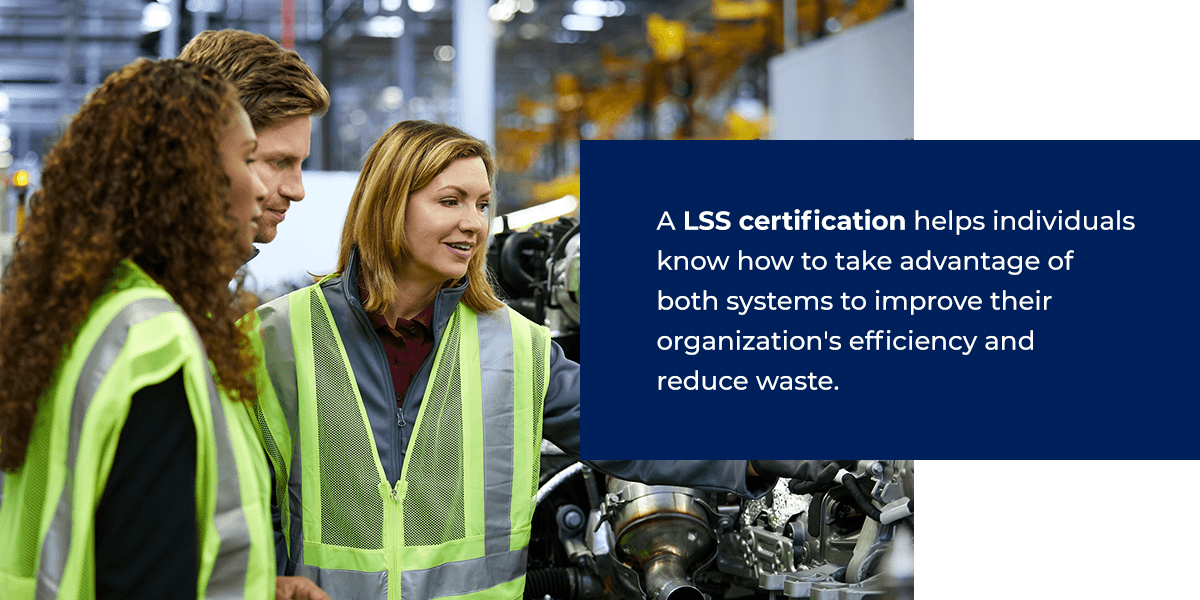
Six Sigma and Lean certifications are valuable in their own rights — individuals certified in these strategies can assist companies in implementing these methods throughout their organizations. However, individuals certified in both protocols through LSS certification can maximize the benefits. A LSS certification helps individuals know how to take advantage of both systems to improve their organization’s efficiency and reduce waste.
Lean Six Sigma Certification Levels Compared
To the average onlooker, LSS certifications sound like martial arts levels. This is because the levels are based on those of the Judo martial arts system. These belt levels indicate the degree of experience certified individuals have and the roles they are qualified to handle in completing and managing LSS projects.
Belt Levels at a Glance Comparison Table
| Belt Level | Who It’s For | Training Duration | Prerequisite | MANTEC Course |
|---|---|---|---|---|
| White Belt | Anyone new to LSS concepts | Half-day | None | Lean Six Sigma Foundations |
| Yellow Belt | Team members, shop floor operators | 1–2 days | None | LSS Yellow Belt |
| Green Belt | Process improvement leads, supervisors | 10 sessions / 4–6 weeks | Yellow Belt recommended | LSS Green Belt |
| Black Belt | Project leaders, quality managers | 10–16 weeks | Green Belt experience | LSS Black Belt |
| Master Black Belt | Senior CI leaders, coaches | Years of Black Belt experience | Black Belt certified | MANTEC advisory |
| Champion | Plant managers, executives | LSS leadership programme | Management experience | MANTEC advisory |
If you’re interested in earning an LSS certification, take a moment to review what each level qualifies you for:
1. White Belt : Introduction to LSS
Professionals interested in pursuing Lean Six Sigma training but who have not undergone formal certification are considered White Belts. White Belts are usually initiated with a short session that provides an overview of LSS methods and vocabulary and how the principles of LSS result in greater efficiency and reliability. From there, White Belts can have limited participation in projects and tasks under the supervision of higher-level certificate holders.
2. Yellow Belt : Foundational Certification
Yellow Belt certification is the foundational level of LSS certification. These individuals complete a day or two of training to gather the basics of LSS knowledge, including Six Sigma terms and applications, certification level roles and overviews of problem-solving models. Yellow Belt training also establishes an understanding of Root Cause Problem Solving and how appropriate data-gathering can minimize process variation. Once a professional has completed Yellow Belt training, they can work on projects as fully contributing team members operating under the guidance of higher-level certificate holders.
3. Green Belt : Intermediate Certification
A Lean Six Sigma Green Belt is the second official certification level for LSS professionals. This certification level requires professionals to attend a full course covering the Six Sigma methods and Lean concepts, plus tutorials on their practical applications. In their courses, Green Belt students learn to apply problem-solving frameworks and initiate and analyze statistical models, among other essential concepts.
Once the program is finished, Green Belt certification holders are ready to take on projects in real-world applications. Once they are certified, Green Belts will do hands-on tasks in project implementation, operating under the guidance of a Black Belt.
4. Black Belt : Advanced Certification
Black Belt certification is the highest official level of certification in Lean Six Sigma. Professionals with Black Belt certification are masters of LSS strategies, having taken years of coursework on top of on-the-job experience. Black Belts are defined by their knowledge and fluency in LSS principles and their ability to analyze, plan, lead and scale projects to organizational needs.
Black Belt-level courses will often require professionals to demonstrate their knowledge and gain experience by conducting a project as part of their program. They’ll use implementation strategies and statistical analysis to apply LSS principles.
In terms of roles, Black Belts tend to be more hands-on in project implementation than Champions and Master Black Belts. While Black Belts work directly on the project at hand and supervise Green Belts and Yellow Belts, Master Black Belts and Champions focus on management, integration and identification of new projects.
5. Master Black Belt : Expert Leadership Level
Master Black Belts are a step below Champions. While the Black Belt level requires that an individual has mastered LSS principles, Master Black Belts augment this with experience in leadership and problem-solving. Master Black Belts will take a leadership role on projects, adopting a broad view of LSS strategy to ensure the principles are implemented in a way that aligns with a company’s structure and goals. On top of this, Master Black Belts also act as coaches for lower-level individuals.
6. Champion : Executive-Level LSS Leadership
A Champion is the highest level of LSS certification and is given to those with extensive experience and leadership in LSS strategy and deployment. Champion-level individuals lead LSS projects in a management role, ensuring all initiatives meet company needs and objectives. They will often work with Master Black Belts to guide projects forward and mentor and track lower-level individuals in their implementation of LSS principles.

Which Lean Six Sigma Belt Should You Get First?
The most common question from manufacturers considering Lean Six Sigma certification is where to start. The answer depends on your current role, your organisation’s goals, and how quickly you need to apply LSS tools on the job.
-
Starting from scratch begin with Yellow Belt
If you have no prior LSS training, Yellow Belt is the right starting point. MANTEC’s Yellow Belt programme takes 1–2 days and gives you a working understanding of LSS concepts, DMAIC fundamentals, and how to contribute to improvement projects as a team member. Many South Central PA manufacturers require Yellow Belt certification for all shop floor supervisors before beginning a lean transformation.
-
Already working in process improvement consider Green Belt
If you already lead improvement initiatives or work in quality, engineering, or operations management, Green Belt is the most impactful next step. Green Belts lead DMAIC projects independently, use statistical analysis tools, and supervise Yellow Belt team members. MANTEC’s Green Belt programme runs over 10 sessions and includes hands-on project work applying real manufacturing data from your facility.
-
Leading projects and teams target Black Belt
Black Belt certification is for professionals who will lead complex, cross-functional LSS projects and coach Green and Yellow Belts. It requires the deepest statistical knowledge and project management skills of the official belt levels. MANTEC’s Black Belt programme builds on Green Belt foundations and includes mentored project execution with measurable business results.
Not sure which level fits your situation? Explore all available Lean Six Sigma certification training options through MANTEC or contact our team and we’ll recommend the right certification pathway for your role and facility.
Is LSS Certification Right for You?
LSS certification is a valuable training system for individuals in project management roles. Certification in LSS principles gives manufacturing professionals the knowledge and tools they need to accomplish the following:
- Maximize productivity
- Increase throughput
- Improve quality
- Reduce damage control incidents
- Promote Lean operation
If you’re working in project management or have a project management team that is interested in implementing valuable leadership tools to achieve these goals, pursuing LSS certification is a great way to go.

MANTEC Lean Certification
In today’s manufacturing industry, process improvement requires constant work and attention. Project managers must consistently evaluate, adapt and innovate processes and procedures to keep businesses competitive. LSS principles can help, providing a solid framework of evaluation and implementation that manufacturing companies can utilize to get ahead. By training project managers in LSS and gaining advanced certification levels, businesses can bring LSS to their organizations. If you’re looking for LSS certification programs that offer an excellent return on investment, MANTEC can help.
MANTEC offers a range of LSS certification programs designed to help trainees learn LSS concepts and how to apply them in real-world applications. Backed by experienced professionals with extensive knowledge of regional, national, and global manufacturing practices, MANTEC offers some of the best training programs in the manufacturing industry. Our training courses include:
- Six Sigma Yellow Belt
- Six Sigma Green Belt
- Six Sigma Black Belt
- A3 Problem Solving
- Lean Six Sigma Foundations
- Lean Certification
Each of the Six Sigma Yellow, Green and Black Belt training programs help trainees become proficient in Six Sigma. Additionally, our A3 Problem Solving course goes over A3 methodology to teach employees how to address manufacturing challenges, communicate solutions and monitor results. Foundations of Lean Six Sigma teaches the fundamentals of LSS. All of our MANTEC training programs are tailored for maximum efficacy while also keeping certification costs to affordable levels.
How to Get Lean Certified in Pennsylvania: Cost, Timeline & Funding
Getting Lean Six Sigma certified in South Central Pennsylvania is more accessible and more affordable than most manufacturers realise.
Lean Six Sigma certification timeline how long each belt takes
Each belt level requires a different time commitment:
- Yellow Belt: 1–2 days of training. Can be completed in a single course session and applied immediately on the job.
- Green Belt: 10 sessions over approximately 4–6 weeks. Includes statistical analysis tools and a practical improvement project.
- Black Belt: Multiple modules over 10–16 weeks. Includes mentored project execution and advanced statistical coursework with measurable outcomes.
All MANTEC courses are delivered at our Knowledge Park facility at 427 Kings Mill Road, York PA or on-site at your manufacturing facility for groups of five or more participants.
Certification cost and WedNET PA funding options
MANTEC’s LSS certification programmes are priced to make certification accessible for small and mid-sized manufacturers:
- Yellow Belt: $1,250 per participant
- Green Belt: $3,295 per participant
- Black Belt: Contact MANTEC for current pricing and schedule
WedNET PA state training grants of up to $2,000 per employee are generally available to eligible Pennsylvania manufacturers, significantly reducing the net certification cost. As a NIST MEP-affiliated centre, MANTEC has on-staff grant specialists who handle the application process on your behalf many clients receive certification at substantially reduced net cost. Learn more about PA manufacturing grants available to South Central PA manufacturers.
Contact MANTEC today to see our list of course schedules and begin a relevant certification process.
Frequently Asked Questions About Lean Six Sigma Certification
What is lean certification?
Lean certification validates a professional’s knowledge of Lean manufacturing principles the systematic elimination of waste from production processes to improve efficiency and value. Lean Six Sigma (LSS) certification goes further, combining Lean’s waste-elimination focus with Six Sigma’s statistical defect-reduction methodology. LSS certifications are awarded at belt levels: White, Yellow, Green, Black, Master Black Belt, and Champion.
What are the Lean Six Sigma certification levels in order?
The Lean Six Sigma certification levels in ascending order are:
- White Belt : introductory overview,
- Yellow Belt : foundational certification,
- Green Belt : intermediate project leadership,
- Black Belt : advanced project leadership and coaching,
- Master Black Belt : expert leadership and mentoring,
- Champion : executive-level LSS sponsorship and strategic direction.
Which Lean Six Sigma belt should I get first?
If you have no prior LSS training, start with Yellow Belt it takes 1–2 days and gives you the foundation to contribute to improvement projects immediately. If you already lead quality or process improvement initiatives, Green Belt is the most impactful next step. Yellow Belt experience is recommended before Green Belt but not always required.
How long does Lean Six Sigma certification take?
Yellow Belt takes 1–2 days. Green Belt runs over 10 sessions across 4–6 weeks. Black Belt requires multiple modules over 10–16 weeks including a mentored project. All timelines depend on the training provider and delivery format.
How much does Lean Six Sigma certification cost?
MANTEC’s LSS programmes are priced at $1,250 for Yellow Belt and $3,295 for Green Belt. WedNET PA state training grants of up to $2,000 per employee are generally available to eligible Pennsylvania manufacturers, significantly reducing the net cost. MANTEC’s grant specialists handle the application process on your behalf.
What is the difference between Lean certification and Six Sigma certification?
Lean certification focuses specifically on eliminating waste from production processes using tools like value stream mapping, 5S, kaizen, and pull systems. Six Sigma certification focuses on reducing process variation and defects using statistical tools and the DMAIC framework. Lean Six Sigma (LSS) certification combines both — making it the more comprehensive and widely recognised credential in manufacturing.
Is LSS certification worth it for manufacturing professionals?
Yes. LSS-certified professionals are eligible for broader project leadership roles, command higher salaries, and deliver measurable value to their organisations through structured waste reduction and defect elimination. Manufacturers who certify teams in LSS consistently report improved throughput, quality, and cost performance.
Related Posts