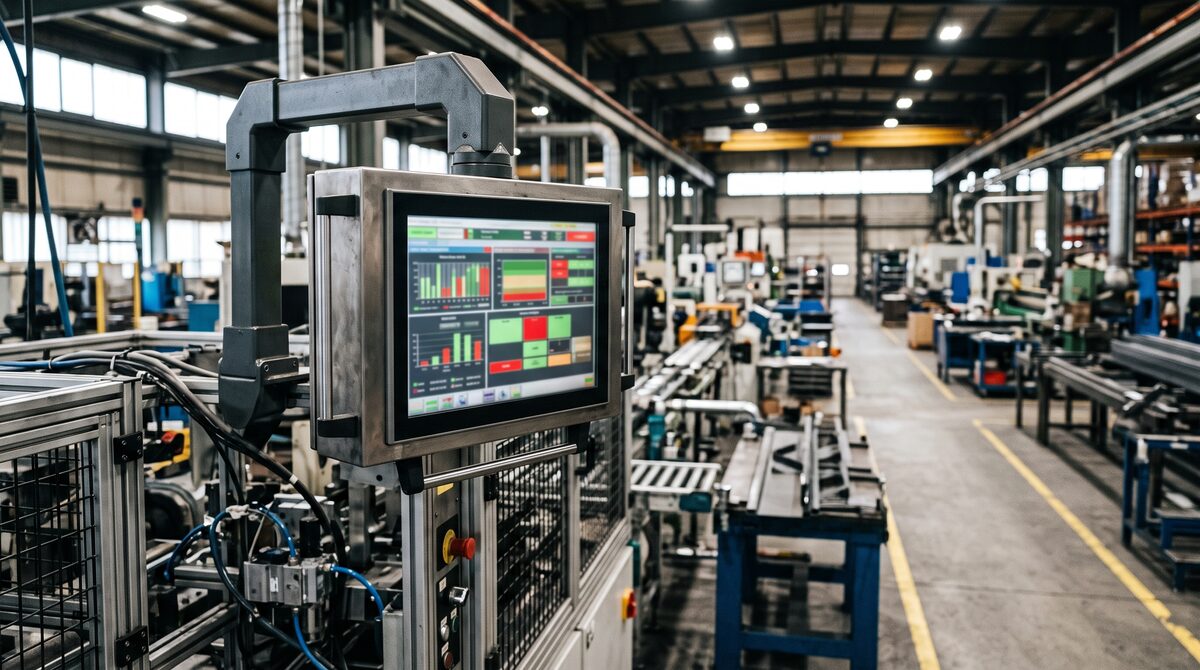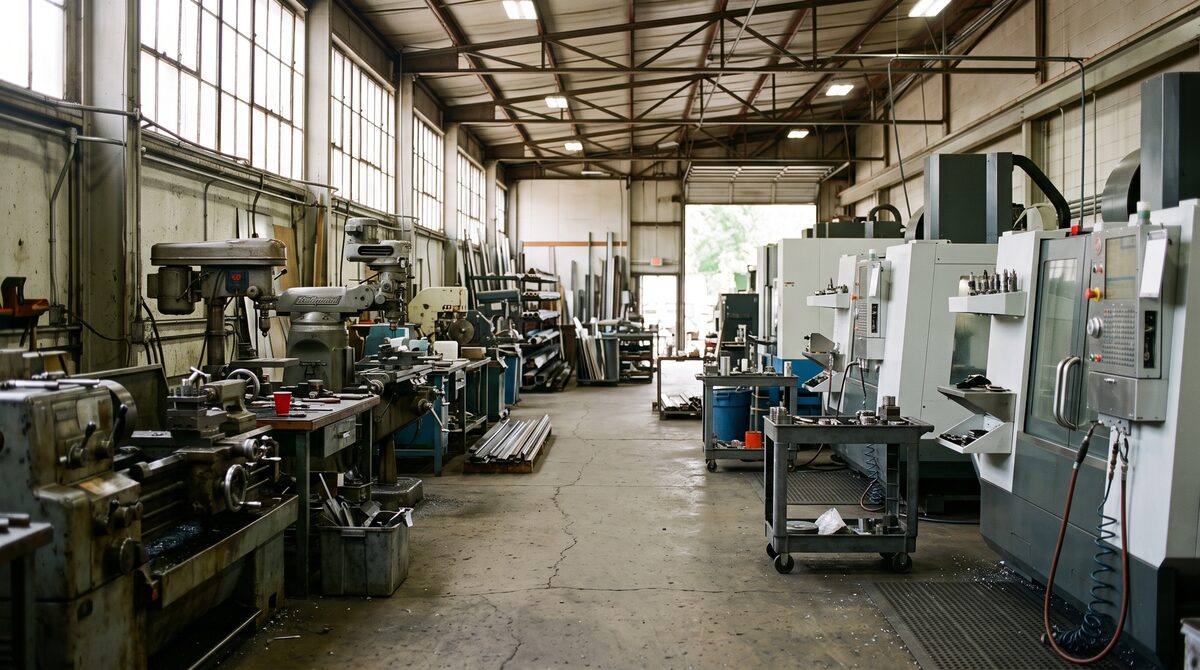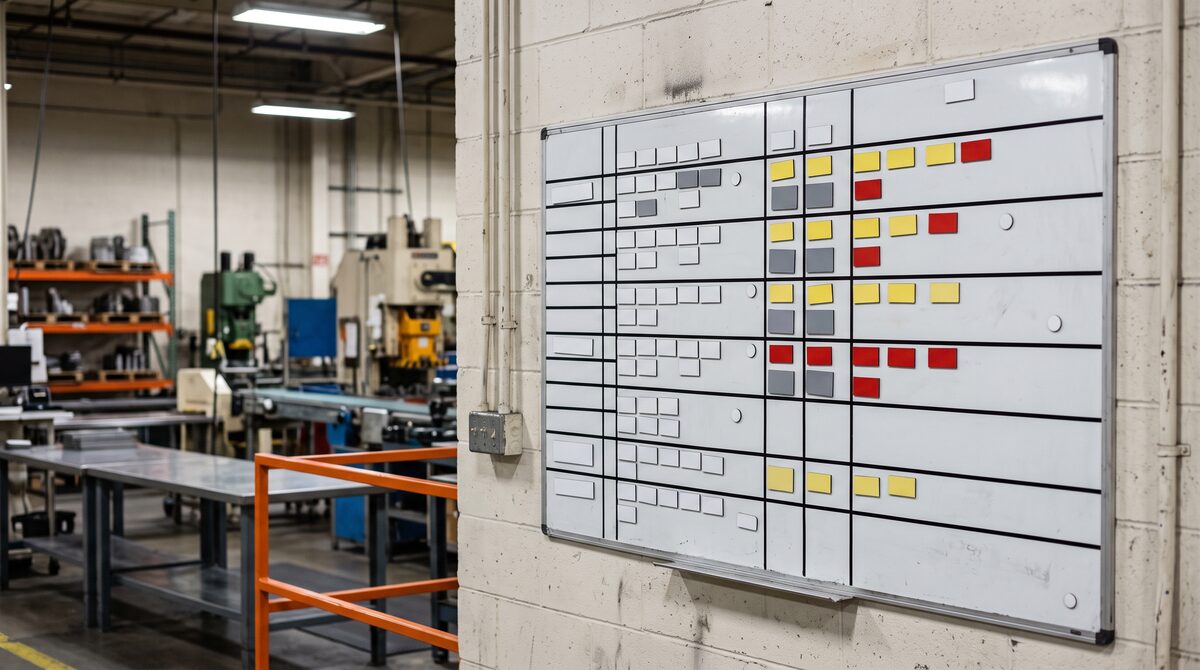
A shop buys a machine-monitoring package. The business case is sound, the vendor demo goes…
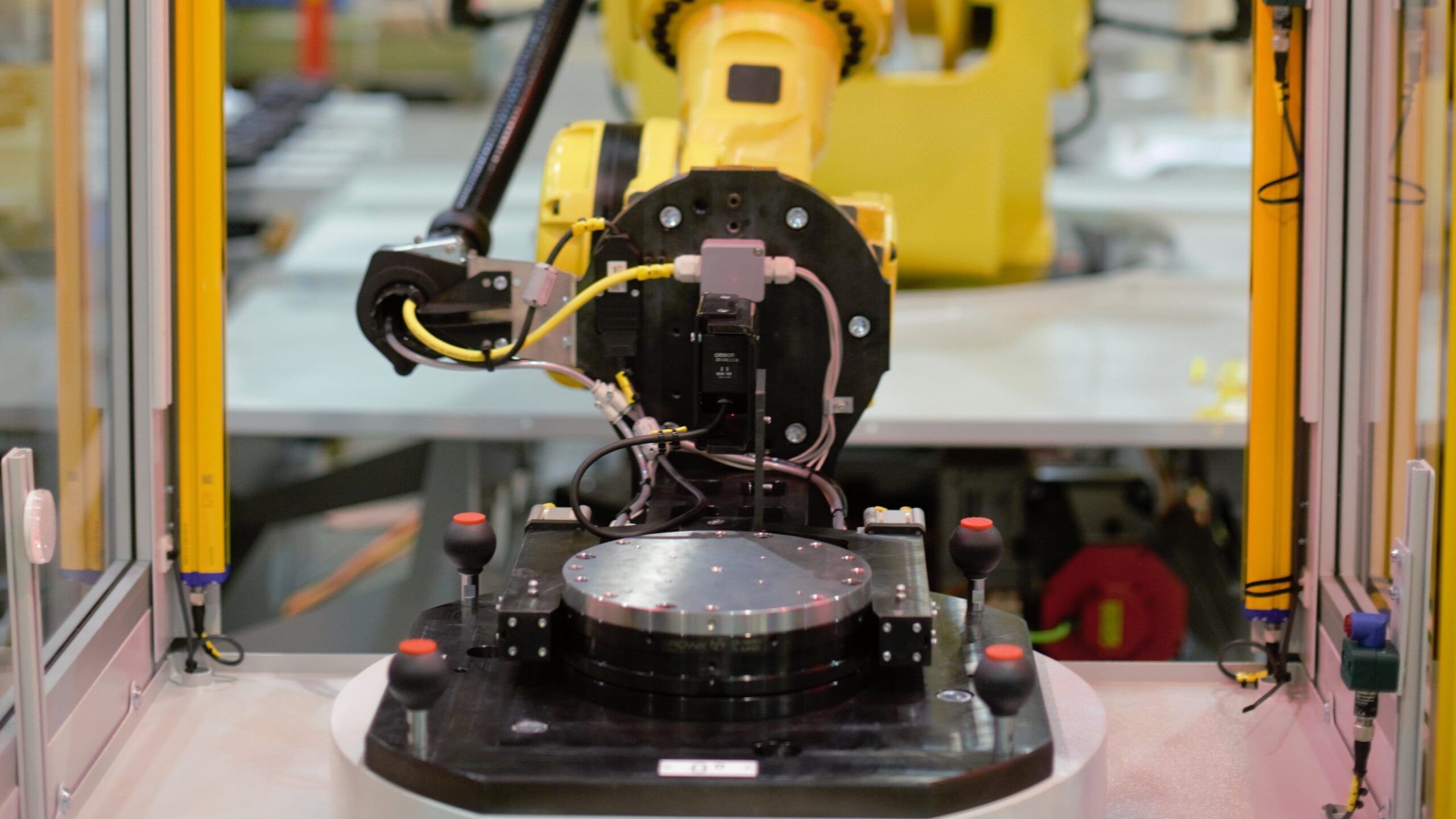
Manual processes that made sense five years ago now cost more than they should. Operators spend hours on repetitive tasks that machines could handle faster and more consistently. Quality suffers when tired workers make errors during monotonous operations. Lead times stretch unnecessarily because manual steps create bottlenecks.
Many manufacturers recognize they need automation but don’t know where to start. They worry about choosing the wrong processes, investing in technology that doesn’t deliver returns, or disrupting operations during implementation. Automation essentials for manufacturers provides systematic approaches for identifying high-value opportunities, assessing readiness, and implementing solutions that solve real problems rather than creating new ones.
This guide walks through proven methods for spotting automation candidates, evaluating their feasibility, and prioritizing investments that deliver measurable improvements in productivity, quality, and cost.
Signs Your Manual Processes Need Automation
Bottlenecks that limit capacity signal automation opportunities. When one operation consistently creates waiting time for upstream and downstream processes, that constraint deserves attention. Manual inspection processes that can’t keep pace with production speed force you to slow everything down or skip checks.
Quality variability from human inconsistency costs money through scrap and rework. Some tasks demand precision beyond what manual operations can maintain reliably. Measurements requiring accuracy within thousandths of an inch, repetitive assembly requiring identical torque values, or inspection needing consistent criteria across thousands of parts all benefit from automation.
Labor shortages make certain positions impossible to fill at reasonable wages. When you can’t find qualified operators for specific roles, automation becomes a necessity rather than an option. Turnover in physically demanding or monotonous positions indicates jobs that would benefit from mechanical assistance or full automation.
The True Cost of Staying Manual
Direct labor represents the obvious expense, but hidden costs often exceed wages. Training time for complex manual operations adds weeks before new hires become productive. Error rates remain higher during extended learning curves, affecting both the trainee and those fixing their mistakes.
Ergonomic injuries from repetitive manual work create workers’ compensation costs, modified duty challenges, and potential OSHA citations. Tasks requiring awkward postures, forceful exertions, or repetitive motions generate predictable injury patterns. These incidents cost manufacturers an average of $40,000 per claim when including medical expenses, lost time, and productivity impact.
Competitive disadvantages emerge when rivals automate processes you continue manually. They quote shorter lead times, offer lower prices from reduced labor content, and deliver more consistent quality. Eventually, the cost differential forces you to match their capability or lose business.
Starting With a Process Mapping Exercise
Document your current production flow before identifying automation candidates. Walk the shop floor with a stopwatch and camera, recording each operation, who performs it, how long it takes, and what quality checks occur. This mapping reveals patterns you won’t see from memory or anecdotal reports.
Quantify the frequency of each process. Operations performed thousands of times daily offer better automation returns than those done occasionally. Calculate annual labor hours spent on each task by multiplying cycle time by annual volume. This simple math highlights where your workforce spends most of their time.
Identify pain points through conversations with operators, supervisors, and quality personnel. They know which tasks cause the most problems, create the most scrap, or generate the most complaints. Their frontline perspective reveals issues that don’t show up in production reports.
Criteria for High-Value Automation Candidates
Repetitive operations with predictable steps make ideal automation targets. Tasks following the same sequence every time require minimal decision-making from robots or automated equipment. Variable processes needing constant human judgment prove much harder to automate successfully.
High-volume, low-mix production justifies automation investments more easily than low-volume, high-mix work. Running the same part for hours or days allows automation to demonstrate clear payback. Frequent changeovers for different products add complexity and reduce automation benefits unless you implement flexible systems.
Measurable quality problems point to automation opportunities. When defect rates exceed acceptable levels despite operator training and attention, removing human variability often solves the problem. Automated processes deliver consistent results that manual operations can’t match.
Calculating Automation ROI Before Investing
Labor savings provide the most obvious return calculation. Multiply annual labor hours saved by fully loaded labor rates including wages, benefits, and overhead. A process requiring two full-time operators at $25/hour loaded costs approximately $104,000 annually. Automating it needs to cost less than the labor savings over your required payback period.
Quality improvements deliver additional returns through reduced scrap and rework. Calculate your annual cost of quality problems in processes you’re considering for automation. Include material waste, labor to remake defective parts, and any customer returns or warranty claims. Automation that eliminates these costs can justify investment even without labor savings.
Capacity increases from automation often provide the highest returns. If manual processes limit your ability to accept new business, automation opens growth opportunities. Calculate the profit contribution from additional revenue you could capture with expanded capacity. This potential often exceeds direct cost savings.
Common Automation Mistakes to Avoid
Automating broken processes just creates automated problems. Fix your process first, then consider automation. Eliminating unnecessary steps, standardizing work methods, and solving quality issues manually makes subsequent automation more successful. Never use automation to cover up process deficiencies.
Over-engineering solutions wastes money on capability you don’t need. Manufacturers sometimes buy sophisticated robotic systems for simple material handling tasks. Match technology complexity to actual requirements. Simple pneumatic devices, basic pick-and-place units, or dedicated automation often outperform flexible robots for specific applications.
Ignoring changeover requirements creates problems in mixed-production environments. Automation designed for one part configuration may require extensive reprogramming or physical changes for different products. This flexibility must factor into technology selection and cost justification.
Low-Cost Automation Options for Small Manufacturers
Collaborative robots offer accessible entry points into automation. These systems work safely alongside human operators without extensive guarding. They’re easier to program than traditional industrial robots and cost $25,000-$50,000 compared to $100,000+ for conventional robotic cells.
Pneumatic automation using air cylinders, valves, and simple controls solves many material handling and part positioning challenges. These systems cost thousands rather than tens of thousands of dollars. Local distributors provide design assistance and components readily available from stock.
End-of-arm tooling modifications on existing equipment add automation capability without replacing entire machines. Custom fixtures, automatic part ejection, or integrated quality checks transform manual operations into semi-automated processes. These improvements often pay back in months rather than years.
Assessing Your Facility’s Automation Readiness
Electrical infrastructure determines what automation you can support. Many older facilities lack adequate power capacity, properly grounded circuits, or appropriate voltage for modern equipment. Survey your electrical system before committing to automation requiring significant power or sensitive to voltage fluctuations.
Floor space availability affects automation feasibility. Robotic cells, conveyor systems, and automated equipment often require more footprint than manual operations. Measure available space carefully, including clearances for maintenance access and safety zones around moving equipment.
Technical capability within your workforce determines implementation success. Someone must program, troubleshoot, and maintain automated systems. Assess whether existing staff can develop these skills or whether you need to hire specialized talent. Automation vendors offer training, but internal capability proves critical for long-term success.
Phased Implementation Strategies
Pilot projects test automation on a limited scale before major investments. Choose one process, implement automation, and measure results for 3-6 months. This approach reveals unexpected challenges, validates cost assumptions, and builds internal expertise before expanding automation across more operations.
Hybrid approaches combine manual and automated steps within the same process. Automate the most repetitive, difficult, or quality-critical tasks while keeping human operators for variable work requiring judgment. This strategy delivers benefits without requiring full process automation that may not justify costs.
Progressive automation adds capability incrementally as production volumes grow. Start with simple automation addressing the biggest pain points. Add more sophisticated systems as volumes increase and returns improve. This staged investment matches automation costs to business growth rather than betting on future demand.
Evaluating Automation Vendors and Partners
Technical capability matters more than sales promises. Ask vendors for detailed demonstrations using parts similar to yours. Request references from customers running similar applications. Visit existing installations to see equipment performing actual production work, not just demonstration scenarios.
Service and support determine long-term automation success. Equipment will require troubleshooting, maintenance, and periodic upgrades. Evaluate vendor response times, parts availability, and technical expertise. Local support provides faster assistance than distant vendors, especially for critical production systems.
Training programs should transfer knowledge to your team rather than creating vendor dependency. Quality vendors provide comprehensive operator and maintenance training, detailed documentation, and ongoing technical support. Avoid systems where only the vendor can program or service the equipment.
Integrating Automation With Existing Equipment
Interface requirements between automated and manual processes need careful planning. Material must transfer reliably between different technologies. Consider part orientation, presentation, and any quality checks required between operations. Gaps in integration create bottlenecks that eliminate automation benefits.
Legacy equipment may lack connectivity for modern automation. Older machines without PLCs, digital inputs/outputs, or communication protocols require retrofitting to integrate with automated material handling or process control systems. Budget for these modifications during automation planning.
Production scheduling becomes more critical with automation. Automated systems run most efficiently with consistent feeding and downstream processing. Starving automation of material or creating backups from insufficient downstream capacity wastes the investment and frustrates operators.
Training Operators to Work With Automated Systems
Role changes require new skills and mindset shifts. Operators transition from performing manual tasks to monitoring automated processes, loading materials, and troubleshooting problems. Some workers embrace this change while others resist feeling replaced by machines. Address these concerns directly during implementation.
Effective onboarding programs introduce automation gradually with hands-on practice before production use. Operators need time to build confidence operating new equipment, understanding safety protocols, and recognizing normal versus abnormal conditions. Rushing training creates safety risks and operational problems.
Maintenance skills become essential when automation enters your facility. Operators should learn basic troubleshooting, routine maintenance tasks, and proper care for automated equipment. This capability reduces downtime and empowers workers to solve minor issues without waiting for outside service.
Safety Considerations for Automated Systems
Risk assessments identify hazards before implementation. Automated equipment creates pinch points, moving parts, and energized systems requiring proper safeguarding. Conduct formal risk analysis using methods like ISO 12100 to identify and mitigate dangers systematically.
Machine guarding must meet OSHA and ANSI standards for your specific equipment type. Light curtains, safety mats, emergency stops, and physical barriers protect workers from automation hazards. Never compromise safety to reduce costs or increase production speed. Inadequate guarding creates liability and worker injuries.
Lockout-tagout procedures become more complex with automation. Multiple energy sources including electrical, pneumatic, and hydraulic systems require proper isolation during maintenance. Train workers thoroughly on energy control procedures specific to each automated system.
Maintenance Planning for Automated Equipment
Preventive maintenance schedules keep automation running reliably. Document recommended maintenance tasks, frequencies, and procedures for each system. Schedule these activities during planned downtime rather than waiting for breakdowns that stop production unexpectedly.
Spare parts inventory prevents extended downtime from failed components. Identify critical wear items and long-lead parts requiring stock. Balance inventory costs against downtime risks based on part failure probability and impact on production.
Documentation systems track maintenance history, troubleshooting procedures, and lessons learned. This institutional knowledge proves invaluable when problems occur, especially after employee turnover. Maintain physical binders near equipment and digital backup copies for easy reference.
Measuring Automation Success After Implementation
Baseline metrics establish starting points for comparison. Document current performance before automation implementation including cycle times, quality rates, labor hours per unit, and any relevant costs. Without baseline data, you can’t prove automation delivered promised benefits.
Track multiple performance indicators beyond simple cost savings. Measure throughput increases, quality improvements, safety incident reductions, and capacity utilization. Comprehensive metrics demonstrate automation value across multiple dimensions, not just labor cost reduction.
Continuous optimization extracts full value from automation investments. Most installations don’t perform optimally immediately after startup. Monitor performance data, identify bottlenecks or issues, and refine operations systematically. This ongoing improvement often delivers 20-30% additional capacity beyond initial expectations.
Long-Term Automation Strategy Development
Technology roadmaps align automation investments with business strategy. Identify which processes you’ll automate over the next 3-5 years based on anticipated volume growth, product mix changes, and competitive pressures. This planning prevents reactive decisions that waste money on wrong solutions.
Workforce planning must account for changing skill requirements. Automation reduces demand for manual operators but increases need for technicians, programmers, and maintenance personnel. Begin developing these capabilities before implementing automation rather than scrambling to find talent afterward.
Capital budgeting processes should reserve funds for automation opportunities. Waiting until you have a specific project identified often means missing windows when automation vendors offer favorable terms or when business conditions create urgency. Planned automation budgets enable faster implementation when opportunities arise.
Manual processes served manufacturers well for decades, but competitive pressures and labor challenges make automation increasingly necessary. The question isn’t whether to automate but which processes to automate first and how to implement successfully without disrupting operations or wasting capital.
Start by systematically identifying high-value opportunities using the frameworks outlined here. Evaluate each candidate carefully considering both financial returns and implementation risks. Begin with manageable pilot projects that build internal capability before tackling more complex automation.
Contact MANTEC today to assess your automation opportunities and develop an implementation roadmap tailored to your facility’s specific needs and constraints.
Manufacturing Automation Standards and Resources
The National Institute of Standards and Technology Manufacturing USA network connects manufacturers with advanced manufacturing technology resources including robotics, automation systems, and smart manufacturing solutions. These institutes provide access to emerging automation technologies, testing facilities, and expert guidance for manufacturers evaluating automation investments.
The U.S. Department of Commerce Economic Development Administration offers grants and resources supporting manufacturing modernization including automation adoption programs. Their regional offices provide connections to technical assistance, funding opportunities, and best practices for manufacturers investing in advanced manufacturing capabilities.
Frequently Asked Questions
How do small manufacturers with limited capital afford automation investments?
Small manufacturers have several options for funding automation that don’t require large upfront capital. Equipment leasing spreads costs over 3-5 years with monthly payments that often align with labor savings from automation. Many states offer low-interest loans or grants specifically for manufacturing modernization and automation adoption. The Economic Development Administration and state manufacturing extension partnerships provide access to these programs. Some automation vendors offer rent-to-own or performance-based payment models where costs tie directly to productivity gains achieved. Start with lower-cost automation like pneumatic systems, basic robotics, or simple mechanization that costs $10,000-$30,000 rather than complex robotic cells exceeding $200,000. These smaller investments often deliver 12-24 month paybacks that fund subsequent automation phases. Consider collaborative robots that cost $25,000-$50,000 instead of traditional industrial robots at $100,000+. Tax incentives including Section 179 deductions and bonus depreciation can offset 50-100% of automation costs in the first year, significantly improving cash flow impact.
What processes should never be automated in manufacturing operations?
Some processes remain better suited to manual operations despite automation capabilities. Low-volume production with frequent product changes costs more to automate than the labor savings justify. Programming and tooling changes for small batches often exceed the time to simply build parts manually. Tasks requiring complex decision-making, subjective judgment, or adaptability to varying conditions challenge current automation technology. Human workers excel at recognizing subtle variations, adapting techniques based on material characteristics, and solving unexpected problems creatively. Prototype development and custom one-off work benefit from human flexibility and problem-solving rather than programmed automation. Final inspection tasks requiring aesthetic judgment like surface finish evaluation, color matching, or subjective quality assessment remain difficult to automate reliably. Operations involving extremely fragile materials, irregular shapes, or soft goods often require human dexterity and sensory feedback that robots lack. Consider keeping processes manual when automation would add unnecessary complexity, reduce flexibility significantly, or require frequent intervention that eliminates productivity benefits.
How long does typical automation implementation take from decision to production?
Automation project timelines vary dramatically based on complexity, but most implementations require 6-18 months from initial decision to full production capability. Simple pneumatic automation or basic mechanization can be designed, built, and implemented in 2-4 months. Collaborative robot cells typically require 3-6 months including planning, programming, safety validation, and operator training. Complex automated systems involving custom equipment, multiple integration points, or facility modifications often take 12-18 months or longer. The planning phase typically consumes 20-30% of total timeline including process analysis, vendor selection, system design, and capital approval. Equipment procurement and building occupies 40-50% of the schedule, particularly for custom-designed systems. Installation, debugging, and optimization take the remaining 20-30% as you work through unexpected issues and refine performance. Manufacturers who rush implementation to meet aggressive timelines often face extended debugging periods that eliminate time savings. Better to allow adequate planning time, anticipate setbacks, and build operator confidence through thorough training than push equipment into production prematurely.
What return on investment should manufacturers expect from automation projects?
Realistic automation ROI targets range from 18-36 months for most manufacturing applications, though some achieve payback in under 12 months. Projects taking longer than 36 months to pay back typically struggle to justify investment unless they solve critical quality problems, enable new product capabilities, or address severe labor shortages. Labor cost savings provide the most predictable returns, calculated by multiplying eliminated labor hours by fully loaded labor rates. Quality improvements deliver additional value through reduced scrap, rework, and warranty costs that may equal or exceed labor savings in high-value applications. Throughput increases from automation often generate the highest returns by enabling revenue growth without proportional cost increases. A project eliminating one full-time operator at $50,000 annual loaded cost while reducing scrap by $25,000 yearly delivers $75,000 in annual benefits. An automation investment of $150,000 would pay back in two years at these savings levels. Calculate ROI conservatively using only proven savings rather than optimistic projections. Include all costs such as installation, training, maintenance, and any facility modifications required. Factor in opportunity costs of capital and compare automation ROI to alternative investments before committing resources.
How do you convince skeptical employees that automation won’t eliminate their jobs?
Address automation concerns directly rather than dismissing worker anxiety as unfounded. Acknowledge that automation does change job requirements and some positions may be eliminated. Honesty builds trust while empty promises create cynicism. Explain how automation typically shifts workers to higher-value activities requiring human judgment rather than eliminating positions entirely. Operators transition from performing repetitive manual tasks to monitoring equipment, loading materials, performing quality checks, and troubleshooting problems. These roles often pay more and cause less physical strain than the manual work being automated. Share specific plans for affected employees including retraining opportunities, timing of changes, and how job transitions will occur. Fear comes from uncertainty, so providing clear information reduces anxiety. Involve workers in automation planning and implementation. Their input improves system design and builds ownership rather than resistance. Employees who help select and implement automation become advocates rather than opponents. Demonstrate commitment to retraining by investing in skill development programs before automation arrives. Point to evidence from previous technology implementations where workers successfully transitioned to new roles. Most manufacturers find that normal attrition and growth absorb displaced workers without layoffs, but you must have actual plans rather than vague reassurances.
Related Posts