A shop buys a machine-monitoring package. The business case is sound, the vendor demo goes…
Effective communication in manufacturing is more than a ‘soft skill’ it’s an operational performance driver. Poor communication between shifts, departments, and management levels generates scrap, delays, safety incidents, and turnover. This guide covers why manufacturing communication matters, what production floor communication systems work best, and how to build a communication plan your team will actually follow.
Manufacturing Communication Systems and Tools
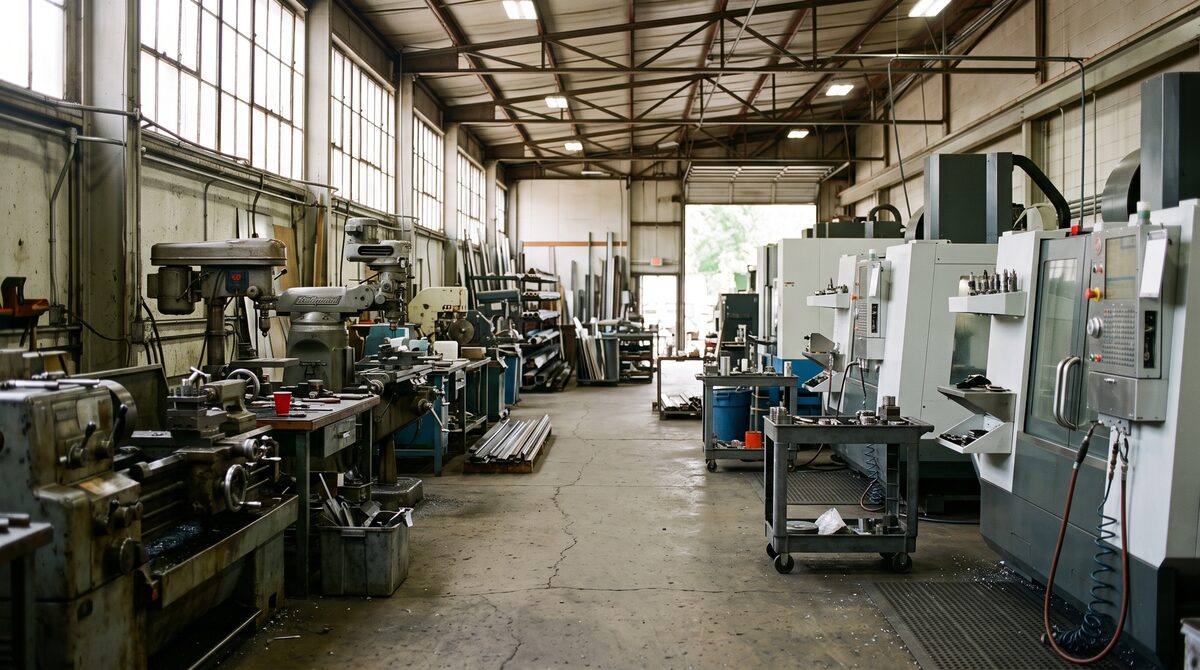
Manufacturing environments have unique communication challenges that general business communication advice doesn’t address. The shop floor is loud. Shifts change. Workers don’t have email access. Management and production staff often operate in physically separate spaces. The communication systems that work in manufacturing must account for all of these realities.
Production floor communication : daily huddles and visual management
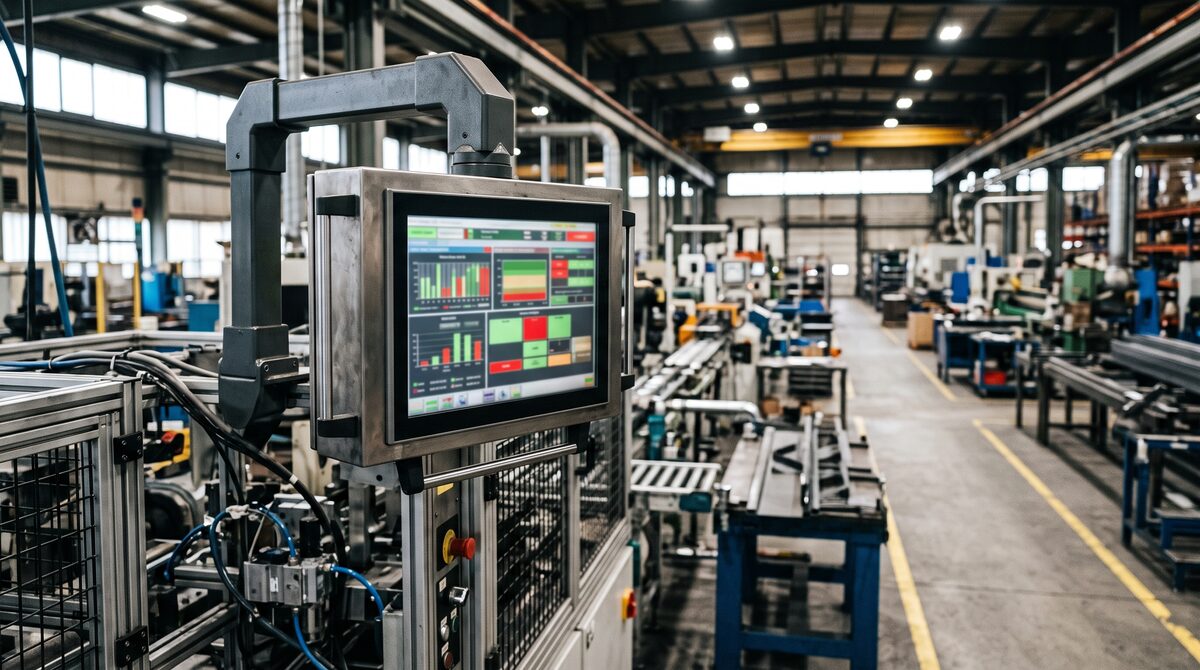
The most effective production floor communication systems combine two elements: structured daily communication moments and visual information displays that don’t require reading an email to stay informed.
Daily huddles (also called shift meetings or team huddles) are 10-15 minute standing meetings at the start of each shift where supervisors communicate: yesterday’s performance, today’s targets, safety reminders, and any issues that need team attention. They create a predictable communication rhythm that ensures critical information reaches production workers before they start work rather than during it.
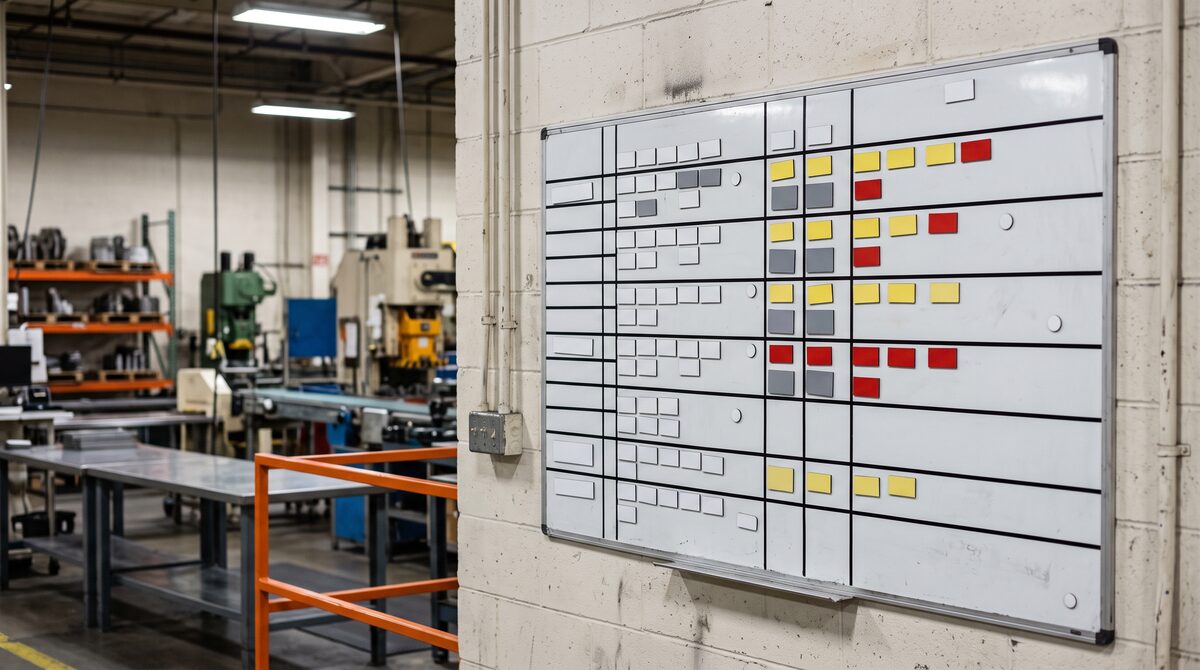
Visual management boards scoreboards displaying quality metrics, production targets, safety stats, and improvement ideas make performance visible to everyone on the floor without requiring a meeting. When operators can see how their shift is performing at a glance, communication becomes a shared responsibility rather than a top-down announcement.
Shift handover communication
Shift handover is one of the highest-risk communication points in manufacturing. When one shift ends and another begins, critical information about machine status, in-progress work, quality issues, and safety concerns must transfer completely and accurately. Poor shift handover communication results in repeated mistakes, missed targets, and safety incidents.
An effective shift handover communication system includes: a standardized handover checklist, a brief face-to-face (or documented) handover between outgoing and incoming supervisors, and a written log of anything unresolved. Many manufacturers find that requiring the outgoing supervisor to brief the incoming supervisor in person — rather than leaving a note dramatically reduces the number of issues that fall through the shift gap.
Cross-department and management-to-floor communication
In many manufacturing plants, information travels well within departments but poorly between them. Quality findings don’t reach production in time. Maintenance schedules aren’t communicated to operators. Customer delivery changes don’t filter down to the floor until the last minute.
Cross-department communication requires both structural solutions (regular cross-functional meetings, shared dashboards, defined escalation paths) and cultural ones (managers who are visible on the floor, supervisors who feel safe raising issues upward). The communication plan section below covers how to address both.
Why Is Communication Important in Manufacturing Management?
Communication dictates how well people throughout a manufacturing company coordinate their efforts to create a product. As a result, effective communication can benefit a manufacturing business in several ways, including:
- Reduced risk in the workplace: Effective communication plays an important role in preventing injury on the job, which becomes particularly important when employees are operating hazardous machinery. When people communicate clearly and quickly, accidents can be avoided.
- Greater efficiency in production: Clear, frequent communication helps people perform their jobs efficiently. For example, when a machine breaks down or materials run low, effective communication helps staff address the problem without confusion or repetitive action, so the company can get back to work quickly.
- Improved cohesion and engagement: One of the biggest benefits of effective communication is cohesion among multiple levels of the business. When communication flows easily in each direction, employees feel more engaged with their work, leading to better worker retention and higher overall productivity.
The manufacturing field is technical, but that doesn’t mean communication can be overlooked. In fact, an effective communication strategy can set your company above the competition.
What Happens When a Company Relies on Poor Communication?
Consistently poor communication can damage a manufacturing company. Careless and infrequent communication between management and factory floor staff can result in excessive scrap, poor product quality, late deliveries and, ultimately, dissatisfied customers.
You can probably see how improving your manufacturing company’s internal communication could pay off financially. One industry consultant even suggests that improved communication could boost a company’s bottom line by upwards of 10%.
What Does Effective Production Floor Communication Look Like?
It’s clear that communication plays a vital role in a manufacturing company’s success. However, before you can begin changing your communication strategy, you need to know what effective communication looks like in the real world.
In general, an effective communicator is someone who has a clear message, delivers that message using an appropriate channel and works to ensure the message is properly received. This type of communication occurs most often at the managerial level.
When they’re communicating with a worker, a manager needs to have a clear idea of what they need to get across — for example, that an employee needs to work faster. Then, the manager needs to choose an appropriate communication channel. In this case, it makes sense for the manager to talk to the employee face-to-face during their shift, rather than over email or telephone, since the message is directly related to how they’re performing their job. Finally, the effective communicator should take care to choose words and a tone that convey the message without implying anything inaccurate or causing the employee to shut down.
Importance of Proper & Effective Communication in Plants
There are often a lot of people and moving parts in any particular manufacturing setting which results in employees having a lot to do. Having so much to do can often push effective communication to the back burner; as long as people are communicating, that’s good enough. But taking the time to think about those on the receiving end and recognizing the best way to communicate to them can pay dividends in the long run.
In a manufacturing company, effective communication should also move in both directions — from management to staff and vice versa. Receiving meaningful feedback from employees will allow you to improve your operations and work in sync.
How to Build an Effective Manufacturing Communication Plan.
Here are a few additional tips you can use to implement an effective manufacturing communication plan at your company:
- Give managers the tools they need to succeed: In manufacturing companies, managers tend to have great technical skills and extensive experience. However, they may not have the communication or leadership skills needed to direct other employees effectively. Before you place one of your best workers in a management role, provide training and support to ease the transition.
- Train new employees thoroughly: Broken communication can lead to costly and potentially dangerous mistakes during the training phase. Take the time to train new hires thoroughly, and make sure a more experienced worker is available to answer questions.
- Meet as a team regularly: To improve morale and communication at all levels of the business, make team meetings a regular occurrence. While at these gatherings, collect feedback from workers and involve everyone in company decision-making processes.
Step 1 : Audit your current communication gaps
Before building a new communication system, identify where the current one breaks down. Ask shift supervisors where information most commonly gets lost. Survey production workers about what they don’t hear about until it’s too late. Review quality and safety records for patterns that suggest communication failures. The most common gaps are: shift handover (information lost between shifts), upward feedback (shop floor problems not reaching management), and lateral communication (between departments).
Step 2 : Train managers in manufacturing communication skills
Most production supervisors are promoted for their technical skills, not their communication ability. Untrained supervisors default to either over-communicating (too many meetings, too much detail) or under-communicating (no structured updates, information hoarded). Communication skills training for manufacturing supervisors should cover: how to run an effective daily huddle, how to give clear performance feedback, how to communicate upward to management, and how to handle difficult conversations on the shop floor.For a deeper look at what this training covers and why most promoted supervisors struggle without it, see MANTEC’s guide to front-line supervisor development.
Step 3 : Build regular communication cadences
A manufacturing communication plan should specify the who, what, when, and how of key information flows. At minimum: a daily shift start huddle (supervisor to team), a weekly supervisors’ meeting (management to supervisors), and a monthly all-hands update (leadership to full workforce). Many manufacturers also implement digital communication boards or intercom announcements for time-sensitive production updates that can’t wait for the next scheduled touchpoint.
Manufacturing Communication Training With MANTEC
MANTEC supports South Central Pennsylvania manufacturers in building stronger communication cultures through training programs designed specifically for manufacturing environments.
Relevant MANTEC programs for manufacturing communication:
- Team Huddles for Manufacturers : build effective daily shift communication rituals
- Leading on the Manufacturing Floor : supervisory communication and leadership skills
- Emotional Intelligence for Manufacturing : self-awareness and interpersonal communication
- Coaching for Peak Performance : manager-to-operator communication and feedback techniques
All programs are available at MANTEC’s York PA facility or on-site at your facility. WedNET PA state training grants of up to $2,000 per employee are generally available to eligible Pennsylvania manufacturers, significantly offsetting the cost of communication and leadership training.
Contact MANTEC at 717-843-5054 to discuss a communication training program tailored to your team’s specific gaps.
Frequently Asked Questions
Q: Why is communication important in manufacturing?
A: Effective communication in manufacturing directly impacts safety, quality, productivity, and employee retention. Clear communication prevents accidents caused by misunderstood procedures, reduces scrap from unclear specifications, improves throughput by eliminating confusion and delays, and improves morale by keeping workers informed and involved. Poor communication is one of the most common root causes of recurring production problems.
Q: What are effective manufacturing communication systems?
A: Effective manufacturing communication systems include: daily production floor huddles at shift start, visual management boards displaying real-time performance metrics, standardized shift handover checklists, defined escalation paths for quality or safety issues, and regular cross-department meetings. The best systems create predictable communication rhythms so critical information reaches workers before it becomes a problem.
Q: How do you improve communication on the production floor?
A: Improve production floor communication by:
- implementing daily shift huddles that brief operators on targets, safety, and issues before work begins,
- installing visual management boards showing live performance data,
- standardizing shift handover procedures so information doesn’t fall through shift transitions,
- training supervisors in structured communication techniques designed for manufacturing environments.
Q: What is a manufacturing communication plan?
A: A manufacturing communication plan defines who communicates what information, to whom, through which channel, and how often. It typically specifies daily huddle schedules, weekly supervisor meetings, escalation paths for quality and safety issues, shift handover procedures, and how production performance is communicated across departments and to leadership. A written plan ensures communication happens systematically rather than inconsistently.
Q: How does poor communication affect manufacturing productivity?
A: Poor communication in manufacturing causes measurable productivity losses: workers repeat tasks due to unclear instructions, machine downtime extends because maintenance isn’t notified promptly, quality defects multiply because production teams aren’t informed of specification changes, and experienced employees leave because they feel uninformed and undervalued. Research suggests improving communication can boost a manufacturing company’s bottom line by 10% or more.
Q: How can MANTEC help with manufacturing communication challenges?
A: MANTEC provides training programs specifically designed for manufacturing communication including Team Huddles for Manufacturers, Leading on the Manufacturing Floor, and Emotional Intelligence for Manufacturing. WedNET PA training grants of up to $2,000 per employee are generally available to eligible PA manufacturers. Contact MANTEC at 717-843-5054 to discuss the right program for your team.
Get Help With Your Company’s Communication Challenges
Effective communication can boost productivity and help your manufacturing business succeed. If you’ve identified persistent communication challenges in your company, reach out to MANTEC for help today. As a nonprofit consulting firm, we serve manufacturing companies in South Central Pennsylvania by providing a number of operational and manufacturing workforce development services at an affordable price.
Related Posts