Ask a plant manager in York, Lancaster, or Harrisburg what keeps them up at night…
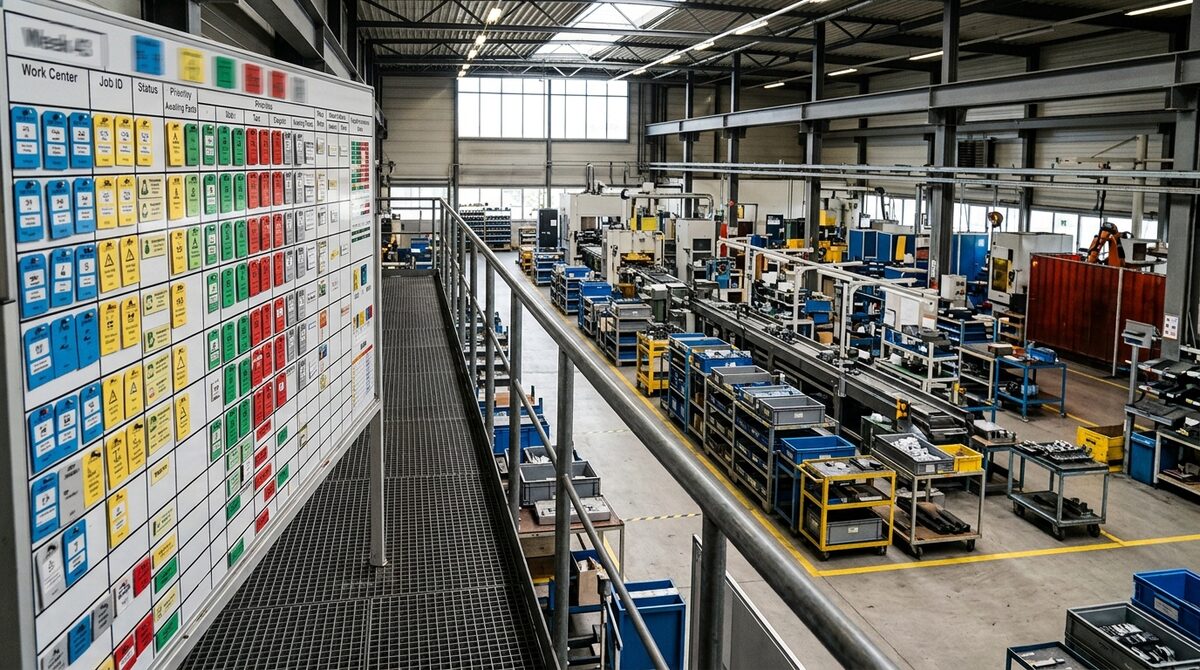
Most manufacturers treat the sales pipeline as a revenue instrument. It gets reviewed in the commercial meeting, tracked against quota, and discussed in terms of close rates. Meanwhile, the production schedule gets built in a different room, from different assumptions, often by people who see the pipeline only as a rumor.
That separation is expensive, and 2026 is making it more expensive. National capacity and labor data show manufacturers absorbing demand volatility through the two most costly buffers available — idle equipment and flexed labor hours — rather than through better forward visibility.
A Quarter of American Manufacturing Capacity Went Unused
The Federal Reserve’s Industrial Production and Capacity Utilization report is the cleanest measure of how much of the nation’s installed manufacturing capability is actually running. In June 2026, capacity utilization for manufacturing registered 75.7 percent, down 0.1 percentage point from the prior month and 2.5 percentage points below its long-run 1972–2025 average.
Roughly a quarter of installed capacity went unused that month. That is not a crisis figure by historical standards, but it is a persistent one. Manufacturing utilization has run in a narrow band well below its long-run norm for months: 75.0 percent in November 2025, 74.8 in December, 75.1 in January, 75.4 in February, 75.4 in March, and 75.8 in April.
What makes the June reading interesting is the context around it. Manufacturing output was unchanged in June, yet grew at a 4.7 percent annual rate across the second quarter as a whole. Strong quarter, flat month. Total industrial production ticked up 0.1 percent in June after a run of months that moved down 0.2, up 0.5, flat, up 0.6, down 0.3, and up 0.7.
Output that lurches month to month while utilization stays stuck below normal describes a specific operating pattern: plants surging to meet clustered orders, then dropping back. Equipment that runs hot for three weeks and cold for three weeks costs more per unit than equipment running steadily at a moderate rate, because setup, changeover, and restart absorb the difference.
Labor Is Absorbing the Shock, One Hour at a Time
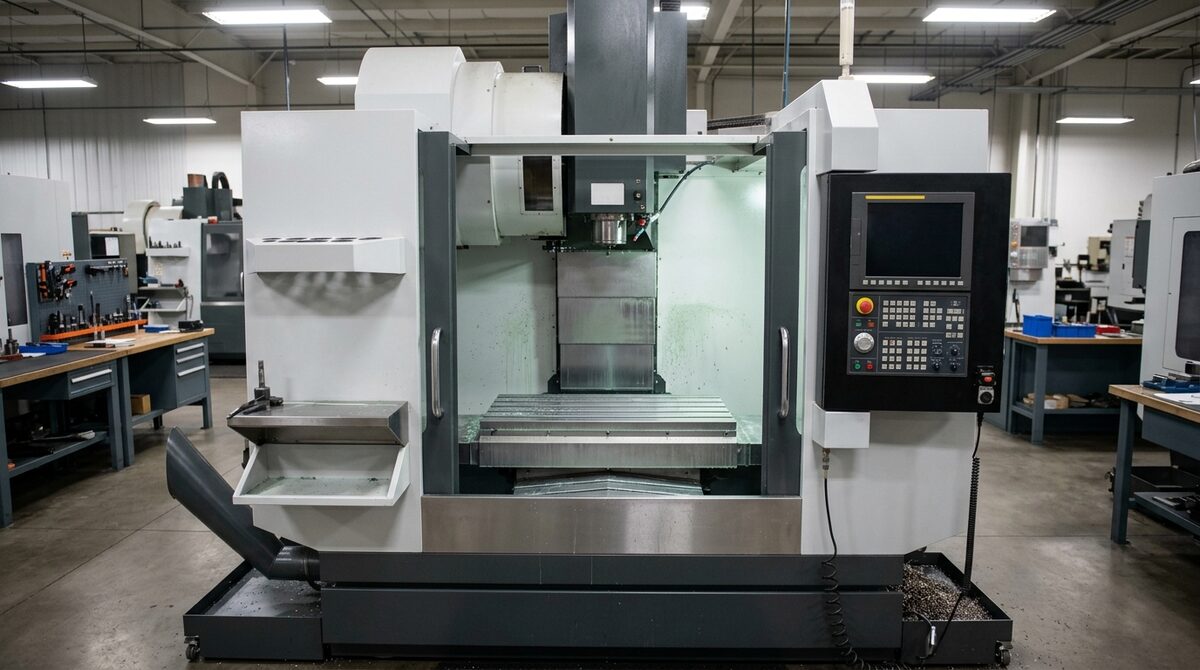
The workforce side of the same equation appears in the Bureau of Labor Statistics Employment Situation report for June 2026. Manufacturing was among the major industries where employment showed little or no change over the month. But the average manufacturing workweek edged down to 40.3 hours from 40.4 in May, while overtime hours edged up to 3.2.
Headcount flat, straight time down, overtime up. That is the signature of a sector managing unpredictable demand by adjusting hours instead of staff — hiring nobody, laying off nobody, and paying premium rates to cover the peaks.
Regional data shows the same lever being pulled harder. In the Philadelphia Fed’s July survey of Third District manufacturers, the average employee workweek index rose 21 points to 14.0, its highest reading since January 2025, while the employment index registered just 10.0, with 83 percent of firms reporting no change in headcount. Eastern and central Pennsylvania manufacturers responded to a surge in orders by extending hours, not by adding people.
There is a defensible logic to that. Given how sharply demand has swung — a dynamic documented in Why Manufacturing Sales Pipelines Turned Unpredictable in 2026 — hiring against a two-month order surge is a real risk. Overtime is reversible. A new hire is not.
But the logic only holds because the alternative was never available. A manufacturer who could see demand three months out with reasonable confidence would not face a choice between overtime premiums and hiring risk. They would schedule.
The Pipeline Is a Production Input
This is where the sales pipeline stops being a commercial artifact and becomes an operations asset. Every quote in your system carries information the shop floor needs: probable volume, probable timing, part complexity, material requirements, and required capability. Most manufacturers capture none of that in a form production can use.
Three failures are common in South Central PA shops.
Stage definitions describe seller activity, not buyer commitment. A pipeline stage called “proposal sent” tells production nothing. A stage defined as “customer has confirmed budget, timing, and specification” tells production a great deal. Stages that describe what the customer has done, rather than what the salesperson has done, convert directly into scheduling confidence.
Probability is assigned by feel. If a stage historically closes 40 percent of the time, that number belongs in the capacity plan. If nobody has ever measured it, every weighted forecast is decoration. The measurement is not difficult; it requires a year of closed-won and closed-lost records and an afternoon.
Timing is captured as close date, not need date. A quote that closes in September for delivery in March is a scheduling non-event. A quote that closes in September for delivery in October is a scheduling emergency. Most systems record only the first.
Fixing these three things does not require software. It requires agreeing on definitions and documenting how information moves from the first customer conversation through quoting, engineering review, and release to the floor. That documentation exercise — sales and marketing process mapping — routinely surfaces handoffs where information exists in someone’s inbox but never reaches the scheduler.
What Changes When It Works
Manufacturers who connect pipeline discipline to production planning typically see four effects, none of which require winning a single additional order.
Overtime becomes planned rather than reactive, which reduces the premium paid and the errors that come with fatigue and rushed changeovers. Material commitments get made earlier against qualified demand rather than late against confirmed orders, improving cost and availability. Capacity decisions gain a defensible basis, so the question of whether to add a shift or a machine stops being an argument about instinct. And quoting improves, because sales gains an accurate picture of what the plant can actually accept and when.
That last point matters more than it sounds. A significant share of margin erosion in small manufacturing comes from accepting work the plant cannot deliver profitably at the promised date. The filtering discipline that prevents it is covered in The Customer Qualification Matrix Manufacturers Need in a Volatile Demand Market.
With roughly a quarter of national manufacturing capacity unused and hours flexing to cover demand the pipeline never predicted, the gap between commercial information and production planning is not an administrative inconvenience. It is where the margin goes.
MANTEC: Your Partner in Manufacturing Growth
MANTEC helps small and mid-sized manufacturers across South Central Pennsylvania close the gap between what sales knows and what operations can act on.
Our Services Include:
- Continuous Improvement Advising — Hands-on support for building stable, predictable production processes
- Training and Events — Workshops at our Knowledge Park facility in York, including process mapping, standard work, and project management
Ready to Stabilize Your Schedule? Contact MANTEC to discuss how better pipeline discipline can protect your productivity.
Works Cited
- “Industrial Production and Capacity Utilization — G.17.” Board of Governors of the Federal Reserve System, 17 July 2026, www.federalreserve.gov/releases/g17/current/default.htm. Accessed 24 July 2026.
- “The Employment Situation — June 2026.” U.S. Bureau of Labor Statistics, U.S. Department of Labor, 2 July 2026, www.bls.gov/news.release/empsit.nr0.htm. Accessed 24 July 2026.
Related Posts