MANTEC: Strengthening South Central Pennsylvania Manufacturing Every manufacturing operation has them: the skilled machinist promoted…
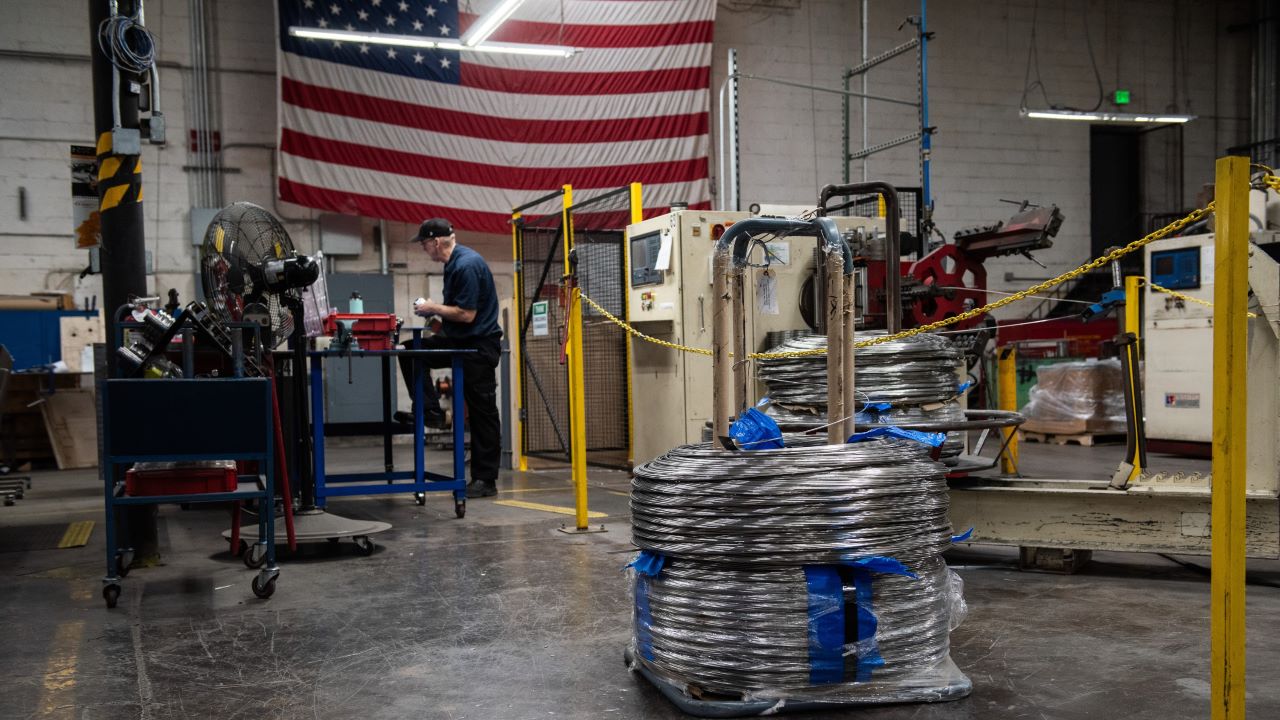
Pennsylvania’s manufacturing sector stands at an inflection point that will determine the Commonwealth’s economic trajectory for the next decade. The state’s 562,000 manufacturing workers generate over $116 billion in gross state product, ranking Pennsylvania sixth nationally in manufacturing output. Yet beneath these impressive figures lies a fundamental challenge threatening to constrain growth across the nine-county South Central Pennsylvania region and beyond.
The numbers paint a stark picture of the workforce mathematics confronting manufacturers. According to recent analysis from The Manufacturing Institute and Deloitte, the U.S. manufacturing industry could require as many as 3.8 million additional employees between 2024 and 2033, with projections indicating that 1.9 million of these positions could go unfilled if current workforce challenges persist. For Pennsylvania manufacturers competing for talent against employers in faster-growing Sun Belt states, these projections represent both immediate operational pressure and long-term strategic risk.
The regional implications extend far beyond individual companies struggling to fill positions. Manufacturing wages in Pennsylvania average $86,000 with benefits—33 percent higher than non-manufacturing positions—making these roles essential anchors for middle-class prosperity. Every manufacturing job supports an additional 1.5 workers throughout related industries and services, meaning workforce constraints ripple through supplier networks, logistics providers, and local communities. When manufacturers turn away profitable contracts because they lack adequate staffing—a situation 45 percent of Pennsylvania companies report experiencing—the economic impact multiplies throughout regional economies.
The Productivity Imperative Reshapes Manufacturing Strategy
Forward-thinking manufacturers are responding to workforce constraints not by waiting for labor markets to improve, but by fundamentally rethinking how they extract value from existing operations. This strategic pivot places continuous improvement methodologies at the center of competitive strategy, transforming process optimization from a nice-to-have initiative into a survival imperative.
The logic is straightforward: when you cannot hire your way to increased capacity, you must improve your way there. Continuous improvement provides structured frameworks for identifying and eliminating waste, reducing variation, and streamlining processes so that current teams accomplish more without proportional workforce expansion. Companies implementing these methodologies report cycle time reductions of 20 to 50 percent, quality defect decreases exceeding 60 percent, and inventory carrying cost reductions surpassing 30 percent—gains that directly address capacity constraints created by staffing limitations.
The fiscal year 2024 results from the MEP National Network demonstrate the tangible business impact these approaches deliver. According to the National Institute of Standards and Technology, manufacturers working with MEP Centers achieved $15 billion in new and retained sales, $5 billion in new client investments, and $2.6 billion in cost savings while creating or retaining over 108,000 jobs. These results emerge from hands-on consulting and training that helps manufacturers improve productivity through technology implementation, supply chain strengthening, and continuous improvement methodologies tailored to each company’s unique challenges.
Building Sustainable Improvement Cultures
The shift toward continuous improvement represents more than implementing isolated projects or deploying specific tools. Manufacturers achieving lasting results are building organizational cultures where systematic problem-solving becomes embedded in daily operations rather than remaining the province of specialized departments or external consultants.
This cultural transformation requires investment in workforce development that extends beyond technical training to encompass analytical thinking, data-driven decision making, and collaborative problem-solving. Employees who understand root cause analysis, process mapping, and statistical thinking become force multipliers who identify improvement opportunities throughout their daily work—not just during formal improvement events.
The approach also addresses a critical talent acquisition challenge. Younger workers entering manufacturing careers increasingly value employers demonstrating commitment to operational excellence and professional development. Companies with active continuous improvement cultures create more stable employment, clearer advancement pathways, and more satisfying work environments that differentiate them in competitive talent markets. Understanding Why Small Manufacturers Are Prioritizing Process Improvement Over Hiring in 2025 reveals how leading organizations are repositioning their workforce development strategies around capability enhancement rather than headcount expansion.
Regional Resources Supporting Manufacturer Transformation
Pennsylvania manufacturers pursuing continuous improvement benefit from exceptional regional resources that reduce implementation risk while accelerating results. The Commonwealth’s Manufacturing Extension Partnership network provides access to experienced consultants who understand regional industry requirements and can tailor improvement approaches to specific operational contexts.
State workforce development programs including WEDnetPA provide reimbursement up to $2,000 per employee for eligible training activities, making comprehensive skill development programs financially accessible even for smaller manufacturers with constrained training budgets. These funding mechanisms reflect state recognition that manufacturing competitiveness increasingly depends on workforce capability development rather than simply workforce expansion.
The economic development strategy articulated in Vision 2030 emphasizes manufacturing as a key growth sector requiring focused support for both process improvements and workforce development. The strategy aims to increase Pennsylvania’s manufacturing output by 10 percent annually, reaching $180 billion by 2030—a goal that requires systematic productivity enhancement across thousands of small and mid-sized manufacturers throughout the Commonwealth.
For manufacturers evaluating their improvement potential, understanding The Hidden ROI of Continuous Improvement: What Pennsylvania Manufacturers Need to Know provides essential context for assessing investment returns and prioritizing initiatives that deliver maximum impact for specific operational circumstances.
MANTEC: Your Partner in Manufacturing Excellence
MANTEC specializes in helping South Central Pennsylvania manufacturers build competitive advantage through continuous improvement and workforce development. Our team understands the unique challenges facing regional manufacturers and delivers practical solutions that generate measurable business results.
Our Services Include:
- Continuous Improvement Support – Expert guidance identifying root causes of inefficiencies and implementing sustainable solutions that streamline processes, reduce waste, and increase productivity
- Change Management Consulting – Support for the mindset shifts, planning, and communication required to achieve sustainable results from improvement initiatives
Ready to Transform Your Operations? Contact MANTEC to discuss how continuous improvement can help your organization maximize workforce productivity while positioning for sustained growth.
Works Cited
“Manufacturers Need as Many as 3.8 Million New Employees by 2033.” The Manufacturing Institute, 3 Apr. 2024, themanufacturinginstitute.org/manufacturers-need-as-many-as-3-8-million-new-employees-by-2033/. Accessed 26 Nov. 2025.
“MEP Economic Impacts Boost Business and Jobs.” National Institute of Standards and Technology, U.S. Department of Commerce, 20 Mar. 2025, www.nist.gov/news-events/news/2025/03/mep-economic-impacts-boost-business-and-jobs. Accessed 26 Nov. 2025.
Related Articles
- Why Small Manufacturers Are Prioritizing Process Improvement Over Hiring in 2025
- The Hidden ROI of Continuous Improvement: What Pennsylvania Manufacturers Need to Know
Related Posts