MANTEC: Strengthening South Central Pennsylvania Manufacturing Every manufacturing operation has them: the skilled machinist promoted…
MANTEC: Strengthening South Central Pennsylvania Manufacturing
South Central Pennsylvania’s manufacturing landscape represents one of the most diverse industrial ecosystems in the Northeast, spanning precision motorcycle manufacturing in York, food processing operations throughout Lancaster County, and distribution centers serving the mid-Atlantic region from Harrisburg. This remarkable diversity creates both opportunity and complexity when manufacturers consider implementing Six Sigma methodologies to improve quality, reduce waste, and enhance operational efficiency. The fundamental question facing regional manufacturers is not whether to adopt Six Sigma principles, but rather which specific methodology aligns with their operational needs and strategic objectives.
The choice between DMAIC and DMADV represents more than an academic distinction for South Central Pennsylvania manufacturers competing in increasingly demanding markets. These two Six Sigma frameworks address fundamentally different manufacturing challenges through distinct approaches that yield different outcomes. Understanding which methodology fits your operation requires examining your current processes, strategic goals, and the specific problems you need to solve. Whether you operate an established food processing line requiring incremental improvements or you are designing automated systems for Industry 4.0 integration, selecting the appropriate Six Sigma framework directly impacts your project success and return on investment.
Regional manufacturers benefit from proximity to exceptional technical resources including MANTEC’s specialized manufacturing consulting services, Pennsylvania’s Manufacturing Extension Partnership network, and workforce development programs through local community colleges. However, accessing these resources effectively requires clarity about which Six Sigma approach matches your operational reality. This comprehensive examination of DMAIC and DMADV methodologies provides South Central Pennsylvania manufacturers with practical frameworks for making informed decisions about process improvement investments.
Understanding DMAIC: The Framework for Process Optimization
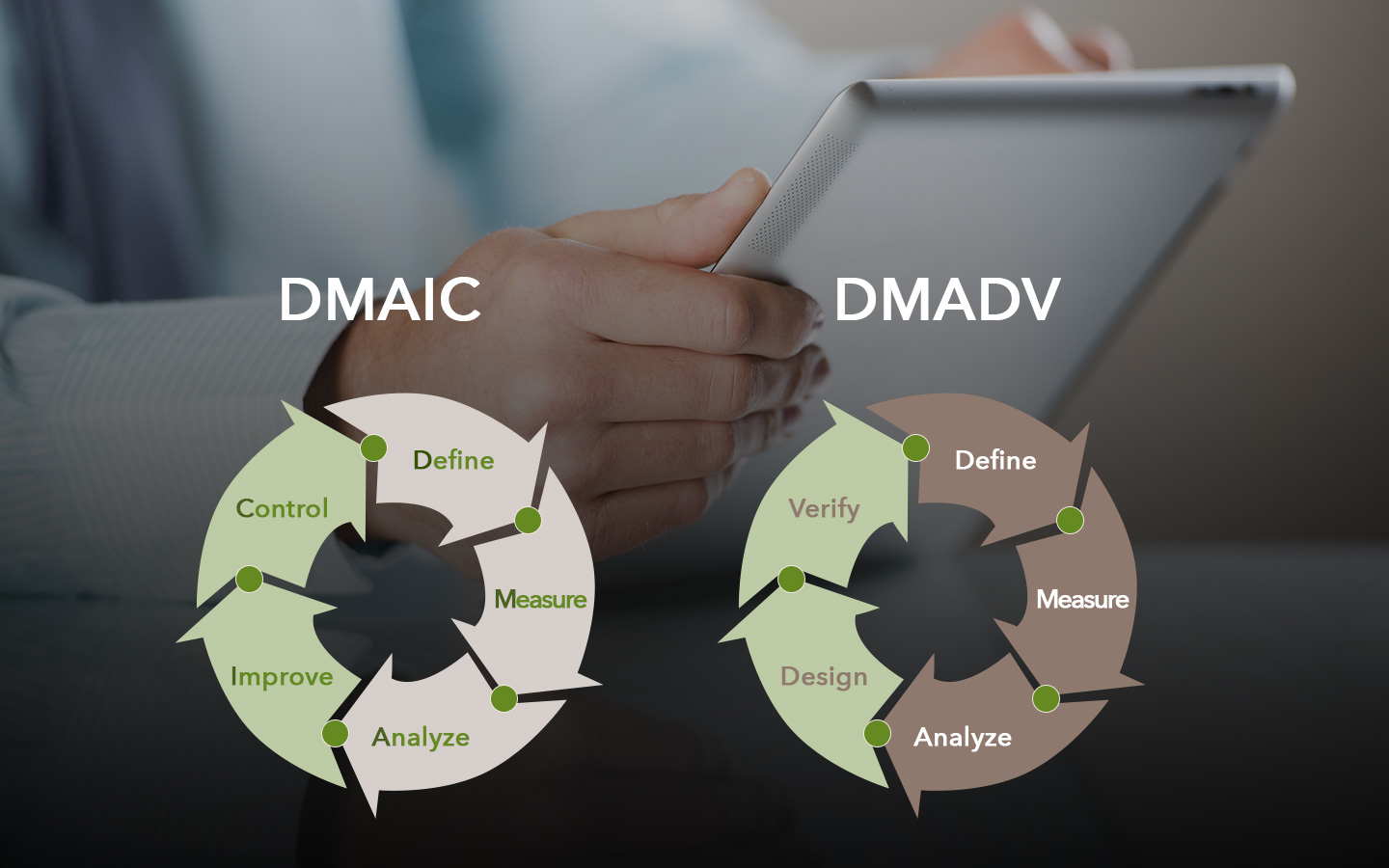
DMAIC provides a structured approach for improving existing manufacturing processes through systematic problem-solving and data-driven decision making. The acronym represents five sequential phases: Define, Measure, Analyze, Improve, and Control. This methodology assumes you already have an established process that requires enhancement rather than complete redesign. DMAIC projects typically focus on reducing defects, minimizing variation, eliminating waste, or improving throughput within existing operational frameworks.
The Define phase establishes project scope by identifying the specific problem requiring attention, defining customer requirements, and articulating improvement goals. Manufacturing teams working with MANTEC consultants during this phase develop clear problem statements that quantify current performance gaps and establish measurable targets. For a Lancaster County food processor experiencing packaging defects, the Define phase might establish a goal of reducing seal failures by fifty percent within six months while maintaining current production rates.
Measurement represents the foundation for all subsequent DMAIC work. Teams collect baseline data documenting current process performance across relevant metrics including defect rates, cycle times, yield percentages, or customer complaints. This phase requires identifying appropriate measurement systems, validating data accuracy, and establishing statistical baselines. The American Society for Quality describes DMAIC as a structured problem-solving approach that helps organizations improve existing processes systematically through five distinct phases, enabling manufacturers to implement long-term solutions rather than temporary fixes.
Analysis transforms raw data into actionable insights by identifying root causes of performance problems. Statistical tools including Pareto analysis, fishbone diagrams, and hypothesis testing help teams separate symptoms from underlying causes. A York precision manufacturer analyzing machine downtime might discover that apparent equipment failures actually stem from inadequate preventive maintenance scheduling or operator training gaps rather than mechanical deficiencies.
The Improve phase develops and implements solutions addressing root causes identified during analysis. Teams design experiments testing potential improvements, validate solutions through pilot implementations, and scale successful interventions across operations. This phase requires balancing improvement magnitude against implementation costs and operational disruption. MANTEC’s consulting expertise proves particularly valuable during implementation, helping manufacturers navigate change management challenges while maintaining production continuity.
Control ensures improvements persist over time through standardized work procedures, statistical process control charts, and ongoing monitoring systems. Teams document new processes, train operators on revised procedures, and establish response protocols when performance metrics drift from target ranges. Sustainable improvement requires embedding new practices into daily operations rather than treating them as temporary initiatives.
DMADV: Designing Quality Into New Processes
DMADV addresses fundamentally different challenges than DMAIC by providing structured frameworks for designing new products, processes, or services that meet customer requirements from inception. The acronym represents: Define, Measure, Analyze, Design, and Verify. While DMADV shares some conceptual similarities with DMAIC, it focuses on creation rather than optimization, making it particularly relevant for manufacturers implementing automation technologies, developing new product lines, or building greenfield facilities.
The Define phase in DMADV establishes customer requirements and project goals similar to DMAIC, but focuses on future-state capabilities rather than improving existing processes. A South Central Pennsylvania manufacturer implementing robotic assembly systems would use DMADV to design the entire production workflow around automation capabilities rather than simply automating existing manual processes. This forward-looking orientation requires understanding customer needs, market requirements, and technological possibilities simultaneously.
Measurement in DMADV quantifies customer requirements and translates qualitative expectations into measurable specifications. Quality Function Deployment and Voice of the Customer techniques help teams understand what customers truly value and how to measure success. A food processor developing a new product line uses this phase to establish specifications for shelf life, texture, flavor consistency, and packaging integrity before designing production processes.
Analysis evaluates alternative process designs and technologies that might meet customer requirements. Teams assess different manufacturing approaches, equipment options, and workflow configurations through simulation, benchmarking, and feasibility studies. This phase generates multiple potential solutions before committing resources to detailed design work. Pennsylvania’s comprehensive ten-year economic development strategy emphasizes manufacturing as a key sector for growth, with focused resources supporting both process improvements and new production capabilities that strengthen the Commonwealth’s industrial competitiveness.
Design transforms analysis into detailed specifications for new processes, products, or services. Teams develop comprehensive documentation including equipment specifications, process flow diagrams, control plans, and training requirements. Detailed design work often involves prototyping, pilot production runs, and iterative refinement before full-scale implementation. This phase requires close collaboration between engineering, operations, quality, and maintenance functions to ensure designs are both effective and practical.
Verification confirms that new designs meet customer requirements through pilot testing, capability studies, and production validation. Teams gather data demonstrating that new processes achieve target performance levels consistently before transitioning to full production. This phase identifies and resolves any gaps between design intent and actual performance, preventing quality issues from reaching customers.
Regional Industry Alignment: Matching Methodologies to Sectors
South Central Pennsylvania’s manufacturing diversity means different industries benefit from different Six Sigma approaches based on their operational characteristics and strategic challenges. Understanding these alignment patterns helps manufacturers select methodologies that fit their specific situations rather than applying generic frameworks inappropriately.
Food processing operations throughout Lancaster County typically benefit most from DMAIC methodologies applied to existing production lines. These manufacturers operate mature processes with well-established procedures where incremental improvements in yield, consistency, and efficiency generate substantial value. A commercial bakery reducing ingredient waste through DMAIC projects achieves immediate bottom-line impact without disrupting operations or requiring major capital investment. However, food processors developing new product lines or implementing automated packaging systems should consider DMADV to design quality and efficiency into new processes from the beginning.
Precision manufacturing operations, exemplified by York’s metalworking and machinery sectors, often require both methodologies depending on project scope. DMAIC suits efforts improving machining accuracy, reducing setup times, or minimizing scrap rates on existing equipment. Conversely, manufacturers implementing advanced CNC systems, adopting additive manufacturing technologies, or designing production cells for new product families benefit from DMADV’s structured approach to process design. The key distinction lies in whether you are optimizing what you already have or creating something fundamentally new.
Distribution and logistics operations near Harrisburg face unique challenges requiring careful methodology selection. Warehouse operations improving order accuracy, reducing picking errors, or optimizing material flow typically apply DMAIC to refine existing processes. However, facilities implementing warehouse management systems, designing automated storage and retrieval systems, or developing new distribution networks should employ DMADV to build quality and efficiency into new operational frameworks rather than automating problematic existing processes.
Small and medium-sized manufacturers throughout the region often start their Six Sigma journey with DMAIC projects addressing pressing operational problems before expanding to DMADV for strategic initiatives. This sequenced approach builds organizational capability and demonstrates value before committing resources to more complex design projects. MANTEC’s consulting services help regional manufacturers develop implementation roadmaps that sequence improvement projects appropriately while building internal expertise gradually.
Assessing Which Approach Fits Your Operation
Selecting between DMAIC and DMADV requires honest assessment of your current situation, strategic objectives, and organizational capabilities. Several key factors should guide your decision-making process as you consider which methodology aligns with your manufacturing reality.
Process maturity represents the most fundamental selection criterion. If you have established processes operating consistently but not meeting performance targets, DMAIC provides structured approaches for identifying and eliminating sources of variation, waste, or defects. Conversely, if you lack established processes, are designing new production systems, or current processes are so problematic that incremental improvement seems insufficient, DMADV offers frameworks for creating better solutions from scratch.
Problem definition clarity also influences methodology selection. DMAIC works best when you can clearly define the problem requiring attention and measure current performance quantitatively. A manufacturer experiencing high defect rates on a specific production line knows exactly what needs improvement and can measure progress objectively. DMADV suits situations where you need to create new capabilities rather than fix specific problems with existing processes.
Resource availability and organizational readiness impact methodology feasibility. DMAIC projects typically require less time and resources than DMADV initiatives because they focus on improving rather than creating. Smaller manufacturers with limited resources often achieve better results starting with focused DMAIC projects that deliver quick wins before attempting more ambitious DMADV initiatives requiring substantial time and expertise.
For manufacturers seeking comprehensive guidance on workforce development strategies that complement Six Sigma implementation, understanding How Lean Six Sigma Training Solves South Central Pennsylvania’s Manufacturing Workforce Crisis provides essential context for building organizational capabilities that support both DMAIC and DMADV initiatives effectively.
Strategic importance determines appropriate investment levels. Minor process improvements might justify lightweight DMAIC applications using basic problem-solving tools without extensive statistical analysis. Major strategic initiatives like implementing Industry 4.0 technologies or developing new product platforms warrant comprehensive DMADV approaches ensuring new capabilities meet customer requirements and deliver competitive advantages.
Customer impact considerations also guide methodology selection. When existing processes disappoint customers through quality inconsistencies or delivery failures, DMAIC projects addressing specific problems can restore satisfaction relatively quickly. When customer requirements are evolving beyond what existing processes can deliver, DMADV enables designing new capabilities that meet emerging needs proactively rather than incrementally improving inadequate processes.
Integrating Regional Resources and Support Systems
South Central Pennsylvania manufacturers pursuing Six Sigma initiatives benefit from exceptional regional resources that enhance project success rates while reducing implementation risks. Understanding how to access and integrate these resources effectively maximizes return on improvement investments.
MANTEC provides specialized consulting services helping regional manufacturers implement both DMAIC and DMADV projects successfully. Consultants work alongside manufacturing teams to develop project charters, facilitate data collection and analysis, guide solution development, and support implementation efforts. This hands-on approach transfers knowledge while delivering results, building internal capabilities that sustain improvements long after consultants depart. MANTEC’s deep understanding of regional industries ensures recommendations reflect practical realities rather than theoretical ideals.
Pennsylvania’s Manufacturing Extension Partnership network offers complementary resources including training programs, assessment tools, and connections to technical experts across the state. The MEP network helps manufacturers access specialized knowledge in areas like statistical analysis, experiment design, or change management that might not exist internally. This broader network extends regional manufacturers’ capabilities beyond what any single organization could maintain independently.
Local workforce development boards and community colleges provide training programs building Six Sigma skills throughout manufacturing organizations. Green Belt and Black Belt certification programs develop project leaders capable of guiding improvement initiatives, while basic quality training for frontline workers creates organizational cultures supporting continuous improvement. These educational resources help manufacturers build sustainable improvement capabilities rather than depending perpetually on external consultants.
Industry associations and peer networks offer opportunities for manufacturers to learn from others’ Six Sigma experiences, sharing both successes and challenges. Regional manufacturing councils facilitate knowledge exchange, helping companies avoid common pitfalls while accelerating their improvement journeys. This collaborative ecosystem strengthens individual manufacturers while enhancing regional competitiveness collectively.
Government incentive programs sometimes provide financial support for process improvement initiatives, reducing implementation costs for qualifying manufacturers. Pennsylvania’s economic development programs periodically offer grants or tax credits supporting workforce training, technology adoption, or operational improvements. MANTEC consultants help manufacturers identify and access these opportunities, maximizing available support for improvement investments.
Regional trends demonstrate the growing recognition of Six Sigma’s value, as explored in Why York County Manufacturers Are Investing in Green Belt and Black Belt Certifications in 2026, which illuminates how leading organizations differentiate themselves through systematic continuous improvement programs that deliver competitive advantages in talent acquisition and operational excellence.
MANTEC: Your Partner in Manufacturing Excellence
At MANTEC, we specialize in helping South Central Pennsylvania manufacturers implement improvement methodologies that deliver measurable results. Our team understands the unique challenges facing regional manufacturers and provides practical guidance tailored to your specific operational context.
Our Services Include:
- Six Sigma Implementation Support – Expert consultation for both DMAIC and DMADV projects
- Process Improvement Consulting – Customized approaches addressing your operational challenges
- Workforce Development – Training programs building internal improvement capabilities
- Strategic Planning Assistance – Helping align improvement initiatives with business objectives
Ready to Transform Your Operations? Contact MANTEC to discuss how Six Sigma methodologies can enhance your manufacturing performance and competitive position in today’s demanding markets.
Works Cited
“DMAIC Process: Define, Measure, Analyze, Improve, Control.” ASQ, American Society for Quality, asq.org/quality-resources/dmaic. Accessed 24 Oct. 2025.
“Pennsylvania Gets It Done: Governor Josh Shapiro Launches First Statewide Economic Development Strategy in Nearly Two Decades.” Pennsylvania Department of Community and Economic Development, 30 Jan. 2024, dced.pa.gov/newsroom/pennsylvania-gets-it-done-governor-josh-shapiro-launches-first-statewide-economic-development-strategy-in-nearly-two-decades/. Accessed 24 Oct. 2025.
Related Articles
Related Posts